
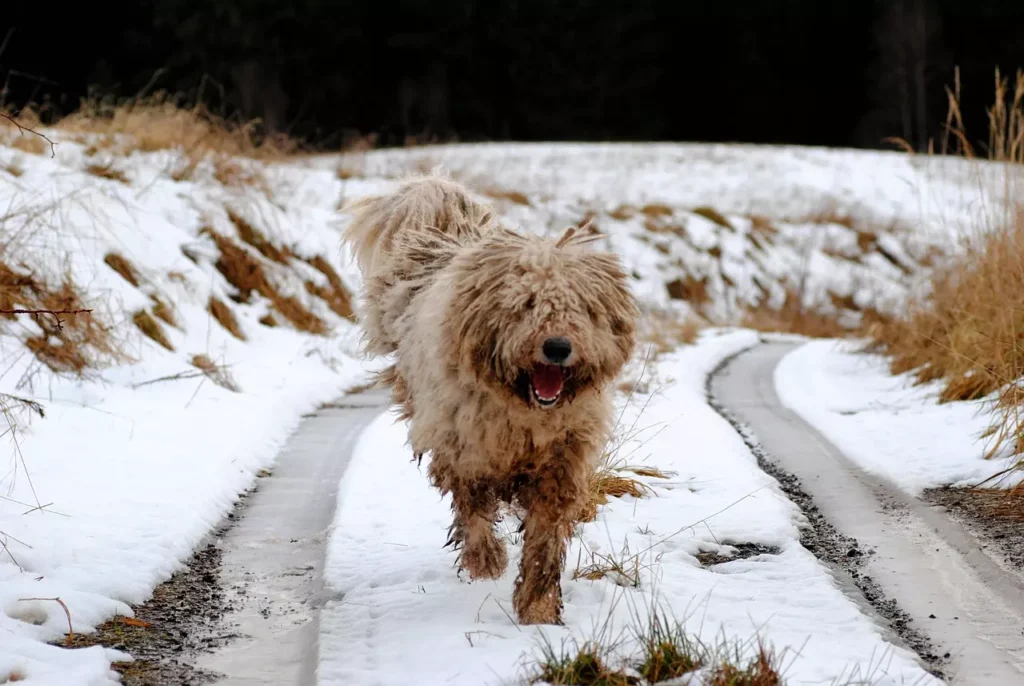
Komondor
The Komondor, often called the “mop dog” due to its unique corded coat, is a powerful Hungarian livestock guardian. Known for its independence, bravery, and distinctive appearance, the Komondor is a loyal protector of family and property. This ancient breed is best suited to experienced owners who understand the responsibilities of keeping a guardian dog with strong instincts.
Quick Facts
| Attribute | Details |
|---|---|
| Group | Pastoral |
| Country of origin | Hungary |
| Original purpose | Livestock guardian, protecting sheep and cattle from predators |
| Size & weight | Males: 70+ cm / 50-60 kg; Females: 65+ cm / 40-50 kg |
| Life expectancy | 10-12 years |
| Coat & colours | Distinctive long corded coat, always white |
| Exercise needs | 1-1.5 hours/day |
| Grooming needs | High- coat must be separated into cords, regular care needed |
| Trainability | Low to medium – intelligent but highly independent |
| Barking tendency | High – natural guardian, very vocal |
| Suitable for | Experienced owners, rural homes with land, livestock farms |
History & Origin
The Komondor has been guarding flocks in Hungary for centuries, with records dating back to at least the 16th century. Believed to have descended from dogs brought by nomadic Magyars from Central Asia, the Komondor became the traditional guardian of sheep in the Hungarian plains (Puszta).
Its corded coat served a dual purpose: protection from harsh weather and camouflage among the flock. This made it difficult for predators such as wolves to distinguish the dog from the sheep it was guarding.
Today, the Komondor remains a symbol of Hungarian heritage and is recognised by The Kennel Club within the Pastoral Group.
What Were They Bred to Do?
Komondors were bred to live with and protect livestock, working independently without human direction. They patrolled flocks, deterred predators, and used their sheer size and bravery to guard against wolves and bears.
Modern Komondors retain these instincts, making them natural protectors of home and family, though this also means they can be wary of strangers.
Appearance & Breed Standard
The Komondor is a large, muscular dog with an unmistakable corded coat.
Head: broad and strong, with dark, expressive eyes
Ears: medium-sized, hanging close to the head
Coat: long, corded, always white; cords form naturally as the coat develops
Build: powerful yet agile, with a strong frame
Movement: steady and deliberate, showing strength and confidence
The cords start forming in puppyhood and continue to develop as the dog matures, creating the iconic “mop-like” appearance.
Temperament & Living with a Komondor
The Komondor is calm, loyal, and protective with family but reserved or suspicious with strangers. They are affectionate with those they know but not typically playful or overly social.
Their guarding instinct is strong, making them excellent watchdogs. However, this same independence means they are not always easy pets. They are best suited to homes with experience of guardian breeds, ideally in rural or semi-rural settings.
Exercise & Mental Stimulation
Komondors require 1-1.5 hours of daily exercise, though they do not need as much high-intensity activity as working herding dogs. Long walks and secure space to roam are ideal.
Mental stimulation through training, puzzle feeders, and tasks such as patrolling gardens or farms helps keep their minds occupied.
Training & Socialisation
Komondors are intelligent but independent thinkers. Training requires patience, consistency, and positive reinforcement. They will often question commands, reflecting their history of working without human direction.
Early and thorough socialisation is vital to ensure they are confident and balanced adults. Without it, they may become overly suspicious or protective.
Grooming & Shedding
The Komondor’s coat is unique and high-maintenance:
Puppies start with a fluffy coat that develops cords over time.
Cords must be manually separated to prevent matting.
Regular checking for dirt, debris, and parasites is essential.
Bathing is challenging, as the coat takes a long time to dry.
While they do not shed in the traditional sense, their cords require lifelong care and attention.
Health & Longevity
Komondors typically live 10-12 years.
Health issues include:
Hip dysplasia
Bloat (gastric dilatation-volvulus)
Entropion (inward-turning eyelids)
Skin infections if cords are not properly maintained
Reputable breeders carry out health testing for hips and eyes.
Feeding & Care Basics
A balanced diet suited to large, slow-maturing breeds is essential. Portion control is important to prevent obesity, which can increase joint and bloat risks. Adults generally do well on two meals per day.
Ethical Sourcing & Adoption
The Komondor is rare in the UK. Prospective owners should seek breeders through The Kennel Club Assured Breeders Scheme, ensuring proper health checks. Occasionally, breed rescues may rehome Komondors, though availability is very limited.
Legal Note
The Komondor is not subject to breed-specific restrictions in the UK.
Is the Komondor Right for You?
Best for:
Experienced owners familiar with guardian breeds
Rural or farm settings with space and secure fencing
Families looking for a calm but protective dog
Think twice if:
You live in a flat or urban setting
You cannot manage high coat maintenance
You want a sociable, easy-to-train companion
FAQs
Are Komondors good family pets?
Yes, with experienced owners. They are loyal and protective but require careful socialisation.Do Komondors bark a lot?
Yes, they are naturally vocal guardians.How much exercise does a Komondor need?
Around 1-1.5 hours daily, with steady activity.Do Komondors shed?
They don’t shed traditionally, but their cords require high grooming maintenance.Are Komondors easy to train?
No, they are independent and strong-willed, needing patient, consistent training.How long do Komondors live?
Typically 10-12 years.