
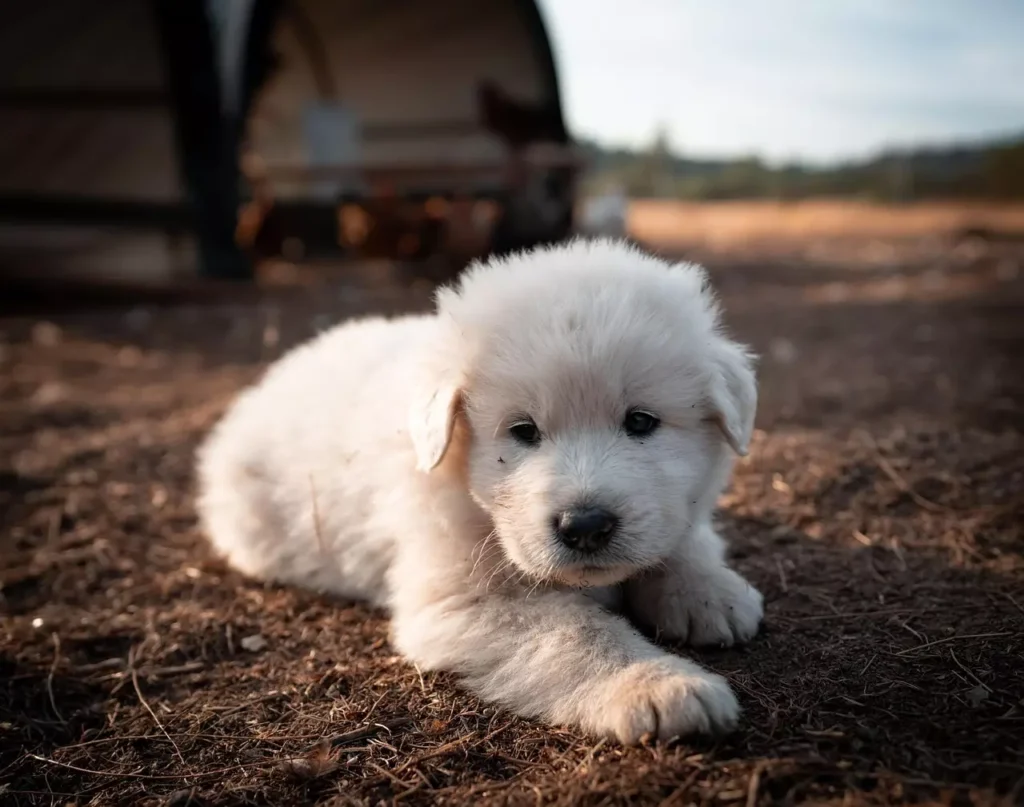
Great Pyrenees (Pyrenean Mountain Dog)
The Great Pyrenees, officially known in the UK as the Pyrenean Mountain Dog, is a large livestock guardian with an independent nature, a protective instinct and a thick, weather-resistant coat. This impressive breed needs secure space, patient training, regular grooming and an owner who understands guardian behaviour.
Quick Facts
| Attribute | Details |
|---|---|
| Group | Pastoral |
| Country of origin | France and the Pyrenees mountain region |
| Original purpose | Guarding livestock and shepherds in mountainous terrain |
| Size & weight | Minimum 70 cm and 50 kg for males; minimum 65 cm and 40 kg for females under the UK breed standard. Many are larger |
| Life expectancy | Typically under 10 years according to the Royal Kennel Club breed profile; individual lifespan varies |
| Coat & colours | Thick double coat; white or white with permitted badger, grey, lemon, orange or tan markings |
| Exercise needs | Up to one hour per day is a general guide, adjusted for age, health and the individual dog |
| Grooming needs | Moderate to high — brushing more than once a week and additional care during heavy shedding |
| Trainability | Moderate — intelligent and capable but naturally independent |
| Barking tendency | Often high because of the breed’s livestock-guardian background |
| Suitable for | Experienced owners with sufficient space, secure fencing and time for training, grooming and careful management |
History & Origin
The Great Pyrenees is known in the UK and by the Royal Kennel Club as the Pyrenean Mountain Dog. The breed developed in the Pyrenees mountain region between France and Spain, where large guardian dogs protected livestock and shepherds in demanding terrain.
The Royal Kennel Club traces the breed’s work with flocks to at least the Middle Ages. Pyrenean Mountain Dogs later attracted attention beyond pastoral communities and appeared in French royal courts. Louis XIV is traditionally associated with naming the breed the Royal Dog of France.
Although many now live as companions, the breed’s independent guardian instincts remain an important part of its character and care requirements.
What Were Great Pyrenees Bred to Do?
Great Pyrenees were bred to protect livestock from potential threats. They needed to patrol large areas, assess situations independently and remain alert without waiting constantly for instructions from a handler.
This background helps explain why modern dogs may watch their surroundings closely, bark at unfamiliar activity and make their own decisions. These traits can be useful in a working guardian but require careful management in a family home or residential area.
Great Pyrenees Size, Weight & Appearance
The Great Pyrenees is a large, powerful dog that should remain balanced and capable of free movement. Under the Royal Kennel Club breed standard, the minimum shoulder height is 70 cm for males and 65 cm for females. Many dogs considerably exceed these minimum measurements.
The standard gives minimum weights of 50 kg for males and 40 kg for females at the minimum height. Taller dogs are expected to weigh more while remaining in healthy proportion. Actual size varies, and maintaining an appropriate body condition is more important than aiming for a particular number.
The breed has a dense undercoat and a longer, weather-resistant outer coat. White is the principal colour, sometimes accompanied by permitted badger, grey, lemon, orange or tan markings. Double dewclaws on each hind leg are also a recognised feature of the breed standard.
Great Pyrenees Temperament & Everyday Life
The Royal Kennel Club describes the Pyrenean Mountain Dog as quietly confident. Many are calm and strongly attached to their household, but they can also be independent, watchful and reserved around unfamiliar people.
A guardian background does not mean that every dog will behave in exactly the same way. Genetics, early socialisation, training and individual experiences all affect temperament. Owners should not encourage unnecessary suspicion or guarding behaviour.
Great Pyrenees can live successfully with children or other animals, but suitability depends on the individual dog and household. Their size alone means that interactions with children require close adult supervision. Introductions to other animals should be gradual and carefully managed.
Exercise & Mental Stimulation
The Royal Kennel Club gives up to one hour of daily exercise as a general guide. The appropriate amount depends on age, health, fitness and lifestyle. Steady walks, opportunities to sniff and suitable activities are generally more appropriate than repeatedly demanding high-impact exercise.
Secure fencing is essential because guardian breeds may patrol, investigate unfamiliar activity or make independent decisions about where to go. Off-lead exercise should only take place where it is safe and legally permitted.
Puppies need age-appropriate activity while their bodies develop. Owners should ask their vet for individual guidance before introducing sustained running, repetitive jumping or strenuous exercise.
Training & Socialisation
Great Pyrenees are intelligent, but they were developed to work independently rather than follow every instruction immediately. Training should be patient, consistent and based on suitable rewards. Harsh handling can damage trust and may increase defensive behaviour.
Useful priorities include recall, settling calmly, accepting visitors appropriately and walking calmly on the lead. Their eventual size makes early practice especially important.
Socialisation should introduce puppies gradually to people, friendly dogs, handling, grooming, vehicles and everyday environments. The aim is to build calm confidence, not to force a puppy into situations they find overwhelming.
Barking can be associated with the breed’s guardian background. Owners should identify triggers, manage the environment and reward calm behaviour rather than relying on punishment.
Do Great Pyrenees Shed? Grooming & Coat Care
Great Pyrenees shed and can release substantial amounts of hair, particularly during seasonal coat changes. Their dense double coat needs brushing more than once a week, with more frequent care when loose undercoat is being shed.
Thorough brushing and coat care help remove loose hair and identify tangles, skin changes or debris. Particular attention may be needed behind the ears, around the neck, under the legs and through the longer hair on the hindquarters and tail.
Nails, including the double hind dewclaws, should be checked regularly. Routine care should also include the teeth, ears, eyes and skin. Owners who are unsure how to manage the coat should ask a suitably experienced groomer for advice.
Great Pyrenees Lifespan, Health & Veterinary Care
The Royal Kennel Club currently categorises the typical lifespan of the Pyrenean Mountain Dog as under 10 years. Some individuals may live longer or have shorter lives, and lifespan is influenced by genetics, body condition, lifestyle and veterinary care.
Current Royal Kennel Club health guidance identifies genetic diversity as an important breeding priority. Its Best Practice recommendations include elbow testing, eye testing and hip testing for breeding dogs.
Puppy buyers should ask for verifiable results rather than accepting a general statement that the parents have been checked by a vet. Health screening cannot guarantee that a puppy will never develop a condition, but it helps breeders make better-informed decisions.
Owners should arrange routine veterinary care and seek prompt professional advice about changes in movement, vision, appetite, breathing, behaviour or general condition. Maintaining a healthy weight is particularly important for a dog of this size.
Feeding & Care Basics
A Great Pyrenees should receive a complete, balanced diet appropriate for their age, health, activity level and adult size. Large-breed puppies have specific nutritional requirements and should receive food designed for controlled growth.
Use the manufacturer’s feeding guidance as a starting point and monitor the individual dog’s body condition. Treats and training rewards should be included when considering total food intake.
Fresh drinking water should always be available. Questions about puppy growth, portions, meal frequency or weight should be discussed with a vet rather than answered from breed averages alone.
Ethical Sourcing & Adoption (UK)
Anyone buying a Pyrenean Mountain Dog puppy should look for a responsible breeder who prioritises health, temperament and genetic diversity. Ask to see the puppy with their mother in the environment where they were raised.
Request verifiable hip, elbow and eye results and ask how the breeder has considered genetic diversity. Responsible breeders should answer questions openly, provide suitable documentation and ask prospective owners about the home they can offer.
Avoid sellers who refuse visits, cannot show the mother, offer immediate delivery or pressure buyers into paying quickly. Adoption may also be possible through general rescue organisations or rescues experienced with livestock guardians and large breeds.
Legal Note (UK)
Great Pyrenees and Pyrenean Mountain Dogs are not specifically named as prohibited types in current UK government guidance. However, laws concerning welfare, identification and keeping dogs under control apply to all owners.
The breed’s strength and guardian instincts make responsible handling, secure fencing and appropriate control particularly important. Owners should also check current local rules affecting leads, public spaces, access and livestock.
Is the Great Pyrenees Right for You?
Best for:
- Experienced owners who understand independent guardian breeds
- Homes with sufficient indoor and outdoor space
- People able to provide secure fencing and responsible management
- Owners prepared for regular grooming and substantial shedding
Think twice if:
- You want a highly obedient dog that responds instantly to every instruction
- You live somewhere where frequent barking could create serious problems
- You cannot safely manage a large, powerful adult dog
- You want a low-shedding or low-maintenance companion
FAQs
Are Great Pyrenees and Pyrenean Mountain Dogs the same breed?
Yes. Great Pyrenees is the name commonly used in North America, while Pyrenean Mountain Dog is the official name used by the Royal Kennel Club in the UK.
How big does a Great Pyrenees get?
The UK breed standard gives minimum heights of 70 cm for males and 65 cm for females. Many dogs are taller than these minimum measurements.
How much does a Great Pyrenees weigh?
The Royal Kennel Club standard gives minimum weights of 50 kg for males and 40 kg for females at the minimum height. Taller dogs should be heavier while remaining in healthy proportion.
How long do Great Pyrenees live?
The Royal Kennel Club currently categorises their typical lifespan as under 10 years. Individual dogs may live for a shorter or longer period.
Do Great Pyrenees shed a lot?
Yes. Their dense double coat sheds throughout the year and can release considerably more hair during seasonal coat changes.
Do Great Pyrenees bark a lot?
Many are naturally vocal because barking helped them warn away potential threats. Training, enrichment and environmental management can help, but owners should not expect guaranteed silence.
How much exercise does a Great Pyrenees need?
Up to one hour per day is the Royal Kennel Club’s general guide. Exercise should be adjusted for the individual dog’s age, health, fitness and lifestyle.
Are Great Pyrenees good family dogs?
They can be calm and affectionate companions, but suitability depends on the individual dog and household. Their size, strength and guardian instincts require careful consideration and supervision.
Are Great Pyrenees easy to train?
They are intelligent but naturally independent. Patient, consistent and reward-based training is generally more effective than expecting automatic obedience.
Can a Great Pyrenees live in a flat?
Their size, tendency to bark and need for secure space generally make a larger home more practical. Individual circumstances still matter, but prospective owners should assess space, neighbours and access carefully.
Sources
- Royal Kennel Club — Pyrenean Mountain Dog breed information and health testing
- Royal Kennel Club — Pyrenean Mountain Dog breed standard
- GOV.UK — Controlling your dog in public
Information checked: September 2026. Breed descriptions are general guidance; every dog is an individual.