
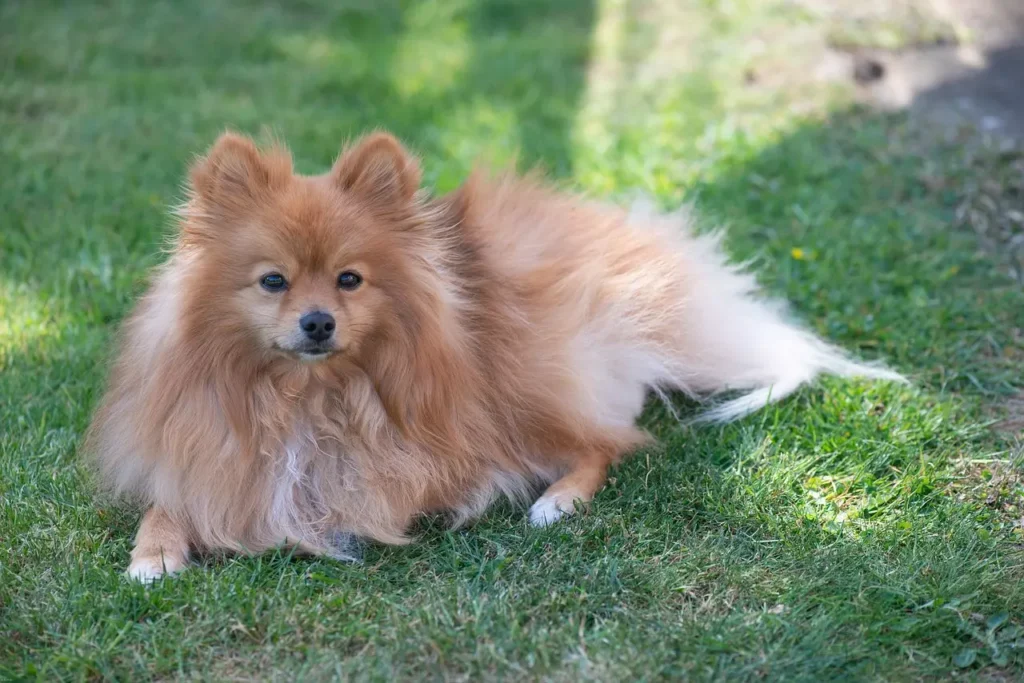
Pomeranian
The Pomeranian is a lively, intelligent and compact companion dog descended from larger German Spitz types. Although small enough for many different homes, Pomeranians are active, alert dogs that require training, careful handling, regular coat care and responsible attention to their knees, eyes, teeth and airways.
Quick Facts
| Attribute | Details |
|---|---|
| Group | Toy |
| Country of origin | Pomerania region in Central Europe; the modern smaller form was further developed and popularised in Britain |
| Original purpose | Companion dog developed from larger German Spitz-type dogs |
| Size & weight | Often around 25–27 cm and 2–3 kg. The Royal Kennel Club’s ideal weights are 1.8–2 kg for males and 2–2.5 kg for females |
| Life expectancy | Typically 12+ years; a large 2024 UK study reported a median lifespan of approximately 12.2 years |
| Coat & colours | Dense double coat in numerous whole, sable and parti-colour combinations; merle is not accepted by the UK breed standard |
| Exercise needs | Moderate — often around 30 minutes of daily physical activity plus play, training and mental stimulation |
| Grooming needs | Moderate to high — brushing two or three times a week and more frequently during shedding |
| Trainability | Medium to high — intelligent and capable but may be independent, vocal or easily distracted |
| Barking tendency | Moderate to high — naturally alert and often quick to respond to sounds or movement |
| Suitable for | Attentive households able to provide training, coat care, companionship and safe handling of a very small dog |
History & Origin
The Pomeranian takes its name from the historical Pomerania region on the southern coast of the Baltic Sea, now divided between Germany and Poland. The breed descended from larger German Spitz-type dogs rather than being created originally as an extremely small lap dog.
Pomeranians appeared in Britain during the nineteenth century and became particularly fashionable during the reign of Queen Victoria. Selective breeding gradually produced the smaller companion dog recognised today, while retaining the alert expression, double coat and confident character associated with spitz breeds.
What Were Pomeranians Bred to Do?
The modern Pomeranian was developed primarily as a companion, but its larger spitz ancestors performed practical roles that included guarding property and alerting people to changes in their surroundings.
This heritage remains visible in the breed’s watchful nature. Many Pomeranians quickly notice unfamiliar sounds, visitors or movement outside the home. Their small size should not be mistaken for a lack of intelligence, energy or behavioural needs.
Pomeranian Size, Weight & Appearance
Pomeranians are very small, compact dogs with erect ears, a fox-like outline and a heavily coated tail carried over the back. PDSA gives an approximate height of 25–27 cm and weight of 2–3 kg.
The Royal Kennel Club breed standard focuses on ideal weight rather than specifying a required height. It lists approximately 1.8–2 kg for males and 2–2.5 kg for females. Dogs may fall outside these narrow show-standard figures, and an appropriate weight should be assessed according to the individual dog’s frame and body condition.
The breed has a soft, dense undercoat covered by longer, straighter outer hair. A pronounced ruff around the neck and feathering on the legs contribute to the characteristic outline but also create a need for consistent grooming.
Is a “Teacup Pomeranian” a Separate Breed?
“Teacup Pomeranian” is not a separate breed or an officially recognised Pomeranian size. It is a marketing description commonly used for dogs expected to remain particularly small.
Selecting puppies primarily for extreme smallness can increase concerns about fragility and health. Prospective owners should prioritise sound structure, breathing, movement, temperament and verified family health information rather than paying more for labels such as teacup, micro or miniature.
Pomeranian Temperament & Personality
Pomeranians are commonly lively, curious and confident. Many enjoy attention and form close relationships with their owners, but some can be cautious around unfamiliar people or frustrated when handled without choice.
Every dog remains an individual. Behaviour is influenced by genetics, early experiences, socialisation, health and training. Constantly carrying a Pomeranian can prevent normal exploration and learning, while treating rough or defensive behaviour as amusing because the dog is small can allow problems to become established.
Exercise & Mental Stimulation
Around 30 minutes of daily physical exercise is often used as a starting guide for a healthy adult Pomeranian. This can be divided into short walks and play sessions, with adjustments for age, fitness, health and weather.
Small size does not remove the need to sniff, explore and make choices. Food puzzles, scent games, gentle retrieving and short training sessions can provide valuable mental stimulation. Exercise for puppies should be gradual and should avoid repeated jumping from furniture or other unnecessary impact.
Training & Socialisation
Pomeranians can learn quickly through positive, reward-based training. Priorities should include recall, settling, handling for grooming, toileting and walking calmly on the lead.
Training should be adapted to the dog’s small size without lowering expectations for polite behaviour. A Pomeranian can learn to keep four paws on the floor, wait calmly and move away from unsuitable items just like a larger dog.
Early socialisation should involve controlled, positive exposure to different people, suitable dogs, surfaces, sounds and environments. The puppy should not be forced into interaction or placed on the ground in situations where larger, uncontrolled dogs could cause injury.
Pomeranian Barking
Pomeranians are alert dogs and can be quick to bark at visitors, outside movement or unfamiliar noises. Barking may also increase through boredom, excitement, anxiety or accidentally being rewarded with attention.
Owners can teach an alternative behaviour such as moving to a mat when the doorbell sounds. Preventing repeated rehearsal, providing appropriate activity and rewarding calm responses are generally more useful than punishment, which may increase anxiety without changing the reason for the barking.
Living with Children and Other Pets
Pomeranians can live with considerate children, but their small frame makes them vulnerable to accidental injury. Interactions should always be supervised, and children must understand that the dog should not be grabbed, dropped, chased or disturbed while resting.
Some Pomeranians live successfully with cats and other dogs after gradual introductions. Care is needed around much larger dogs, even during friendly play, because of the difference in size. Smaller pets should be securely separated where chasing or predatory behaviour is possible.
Pomeranian Grooming & Shedding
Pomeranians shed and require more coat care than their size may suggest. Brushing two or three times a week is a practical starting point, with more frequent grooming during periods of heavier shedding.
Our guide to brushing a dog’s coat correctly explains how to work through the coat gently. The areas behind the ears, beneath the legs, around the collar and under the tail deserve particular attention because tangles can form close to the skin.
The coat should be separated carefully so that brushing reaches the undercoat rather than passing only over the surface. Mats should not be pulled or cut close to the skin without appropriate experience, as a dog’s skin can be caught easily.
Should You Shave a Pomeranian?
A Pomeranian’s double coat should not normally be shaved simply to reduce shedding or make grooming easier. Clipping does not stop the natural shedding cycle, and the coat may take a long time to recover or may regrow unevenly.
Minor trimming for hygiene or shaping can be discussed with an experienced groomer. Extensive clipping may occasionally be required for veterinary treatment or severe matting, but this should not be confused with routine breed care.
Dental Care
Small dogs can be vulnerable to dental crowding and periodontal disease. Pomeranians should become accustomed to having their mouth handled and teeth checked from an early age.
Regular brushing with toothpaste made specifically for dogs is the most direct form of home dental care. Persistent bad breath, bleeding gums, difficulty eating or loose teeth require veterinary assessment rather than being accepted as a normal consequence of ageing.
Pomeranian Health & Lifespan
Pomeranians typically live for 12 years or more. A large study published in 2024 and based on UK data reported a median lifespan of approximately 12.2 years for the breed. This population estimate cannot predict how long an individual dog will live.
Potential health concerns include luxating patellas, eye conditions, dental disease, tracheal collapse, skin and coat problems, thyroid disease and some neurological conditions. Not every Pomeranian will develop these conditions, but owners and puppy buyers should understand the possible signs and available screening.
Routine veterinary checks and prompt investigation of persistent symptoms can support earlier diagnosis. Sudden changes in movement, vision, breathing, appetite or behaviour should not be dismissed simply because a dog is small or getting older.
Luxating Patellas & Safe Handling
A luxating patella occurs when the kneecap moves out of its normal position. Possible signs include intermittent skipping, briefly carrying a hind leg or reluctance to jump. Any recurring change in movement should be assessed by a vet.
Owners can reduce avoidable risks by preventing repeated jumps from high furniture, supervising the dog on stairs where necessary and maintaining a healthy body condition. These measures cannot prevent every inherited joint problem.
Puppy buyers should ask whether the parents’ kneecaps have been examined and whether related dogs have experienced patellar problems. A verbal claim that the dogs have “never been ill” is not equivalent to a documented assessment.
Tracheal Collapse & Breathing
Tracheal collapse can interfere with airflow and may cause a persistent dry or honking cough, particularly during excitement or exertion. Similar symptoms can have other causes, so diagnosis requires veterinary assessment.
Avoiding unnecessary pressure on the neck and teaching calm lead walking are sensible precautions. A properly fitted harness may be appropriate for some dogs, but equipment should fit securely without restricting shoulder movement or allowing the dog to escape.
Dogs Trust describes Pomeranians as brachycephalic because they can have relatively shortened faces. Comfortable, quiet breathing and open nostrils should therefore be prioritised over an exaggeratedly short or rounded facial appearance.
Health Testing for Pomeranian Puppies
The current Royal Kennel Club Health Standard lists eye testing through the BVA/KC/ISDS Eye Scheme as Best Practice for Pomeranian breeding dogs. Buyers should ask to see current results for both parents rather than accepting a general statement that they were checked by a vet.
It is also sensible to discuss patellar health, breathing, dental development and any history of neurological or airway conditions within the family. The Royal Kennel Club currently lists the Pomeranian in Breed Watch Category 2 and states that the fontanelle should be fully closed in mature dogs over 12 months.
Health screening reduces uncertainty and supports better breeding decisions, but no result guarantees that a puppy will remain free from every condition.
Feeding & Weight Management
A Pomeranian should receive a complete, balanced diet formulated for the dog’s age and life stage. Portions should be measured carefully because a small quantity of extra food represents a substantial proportion of a very small dog’s daily needs.
Young puppies may require meals divided appropriately throughout the day according to veterinary and breeder guidance. Sudden weakness, unusual drowsiness, trembling or refusal to eat in a very small puppy warrants prompt professional advice.
Maintaining a healthy body condition supports the joints, breathing and general mobility. Owners uncertain about portions, growth or weight should ask their vet for an individual assessment.
Can Pomeranians Be Left Alone?
Pomeranians can gradually learn to spend reasonable periods alone, but they are companion dogs and should not routinely be left for long hours. Alone-time training should begin with very short, comfortable periods and increase gradually.
Persistent barking, toileting, destructive behaviour or signs of distress may indicate that the dog is struggling rather than being deliberately disobedient. An accredited behaviour professional can help identify the cause and create an appropriate plan.
Ethical Sourcing & Adoption in the UK
Pomeranians and Pomeranian crosses occasionally become available through general rescue organisations and specialist rescues. A reputable organisation should assess each dog and explain any known medical, behavioural or grooming requirements.
Anyone buying a puppy should meet the mother with her litter in the environment where the puppies were raised. The breeder should provide eye-test documentation, discuss family health openly and demonstrate that the dogs move, breathe and behave comfortably.
Avoid sellers who advertise puppies primarily as teacup, micro, rare-coloured or exceptionally tiny. Merle is not accepted by the current UK breed standard. Colour and predicted adult weight should never take priority over health, temperament and responsible breeding.
Legal Note (UK)
Pomeranians are not specifically named as a prohibited type in current UK government guidance. However, laws concerning dangerously out-of-control dogs apply to every dog regardless of size or breed.
Owners must keep their dog appropriately controlled and follow current identification, microchipping and local access requirements. A dog’s small size does not remove the owner’s legal responsibilities.
Is the Pomeranian Right for You?
Best for:
- Owners wanting a small but lively and intelligent companion
- Households able to provide regular grooming and dental care
- People prepared to train calm behaviour and manage barking
- Homes able to protect a very small dog from falls and rough handling
Think twice if:
- You want a dog requiring almost no grooming or training
- The dog would regularly be left alone for long periods
- Young children cannot interact gently and consistently
- You are choosing primarily for an extremely small size or unusual colour
FAQs
How long do Pomeranians live?
Pomeranians typically live for 12 years or more. A large 2024 UK study reported a median lifespan of approximately 12.2 years, although individual longevity varies.
How big does a Pomeranian get?
Many are around 25–27 cm tall and weigh approximately 2–3 kg. The UK breed standard lists ideal show weights of 1.8–2 kg for males and 2–2.5 kg for females.
Is a teacup Pomeranian a real breed?
No. “Teacup” is a marketing description rather than a separate breed or officially recognised size. Health and sound structure should take priority over extreme smallness.
Do Pomeranians shed?
Yes. They have a dense double coat and shed throughout the year, with periods of heavier coat loss. Brushing several times a week helps manage loose hair and tangles.
How much exercise does a Pomeranian need?
Around 30 minutes of daily physical activity is a common starting guide for a healthy adult, supplemented with play, exploration and training. Individual needs vary.
Do Pomeranians bark a lot?
They can be vocal because they are naturally alert. Training, enrichment and managing repeated triggers can help prevent barking from becoming excessive.
Are Pomeranians good family dogs?
They can be affectionate companions in suitable households. Their small frame requires gentle handling, careful supervision around children and protection from accidental injury.
Are Pomeranians easy to train?
They are intelligent and capable of learning quickly, although consistency is important. Short, reward-based sessions generally suit the breed well.
Can a Pomeranian live in a flat?
Yes, provided their exercise, enrichment, toileting and companionship needs are met. Their tendency to alert bark must also be managed considerately around neighbours.
Sources
- Royal Kennel Club — Pomeranian breed standard
- Royal Kennel Club — Pomeranian health and breed information
- Royal Kennel Club — Pomeranian Breed Watch Category 2
- PDSA — Pomeranian health and care information
- Dogs Trust — Pomeranian breed information
- Scientific Reports — Longevity of companion dog breeds in the UK
- GOV.UK — Controlling your dog in public
Information checked: September 2026. Breed descriptions provide general guidance; every dog is an individual.