
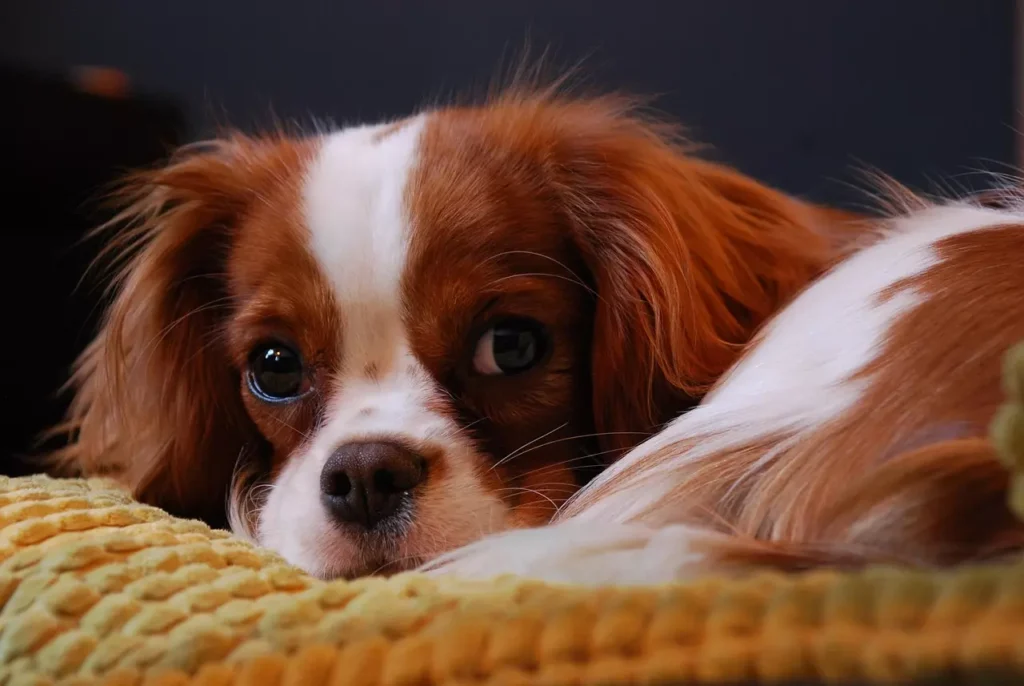
Cavalier King Charles Spaniel
Quick Facts
| Attribute | Details |
|---|---|
| Group | Toy |
| Country of origin | United Kingdom |
| Original purpose | Companion dog developed from historic toy spaniels |
| Size & weight | Small; approximately 30–33 cm tall and usually around 5.4–8.2 kg |
| Life expectancy | Typically 12 years or more, although health varies considerably |
| Coat & colours | Silky, medium-length coat in Blenheim, tricolour, ruby or black and tan |
| Exercise needs | Up to around 1 hour daily, adjusted for age, health and weather |
| Grooming needs | Moderate to high; brushing most days and regular ear, eye and dental care |
| Trainability | Generally responsive and eager to engage when trained with rewards |
| Barking tendency | Low to moderate, but varies between individual dogs |
| Suitable for | Households able to provide companionship, gentle exercise, coat care and careful health monitoring |
History & Origin
Small toy spaniels have appeared in British art and written records for centuries. They became particularly associated with the royal courts of Charles I and Charles II, where they were valued primarily as companion dogs.
During the nineteenth century, shorter-faced toy spaniels became fashionable. In the 1920s, efforts began to recreate the slightly larger, longer-muzzled spaniels shown in earlier paintings. The name “Cavalier” distinguished this revived type from the shorter-faced King Charles Spaniel, and the Royal Kennel Club recognised the Cavalier King Charles Spaniel as a separate breed in 1945.
What Were Cavalier King Charles Spaniels Bred to Do?
Cavaliers were developed mainly for companionship, although their ancestry also includes the sporting instincts of larger spaniels. Many retain an interest in birds, scents and moving objects and may enjoy retrieving games and countryside walks.
Their historic role helps explain why many Cavaliers actively seek human company. This does not mean that every dog will have the same personality or that the breed should never be left alone, but separation should be introduced gradually and positively.
Size, Weight & Appearance
The Cavalier King Charles Spaniel is a small, lightly built dog. Adults are commonly around 30–33 cm tall and usually weigh approximately 5.4–8.2 kg. Healthy individuals may fall slightly outside these figures, so body condition and overall proportion are more useful than one exact target weight.
Cavaliers have long, feathered ears, large dark eyes and a silky coat with feathering on the chest, legs and tail. The recognised colours are Blenheim, tricolour, ruby, and black and tan.
Health and sound movement should take priority over an especially short muzzle, unusually prominent eyes or any other exaggerated feature. A dog should be able to breathe, exercise and regulate body temperature comfortably.
Cavalier King Charles Spaniel Temperament
Cavaliers are often described as affectionate, gentle and people-orientated. Many enjoy meeting visitors and spending time with their household, but temperament varies according to genetics, socialisation, previous experiences and the individual dog.
The breed can be playful and active outdoors while settling comfortably at home after suitable exercise. Cavaliers often respond well to calm handling and reward-based training. Harsh methods can damage trust and are unnecessary.
They may live successfully with considerate children, but all interactions between dogs and children require adult supervision. The dog should have a quiet resting place and must be allowed to move away when it wants space.
Exercise & Mental Stimulation
A healthy adult Cavalier generally needs up to around an hour of activity each day. This can include relaxed walks, play, sniffing and short training sessions. The appropriate amount should always be adjusted for age, fitness, heart health, breathing and any joint or neurological condition.
Cavaliers may enjoy exploring, but demanding hikes or intense exercise will not suit every individual. Puppies need shorter, age-appropriate outings, while older dogs and those with medical conditions may need an exercise plan agreed with their vet.
Because Cavaliers can be vulnerable to heat-related illness, exercise should be reduced or moved to cooler parts of the day during warm weather. Provide shade and water and never continue exercising a dog that is struggling to breathe or keep pace.
Food puzzles, scent games, gentle retrieving and reward-based training provide useful mental stimulation without relying only on physical exercise.
Training & Socialisation
Cavaliers are often engaged and responsive during training, particularly when sessions are short and rewarding. Begin with practical behaviours such as recall, settling, handling and walking calmly on a lead.
Early socialisation should introduce a puppy gradually to different people, suitable dogs, household noises, traffic and other everyday experiences. The aim is calm confidence rather than forcing the puppy into as many encounters as possible.
Some Cavaliers find being alone difficult. Start with very short, manageable separations and increase them gradually. A dog showing persistent distress needs an individual plan from a qualified behaviour professional rather than punishment or repeated exposure to long absences.
Grooming & Shedding
Cavalier King Charles Spaniels shed and may lose more hair during seasonal coat changes. Their feathered coat can tangle around the ears, chest, legs and tail, so most benefit from brushing on most days.
Use gentle handling and check close to the skin rather than brushing only the surface. Our guide to brushing your dog’s coat covers the basic approach.
The hanging ears reduce airflow around the ear canal and should be checked regularly for redness, discharge, odour or discomfort. Eyes, nails and teeth also need routine attention. Seek veterinary advice when something appears abnormal instead of attempting to treat an ear or eye problem at home.
Professional grooming can help manage the coat, but a Cavalier should not routinely need to be shaved. Discuss the dog’s coat condition and practical needs with an experienced, welfare-conscious groomer.
Health & Lifespan
Cavalier King Charles Spaniels typically live for 12 years or more, but the breed has several important inherited health concerns. Not every Cavalier will develop them, and screening cannot remove every risk, but responsible breeding decisions can reduce the likelihood of passing on some conditions.
Mitral valve disease, or MVD, is a major concern in the breed and may develop earlier than in many other dogs. It affects a valve within the heart and is often first detected as a heart murmur. Dogs used for breeding should be assessed through the Royal Kennel Club heart scheme for Cavalier King Charles Spaniels.
Chiari-like malformation and syringomyelia can affect the skull, brain and spinal cord. Signs vary and may include unexplained sensitivity around the head or neck, reluctance to jump, unusual scratching or apparent discomfort. Diagnosis and treatment require veterinary assessment, and MRI scanning may form part of an investigation.
The breed may also be affected by eye disease, kneecap instability, ear problems and dental disease. Two inherited conditions with available DNA tests are curly coat/dry eye syndrome, known as CC/DE, and episodic falling, known as EF.
At the time this page was checked, the Royal Kennel Club listed the following pre-breeding measures:
- Heart screening for mitral valve disease through the Cavalier heart scheme
- DNA testing for curly coat/dry eye syndrome
- DNA testing for episodic falling
- Eye testing through the BVA/KC/ISDS Eye Scheme
A breeder should explain the results for both parents and show the original documentation or verifiable records. A statement that the parents were “vet checked” is not a substitute for the breed-specific screening above.
Feeding & Everyday Care
Feed a complete, balanced diet suitable for the dog’s age, health and activity. Package instructions provide a starting point, but portions should be adjusted according to the individual dog’s body condition and veterinary advice.
Measure food and include treats used during training in the overall daily allowance. Our guide to feeding a dog a balanced diet explains the general principles.
Fresh water should always be available. Regular weight and body-condition checks are useful because gradual changes can be difficult to notice beneath a feathered coat.
Living with Other Pets
Many Cavaliers can live successfully with other dogs, and some share a home with cats. Compatibility still depends on the individual animals, their experiences and how introductions are managed.
Introductions should be gradual, with separate resting and feeding areas available. Despite their companion-breed appearance, some Cavaliers retain an interest in chasing birds or smaller animals, so contact with small pets should be managed carefully.
Ethical Sourcing & Adoption in the UK
Cavaliers are available through general rescue organisations and specialist rehoming groups. Rescue staff should discuss the individual dog’s health, behaviour, history and ability to cope with children, other animals or time alone.
Anyone buying a puppy should meet the puppy with its mother where they were raised. Ask to see verifiable heart, eye and DNA results for both parents before agreeing to a purchase. The breeder should be willing to discuss MVD, syringomyelia, CC/DE and EF openly rather than dismissing concerns because the parents appear healthy.
Avoid choosing primarily for unusually large eyes, a very short muzzle, rare colouring or extremely small size. Health, temperament and responsible rearing are more important than fashion or appearance.
Legal Responsibilities in the UK
Cavalier King Charles Spaniels are not specifically listed as a prohibited type under current UK government guidance. General dog-control and animal-welfare laws still apply.
Owners must keep their dog under proper control and comply with applicable microchipping rules. Local restrictions may also determine where dogs must be kept on a lead.
Is a Cavalier King Charles Spaniel Right for You?
A Cavalier may suit you if:
- You want a small, sociable companion that enjoys being included in family life
- You can provide daily walks, play and gentle mental stimulation
- You have time for frequent brushing and routine ear, eye and dental care
- You are prepared for careful health monitoring and possible veterinary costs
- You will check comprehensive health results before buying a puppy
Think carefully if:
- The dog would regularly be left alone for long periods
- You want a very low-maintenance or non-shedding coat
- You cannot adapt exercise to weather and individual health
- You are unprepared for the breed’s significant inherited health risks
- A seller cannot provide verifiable breed-specific screening results
Frequently Asked Questions
How long do Cavalier King Charles Spaniels live?
They typically live for 12 years or more, although lifespan varies considerably. Genetics, heart health, other medical conditions, body condition and veterinary care can all influence longevity.
How big does a Cavalier King Charles Spaniel get?
Adults are commonly around 30–33 cm tall and usually weigh approximately 5.4–8.2 kg. Healthy weight should be assessed using body condition as well as the number on the scales.
Do Cavalier King Charles Spaniels shed?
Yes. Their medium-length coat sheds throughout the year and may shed more heavily during seasonal changes. Brushing on most days helps control loose hair and prevent tangles.
How much exercise does a Cavalier need?
A healthy adult generally needs up to around an hour daily, divided into suitable walks, play and enrichment. Exercise should be adapted for puppies, older dogs and dogs with heart, breathing, joint or neurological conditions.
Can Cavaliers live in flats?
Yes, provided they receive regular outdoor exercise, mental stimulation and companionship. Owners should also work gradually on calm behaviour and time alone.
Are Cavaliers good family dogs?
Many are affectionate family companions, but suitability depends on the individual dog and household. Children must be supervised and taught to respect the dog’s resting space and body language.
What health tests should Cavalier breeders carry out?
Current Royal Kennel Club guidance includes heart screening for MVD, DNA tests for CC/DE and EF, and eye testing through the BVA/KC/ISDS scheme. Buyers should ask for verifiable results for both parents.
How much does a Cavalier King Charles Spaniel cost in the UK?
Purchase and adoption fees vary over time. Owners should also budget for grooming, insurance, food, preventive care and potentially substantial veterinary costs associated with the breed’s recognised health risks.
Sources
- Royal Kennel Club — Cavalier King Charles Spaniel breed information and health standard
- Royal Kennel Club — Cavalier King Charles Spaniel breed standard
- Dogs Trust — Cavalier King Charles Spaniel care information
- PDSA — Cavalier King Charles Spaniel health and care information
- GOV.UK — Controlling your dog in public
Information checked: September 2026. Breed descriptions provide general guidance; every dog is an individual.