
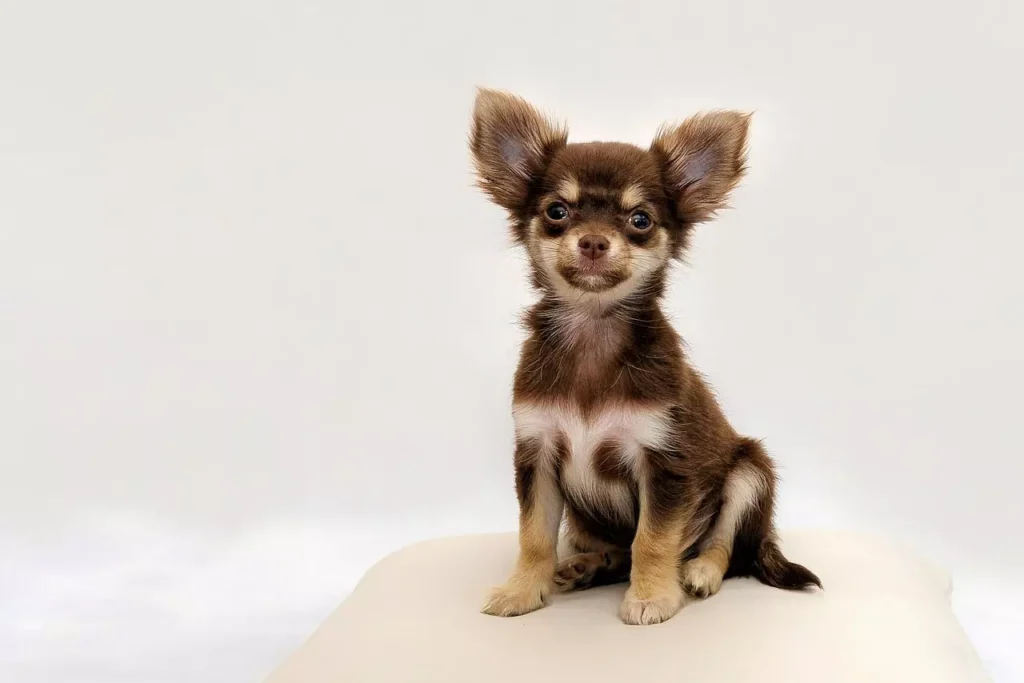
Chihuahua
The Chihuahua is a very small companion breed from Mexico, available in smooth- and long-coated varieties. Chihuahuas can be lively, affectionate and attentive, but breed alone cannot predict barking, confidence or compatibility with children and other pets. Their small size makes careful handling, dental care, suitable socialisation and responsible sourcing especially important.
Quick Facts
| Attribute | Details |
|---|---|
| Group | Toy |
| Country of origin | Mexico |
| Original purpose | Companion dog |
| Size & weight | Very small; commonly around 1–3 kg, although individual size varies |
| Life expectancy | Typically over 12 years; individual lifespan varies |
| Coat & colours | Smooth or long coat; available in many colours and combinations |
| Exercise needs | Up to around 30 minutes per day as a general guide, adjusted for age, health and fitness |
| Grooming needs | Low to moderate; usually weekly brushing, with additional care for longer coats |
| Trainability | Responsive to patient, consistent and reward-based training |
| Barking tendency | Variable; some are vocal, but behaviour depends on the individual dog and environment |
| Suitable for | Households able to provide companionship, careful handling, training and appropriate daily activity |
History & Origin
The Chihuahua takes its name from the Mexican state of Chihuahua, where small dogs of this type became known internationally during the late nineteenth century. Connections are often suggested between the modern breed and small companion dogs kept by earlier Mexican civilisations, although the Chihuahua’s precise development is not completely documented.
The breed later gained popularity in the United States and other countries before becoming established as a companion dog around the world. In the UK, the Royal Kennel Club recognises the Chihuahua in two varieties: Smooth Coat and Long Coat.
What Were Chihuahuas Bred to Do?
Unlike breeds developed primarily for herding, guarding or retrieving, the modern Chihuahua is principally a companion dog. Its small size allows it to live comfortably in many types of home, but this does not mean it should be treated as an ornament or carried everywhere.
Chihuahuas still benefit from normal opportunities to walk, sniff, explore, learn and make choices. Appropriate socialisation and training are as important for a very small dog as they are for a larger breed.
Chihuahua Size, Weight & Appearance
The Chihuahua is a very small, compact dog with a rounded head, large ears and an alert expression. Adults commonly weigh around 1–3 kg, although individual dogs can fall outside this range. Health, sound movement and suitable body condition are more important than pursuing the smallest possible size.
There are two recognised coat varieties. The Smooth Coat Chihuahua has a short, close coat, while the Long Coat variety has softer, longer hair with feathering around areas such as the ears, neck, legs and tail. Both varieties occur in many colours and combinations.
Terms such as “teacup”, “micro” or “miniature Chihuahua” do not describe separate recognised varieties. Deliberately selecting for extremely small size can increase welfare concerns, so prospective owners should prioritise health and responsible breeding over size or fashionable labels.
Chihuahua Temperament & Home Life
Chihuahuas can be affectionate, attentive and closely connected to their household. Some are confident and sociable, while others may be cautious or easily overwhelmed. Temperament is influenced by genetics, early experiences, socialisation, training and the individual dog’s environment.
The breed is sometimes described as naturally noisy, aggressive or difficult. These labels are not reliable descriptions of every Chihuahua. Barking, growling or avoidance can be influenced by fear, frustration, excitement, pain or learned behaviour and should be considered in context rather than dismissed as a feature of a small breed.
Chihuahuas can live successfully in flats because they need little physical space, but they still require exercise, enrichment, toilet access and gradual preparation for time alone. Our guide to dog breeds for apartments explains why size alone does not determine whether a dog is suitable for flat living.
Are Chihuahuas Good with Children and Other Pets?
A Chihuahua can live with children, but suitability depends on the individual dog and the household. Because the breed is physically small and vulnerable to accidental injury, children must learn to handle the dog gently and respect its resting, eating and retreat spaces. All interaction between children and dogs should be supervised.
Some Chihuahuas live comfortably with other dogs or cats, while others prefer more personal space. Introductions should be gradual and managed according to the animals involved. Extra care is needed around much larger dogs because even friendly play can accidentally injure a very small dog.
Exercise & Mental Stimulation
The Royal Kennel Club lists up to around 30 minutes of daily exercise as a general breed guide. The appropriate amount will depend on the dog’s age, health, fitness and personality. Daily activity can be divided into shorter walks, particularly for puppies, older dogs or dogs unaccustomed to exercise.
Indoor play is useful but should not completely replace safe outdoor walks. Sniffing, exploring different surfaces and calmly observing the environment provide valuable physical and mental stimulation. Very young puppies should avoid excessive jumping and repetitive high-impact activity while developing.
Chihuahuas can feel the cold, especially smooth-coated dogs and individuals with little body fat. A comfortable, well-fitting coat may be helpful in cold or wet weather, but the dog must still be able to move freely. Exercise should also be adapted during very hot weather.
Training & Socialisation
Chihuahuas should receive the same patient, reward-based training as any other dog. Useful skills include recall, calm lead walking, settling on a mat, comfortable handling and remaining relaxed around everyday sights and sounds.
Training should use rewards the individual dog values and progress in manageable stages. Punishment or forcing a frightened dog into a difficult situation can increase anxiety and defensive behaviour.
House training may require patience and frequent opportunities to reach the correct toilet area. Accidents should be cleaned calmly rather than punished. A consistent routine, supervision and rewarding the desired behaviour are more useful than assuming the dog is being deliberately difficult.
Socialisation should involve positive, controlled experiences rather than overwhelming exposure. Chihuahuas should not be expected to greet every person or dog they encounter, and their signals should not be ignored simply because they are small enough to pick up.
Do Chihuahuas Shed? Grooming & Coat Care
Both Chihuahua varieties shed. Smooth-coated dogs have short hair and may need only straightforward weekly grooming, while long-coated Chihuahuas may need additional attention to prevent knots around feathered areas.
A regular brushing routine also provides an opportunity to check the skin, paws, ears and coat for irritation, parasites or other changes. Nails must be monitored because insufficient wear can allow them to become uncomfortably long.
Dental care is particularly important in a dog with a small mouth. Owners should introduce tooth brushing gradually using dog-safe products and ask their vet to check the teeth and gums during routine examinations. Persistent bad breath, difficulty eating, facial swelling or changes in chewing require veterinary advice.
Chihuahua Health & Lifespan
Chihuahuas typically live for more than 12 years, although no lifespan can be guaranteed for an individual dog. Genetics, breeding, body condition, diet, dental health, preventive care and access to veterinary treatment can all influence long-term wellbeing.
Potential concerns in the breed can include kneecap instability, eye disease, dental problems and certain neurological, heart or respiratory conditions. This does not mean every Chihuahua will develop these problems, but owners should understand possible warning signs and arrange veterinary assessment when concerned.
The current Royal Kennel Club guidance recommends eye testing through the BVA/KC/ISDS Eye Scheme for both coat varieties. In August 2026 it also recognised breathing assessment through the Respiratory Function Grading Scheme as a new test for the breed, with formal addition to its Health Standard planned for January 2027.
Prospective puppy buyers should ask for evidence of relevant results rather than accepting statements that the parents were simply “vet checked”. They should also consider the overall health, movement, breathing, temperament and degree of exaggeration in the parent dogs.
Very small or young puppies can become unwell quickly. Weakness, collapse, breathing difficulty, repeated vomiting, seizures or an inability to eat or drink require prompt veterinary advice rather than treatment based on online home remedies.
Feeding & Everyday Care
A Chihuahua needs a complete diet appropriate for its age, health and activity. Portion sizes should be measured for the individual dog because small differences can represent a meaningful proportion of its daily intake. Our guide to feeding a dog a balanced diet explains the principles in more detail.
Fresh water should always be available. Puppies may require meals divided appropriately across the day according to veterinary or breeder guidance, while adult feeding routines should support a healthy body condition.
Equipment must fit securely without restricting breathing or movement. Collars, harnesses, coats and gaps in fencing should be checked carefully because standard items designed for larger dogs may not fit a Chihuahua safely.
Ethical Sourcing & Adoption in the UK
Chihuahuas can be found through rescue organisations as well as responsible breeders. A rescue should provide an honest assessment of the individual dog’s behaviour, health and preferred home. Owners should be prepared to allow a newly adopted dog time to settle.
A responsible breeder should allow buyers to meet the puppy with its mother where it was raised, explain socialisation and veterinary care, provide genuine documentation and discuss relevant health screening. Buyers should avoid sellers who offer several breeds continuously, refuse visits, arrange handovers in public places or promote extremely small puppies as premium products.
Colour and size should never take priority over health and temperament. The Royal Kennel Club does not register merle Chihuahuas under its current breed-specific restrictions because of health risks associated with the merle gene in this breed.
Legal Note (UK)
The Chihuahua is not named as a prohibited type under current UK government guidance. However, laws concerning identification, control and dangerous behaviour apply to dogs of every size and breed.
Owners must keep their dog under control and follow current national and local requirements. A small dog can still cause an incident, become frightened or be placed at risk, so responsible management remains essential.
Is the Chihuahua Right for You?
May suit you if:
- You want a very small companion and can provide daily attention and suitable activity
- You are prepared to use patient, reward-based training
- You can handle and supervise a physically delicate dog carefully
- You will maintain regular dental care and veterinary checks
- You can provide warmth, secure equipment and safe interactions with larger animals
Think carefully if:
- The dog would regularly be left alone for long periods
- Young children cannot yet interact gently and consistently with a small dog
- You want a dog primarily because it is advertised as “teacup” or exceptionally tiny
- You are unwilling to train because you assume a small dog does not need it
- You cannot safely manage contact with substantially larger dogs
FAQs
How long do Chihuahuas live?
The Royal Kennel Club lists the breed’s typical lifespan as over 12 years. An individual dog’s lifespan depends on factors including genetics, health, care and lifestyle.
How much exercise does a Chihuahua need?
Up to around 30 minutes per day is a general breed guide, but exercise should be adjusted for age, health, fitness and weather. Short walks, sniffing, play and training can all contribute.
Do Chihuahuas shed?
Yes. Both smooth- and long-coated Chihuahuas shed, although the amount and grooming required vary between individuals and coat types.
Do Chihuahuas bark a lot?
Some are vocal, but barking is not identical across the breed. Training, socialisation, the home environment and the reasons behind the behaviour all matter.
Are Chihuahuas good family dogs?
They can be suitable family companions, but their small size requires careful handling. Compatibility should be judged using the individual dog’s temperament and the household rather than breed alone.
Can Chihuahuas live with other dogs or cats?
Some can, following suitable assessment and gradual introductions. Interactions with larger dogs need particular supervision because of the risk of accidental injury.
Is a teacup Chihuahua a separate breed?
No. “Teacup”, “micro” and similar terms are marketing descriptions, not separate Chihuahua varieties recognised by the Royal Kennel Club. Health should take priority over exceptionally small size.
Can a Chihuahua live in a flat?
Yes, provided its exercise, training, toilet access and enrichment needs are met. Owners must also manage barking considerately and teach time alone gradually.
What health checks should Chihuahua breeders complete?
Current Royal Kennel Club guidance recommends eye testing for both coat varieties. Breathing assessment through the RFG Scheme was newly recognised in August 2026. Buyers should check the latest guidance and ask to see the parents’ actual results.
Sources
- Royal Kennel Club — Chihuahua (Smooth Coat)
- Royal Kennel Club — Chihuahua (Long Coat)
- Royal Kennel Club — Health Standard
- Dogs Trust — Chihuahua breed information and rehoming
- British Chihuahua Club — About Chihuahuas
- British Chihuahua Club — Medical information
- British Veterinary Association — Eye Scheme
- GOV.UK — Controlling your dog in public
Information checked: September 2026. Breed descriptions provide general guidance; every dog is an individual.