
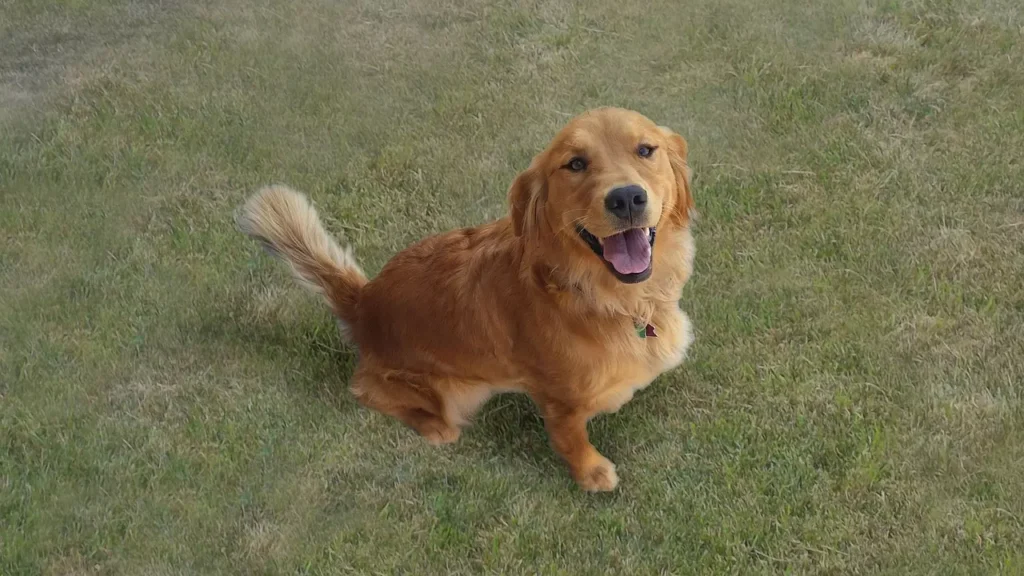
Golden Retriever
The Golden Retriever is an intelligent, sociable and active British gundog developed to retrieve game on land and from water. Golden Retrievers are widely valued as family companions, assistance dogs and working partners, but their friendly reputation should not obscure their need for substantial exercise, training, grooming and careful health screening.
Quick Facts
| Attribute | Details |
|---|---|
| Group | Gundog |
| Country of origin | Scotland, United Kingdom |
| Original purpose | Retrieving shot game on land and from water |
| Size & weight | Males: approximately 56–61 cm; females: 51–56 cm. Many adults weigh around 25–34 kg, although healthy weight varies by sex, build and ancestry |
| Life expectancy | Approximately 13.2 years was the median in a large 2024 UK study, but individual lifespan varies |
| Coat & colours | Flat or wavy double coat with feathering and a water-resistant undercoat; shades of gold or cream |
| Exercise needs | High — many healthy adults need around two hours of daily activity, adjusted for age, health and fitness |
| Grooming needs | Moderate to high — brushing several times a week and more frequently during heavy shedding |
| Trainability | High — intelligent, responsive and usually motivated by food, play and interaction |
| Barking tendency | Low to moderate, but varies between individuals |
| Suitable for | Active households able to provide companionship, training, substantial exercise and regular coat care |
History & Origin
The Golden Retriever was developed in Scotland during the nineteenth century. The breed’s early development is closely associated with Lord Tweedmouth, who aimed to produce a capable retrieving dog suited to the Scottish landscape, wet conditions and demanding fieldwork.
Early breeding combined a yellow retriever with the now-extinct Tweed Water Spaniel, with other gundog breeds contributing to later generations. The dogs became known for their retrieving ability, willingness to work and gentle handling of game. The name Golden Retriever was formally adopted during the early twentieth century.
What Were Golden Retrievers Bred to Do?
Golden Retrievers were bred to locate and retrieve shot game without damaging it. They needed sufficient stamina to work across rough ground, confidence in water, a soft mouth and the ability to cooperate closely with a handler.
These working traits remain visible today. Many Golden Retrievers enjoy carrying objects, searching, swimming and completing tasks with people. Their intelligence and cooperative nature have also made them suitable for assistance work, scent work, search and rescue, and other specialist roles.
Working and Show-Line Golden Retrievers
Golden Retrievers from working and show-focused lines can differ in build, coat and typical activity level. Working-line dogs are often lighter, more athletic and highly driven to retrieve, while show-line dogs may have a broader build and a heavier, paler coat.
These are general tendencies rather than strict categories. Temperament, health and energy can vary considerably within either line, so prospective owners should discuss the parent dogs and the breeder’s priorities rather than choosing solely by appearance.
Golden Retriever Size, Weight & Appearance
The Royal Kennel Club breed standard gives an ideal height of approximately 56–61 cm for males and 51–56 cm for females. Many adult Golden Retrievers weigh around 25–34 kg, although an appropriate weight depends on sex, height, build, muscle condition and overall health.
Golden Retrievers have a balanced, powerful appearance with a broad head and a friendly, confident expression. Their coat may be flat or wavy, with feathering on the legs, chest, underside and tail. Accepted colours range through shades of gold and cream rather than red or mahogany.
Golden Retriever Temperament & Personality
Golden Retrievers are commonly sociable, affectionate and eager to cooperate. However, breed reputation does not guarantee that every individual will be calm, confident or immediately friendly. Genetics, early experiences, socialisation, training and health all influence behaviour.
Young Golden Retrievers can be energetic, excitable and physically boisterous. They may jump up, carry household objects or use their mouths during play. Patient training, adequate rest and suitable outlets for natural retrieving behaviour help them develop into manageable adult companions.
Exercise & Mental Stimulation
Golden Retrievers are active gundogs rather than naturally sedentary pets. The Royal Kennel Club and PDSA use more than two hours of daily exercise as a general guide for healthy adults, although the correct amount depends on age, health, fitness and personality.
Exercise can include walks, controlled running, retrieving games, swimming and time to sniff and explore. Mental activities such as scent games, food puzzles and structured training are also important. Repetitive high-impact exercise should be limited in growing puppies while their joints and bones are developing.
Training & Socialisation
Golden Retrievers are usually responsive to positive, reward-based training. Their enthusiasm and food motivation can make learning enjoyable, but consistency is still necessary, especially during adolescence.
Useful everyday skills include recall, settling calmly, leaving unsuitable objects and walking nicely on the lead. Early socialisation should involve controlled, positive experiences rather than overwhelming a puppy with constant interaction.
Living with Children and Other Pets
A well-matched Golden Retriever can become an affectionate family companion, but children and dogs should always be supervised together. Young dogs may accidentally knock over smaller children, while every dog needs a quiet place where they can rest without being disturbed.
Many Golden Retrievers can live successfully with other dogs and cats following suitable introductions. Compatibility still depends on the individual animals, their previous experiences and how carefully their interactions are managed.
Golden Retriever Shedding & Grooming
Golden Retrievers shed throughout the year and commonly lose considerably more hair during seasonal coat changes. Their dense undercoat and feathering mean they are not a low-maintenance or low-shedding breed.
Brushing several times a week helps remove loose hair and identify tangles, grass seeds, skin changes or parasites. Daily attention may be necessary during heavy moulting. Our guide to brushing a dog’s coat correctly explains how regular coat care can be introduced gently.
The feathering behind the ears, around the legs and under the tail deserves particular attention. Ears should be checked after swimming, while nails, teeth and skin also require routine care. Shaving the entire double coat is generally unnecessary unless recommended for a medical reason by a veterinary professional.
Golden Retriever Health & Lifespan
A large UK study published in 2024 reported a median lifespan of approximately 13.2 years for Golden Retrievers. This is a population estimate rather than a prediction for an individual dog. Genetics, body condition, preventive care, lifestyle and access to veterinary treatment can all influence longevity.
Health concerns within the breed can include hip and elbow dysplasia, inherited eye conditions, skin problems and ichthyosis. Golden Retrievers can also develop different forms of cancer, but precise percentages quoted online vary between studies and populations and should not be treated as a prediction for every dog.
Owners should seek veterinary advice about persistent lumps, unexplained weight loss, changes in appetite, ongoing lameness or other unusual symptoms. Routine screening and attentive care can support earlier investigation, but they cannot eliminate every health risk.
Health Testing for Golden Retriever Puppies
Responsible breeders should provide verifiable health results for the parent dogs rather than relying on statements such as “vet checked” or “healthy lines.” Current Royal Kennel Club recommendations include hip and elbow assessment, eye testing with gonioscopy, and DNA testing for GR_PRA2.
Additional recommended DNA tests include GR_PRA1 and ichthyosis type A. Prospective owners should ask to see the actual results, confirm the identity of both parents and discuss how the breeder uses those results when planning a litter. Screening reduces avoidable risk but does not guarantee that a puppy will never develop a health condition.
Feeding & Weight Management
A Golden Retriever should receive a complete, balanced diet appropriate for their age, health and activity level. Feeding portions should be adjusted according to body condition rather than appetite alone, as many Golden Retrievers are highly interested in food.
Maintaining a healthy, lean body condition reduces unnecessary strain on the joints. Treats used during training should be included within the dog’s overall daily food allowance. Owners concerned about growth, weight or diet should request individual advice from their vet.
Swimming & Water Safety
Many Golden Retrievers enjoy water, but swimming ability and confidence vary. Dogs should be introduced gradually and should not be forced into deep or fast-moving water. Owners should check local conditions, supervise closely and prevent access to unsafe water affected by strong currents, steep banks or suspected pollution.
After swimming, the coat should be rinsed when necessary and dried thoroughly, with particular attention paid to the ears and dense undercoat. Persistent ear irritation, skin redness or an unpleasant smell should be assessed by a vet.
Golden Retriever vs Goldendoodle
A Golden Retriever is an established pedigree gundog with a defined breed standard. A Goldendoodle is a cross between a Golden Retriever and a Poodle, so its size, coat, shedding and temperament can be less predictable.
Neither is automatically hypoallergenic, easy to train or suitable for every family. The best choice depends on the individual dog, responsible breeding, health screening and the household’s ability to meet its exercise, grooming and companionship needs.
Ethical Sourcing & Adoption in the UK
Golden Retrievers sometimes become available through breed-specific rescues and general rehoming organisations. A reputable rescue should assess the individual dog and explain any known behavioural, medical or management needs.
Anyone buying a puppy should meet the mother with her litter in the place where the puppies were raised. The breeder should provide health-test documentation, explain their breeding decisions and ask questions about the prospective home. Avoid sellers offering immediate collection, several unrelated breeds or excuses for why the mother cannot be seen.
Legal Note (UK)
Golden Retrievers are not specifically named as a prohibited type in current UK government guidance. However, laws concerning dangerously out-of-control dogs apply to every breed and crossbreed in both public and private places.
Owners must manage their dog responsibly and follow local restrictions concerning leads, livestock, wildlife and access to public spaces. Identification, microchipping and other legal requirements should be kept up to date.
Is the Golden Retriever Right for You?
Best for:
- Active households able to provide substantial daily exercise
- Owners interested in positive training and interactive activities
- People prepared for regular grooming and considerable shedding
- Households able to provide companionship and include the dog in daily life
Think twice if:
- You want a low-shedding or low-maintenance dog
- You cannot provide sufficient physical activity and mental stimulation
- The dog would regularly be left alone for long periods
- You are unprepared for the cost of health screening, insurance and veterinary care
FAQs
How long do Golden Retrievers live?
A large 2024 UK study reported a median lifespan of approximately 13.2 years for Golden Retrievers. Individual lifespan varies according to genetics, health, body condition, lifestyle and veterinary care.
How big does a Golden Retriever get?
Adult males are ideally around 56–61 cm tall and females around 51–56 cm. Many adults weigh approximately 25–34 kg, but a healthy weight depends on the individual dog’s height, sex and build.
Do Golden Retrievers shed?
Yes. Golden Retrievers shed throughout the year and often shed heavily during seasonal coat changes. Regular brushing helps manage loose hair and prevents tangles in the feathering.
How much exercise does a Golden Retriever need?
Many healthy adults need around two hours of activity each day, divided into suitable walks, play, training and opportunities to explore. Puppies, older dogs and dogs with health conditions require individually adjusted exercise.
Are Golden Retrievers good family dogs?
They can be excellent family companions when their exercise, training and companionship needs are met. However, young Goldens can be energetic and boisterous, and children should always be supervised around dogs.
Are Golden Retrievers easy to train?
They are generally intelligent and willing to cooperate, but successful training still requires patience and consistency. Positive, reward-based methods are recommended.
Can Golden Retrievers be left alone?
They can gradually learn to spend reasonable periods alone, but they are sociable dogs and should not routinely be left for long hours. Alone-time training should be introduced slowly.
Are Golden Retrievers hypoallergenic?
No. Golden Retrievers have a shedding double coat and are not considered hypoallergenic. People with allergies should seek medical advice and spend time around adult dogs before making a decision.
Sources
- Royal Kennel Club — Golden Retriever breed standard
- Royal Kennel Club — Golden Retriever health and breed information
- Dogs Trust — Golden Retriever breed information
- PDSA — Golden Retriever care information
- Scientific Reports — Longevity of companion dog breeds in the UK
- Dogs Trust — UK dog longevity research summary
- GOV.UK — Controlling your dog in public
Information checked: September 2026. Breed descriptions provide general guidance; every dog is an individual.