
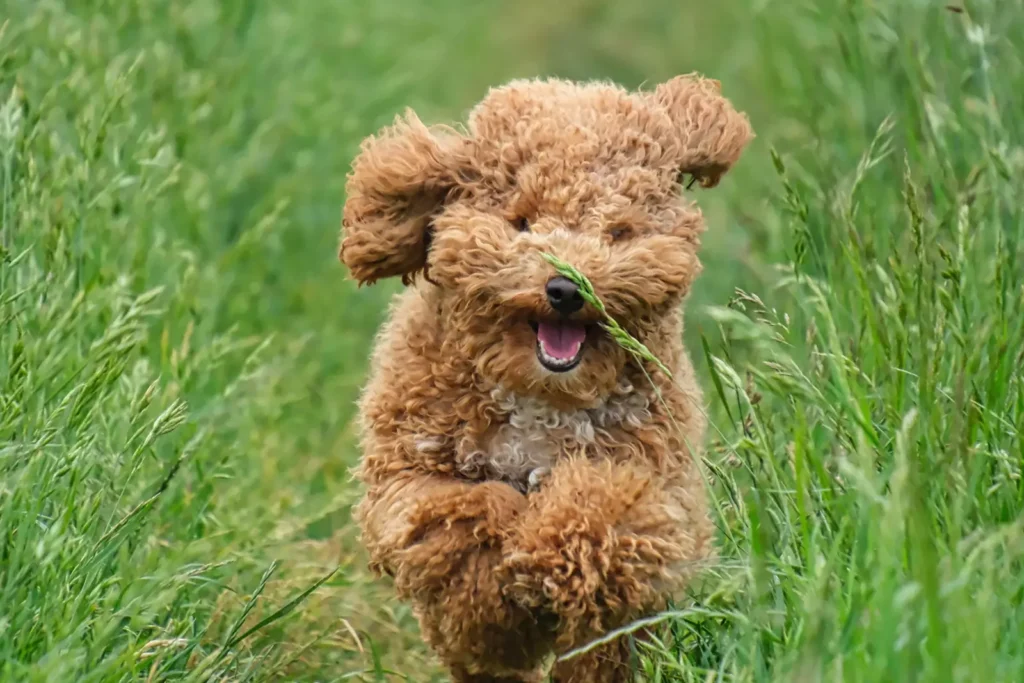
Toy Poodle
The Toy Poodle is a small, intelligent companion known for its curly, low-shedding coat and eagerness to learn. This lively breed can adapt well to flats and houses, but still needs frequent grooming, daily activity and plenty of mental stimulation.
Quick Facts
| Attribute | Details |
|---|---|
| Group | Utility |
| Country of origin | Germany |
| Original purpose | Smaller companion variety descended from water-retrieving Poodles |
| Size & weight | Small; under 28 cm at the shoulder according to the UK breed standard. No fixed official weight |
| Life expectancy | Typically over 12 years; approximately 12–15 years is a common guide |
| Coat & colours | Dense, curly and very low-shedding; accepted UK colours include apricot, black, blue, brown, cream, red, silver and white |
| Exercise needs | Up to 1 hour per day, adjusted for age, health and fitness |
| Grooming needs | High — frequent brushing and regular clipping |
| Trainability | High — intelligent and usually responsive to reward-based training |
| Barking tendency | Can be vocal; varies with the individual dog, training and environment |
| Suitable for | Households able to provide companionship, grooming, daily activity and mental stimulation |
History & Origin
The Toy Poodle is the smallest of the three Poodle varieties recognised in the UK. The breed’s ancestors originated in Germany, where larger Poodles worked as water retrievers. Their distinctive coat and traditional clipping style developed partly from this working background.
Smaller Poodles were developed over time as compact companions while retaining the intelligence, trainability and lively character associated with the breed. They also became popular as performing dogs because they could learn complex behaviours and work closely with people.
What Were Toy Poodles Bred to Do?
The Toy Poodle was developed primarily as a smaller companion version of the original working Poodle. Although Toy Poodles were not expected to retrieve water like their larger ancestors, they retained many of the same qualities, including intelligence, agility and responsiveness to training.
Modern Toy Poodles are mainly companion dogs, but many enjoy obedience, trick training, scent games and appropriately scaled canine activities. Their small size should not be mistaken for a lack of energy or need for mental stimulation.
Toy Poodle Size, Weight & Appearance
According to the Royal Kennel Club breed standard, a Toy Poodle should stand under 28 cm at the shoulder. The standard does not specify a fixed weight, and an individual dog’s healthy weight depends on height, build, age and body condition. A vet can help owners assess whether their dog is at an appropriate weight.
Toy Poodles are small, well-balanced dogs with an elegant outline, dark expressive eyes and a dense, curly coat. UK breed-standard colours include apricot, black, blue, brown, cream, red, silver and white. Health and temperament should always take priority over a particular colour or appearance.
Toy Poodle Temperament & Everyday Life
Toy Poodles are often lively, affectionate and highly attentive to their owners. They usually enjoy being involved in household activities and can form strong relationships with the people caring for them. However, temperament varies between individual dogs and is influenced by breeding, socialisation, training and previous experiences.
Their compact size can suit flats and smaller homes, provided they receive sufficient exercise, enrichment and opportunities to go outside. Interactions with children should always be supervised, particularly because a small dog may be accidentally injured by rough handling or play.
Exercise & Mental Stimulation
The Royal Kennel Club describes the Toy Poodle as needing up to one hour of exercise per day. The appropriate amount varies according to age, health and fitness and can be divided between walks, play and other suitable activities.
Mental stimulation is especially important for this intelligent breed. Short reward-based training sessions, food puzzles, scent games and opportunities to explore can help prevent boredom. Puppies and dogs with health conditions may require shorter or adapted activity based on veterinary advice.
Training & Socialisation
Toy Poodles are usually quick learners and often respond well to positive, reward-based training. Sessions should be short, consistent and appropriate for the individual dog. Useful everyday skills include recall, comfortable lead walking, settling calmly and accepting routine handling.
Early, carefully managed socialisation can help a puppy become comfortable with people, dogs, household sounds and different environments. Barking should not simply be dismissed as a breed trait. Owners should identify its cause and use suitable training, enrichment and environmental management rather than punishment.
Do Toy Poodles Shed? Grooming & Coat Care
The Toy Poodle’s coat is commonly described as non-moulting or very low-shedding. Loose hairs can remain caught within the curls rather than falling freely, so the coat still needs frequent care. No breed can be guaranteed suitable for every person with allergies, and spending time with an individual dog before making a commitment is sensible.
Frequent regular brushing and combing help prevent tangles and uncomfortable matting. Many pet Toy Poodles are professionally clipped approximately every six weeks, although the schedule depends on coat length, lifestyle and the chosen trim. Teeth, nails, ears, eyes and skin should also be checked routinely.
How Long Do Toy Poodles Live? Health & Lifespan
The Royal Kennel Club describes the Toy Poodle’s typical lifespan as over 12 years, while approximately 12–15 years is often used as a general guide. An individual dog’s lifespan depends on factors including genetics, body condition, preventive healthcare, diet and lifestyle.
Toy Poodles may be affected by certain inherited or breed-associated conditions, including progressive retinal atrophy, patellar luxation, Legg–Perthes disease and other eye problems. This does not mean that every Toy Poodle will develop these conditions.
The Royal Kennel Club currently lists DNA testing for prcd-PRA as Good Practice for breeding dogs, with eye testing and hip testing included under Best Practice. Puppy buyers should ask for verifiable results rather than relying only on a seller’s statement that the parents are healthy. Owners should arrange routine veterinary care and seek advice if they notice changes in movement, vision, appetite, behaviour or general condition.
Feeding & Care Basics
A Toy Poodle should receive a complete, balanced diet appropriate for their age, size, health and activity level. Feeding amounts should be based on the manufacturer’s guidance and the individual dog’s body condition rather than breed alone.
Fresh drinking water should always be available. Puppies may need meals divided into several appropriately sized portions, while an adult feeding routine should be selected according to the dog and the food being used. Owners who are unsure about portions, growth or body condition should consult their vet.
Ethical Sourcing & Adoption (UK)
Anyone buying a Toy Poodle puppy should choose a responsible breeder who prioritises health, temperament and early socialisation. Ask to see the puppy with their mother in the place where they were raised, review relevant health-test results and avoid sellers who refuse questions or pressure buyers into making a quick decision.
The Royal Kennel Club’s current health recommendations should be checked before choosing a breeder because testing guidance can change. Adoption may also be possible through general rescue organisations or Poodle-specific rescues, although availability varies.
Legal Note (UK)
Toy Poodles are not specifically named as a prohibited type in current UK government guidance. However, laws concerning identification, welfare and keeping dogs under control apply to all owners. Check current national guidance and any local rules affecting leads, public spaces and access before relying on breed information alone.
Is the Toy Poodle Right for You?
Best for:
- People seeking a small, intelligent and highly trainable companion
- Owners able to provide frequent grooming and coat maintenance
- Households prepared to offer daily exercise and mental stimulation
- Flat or house dwellers who can provide regular outdoor access
Think twice if:
- You want a dog requiring very little grooming or interaction
- The dog would regularly be left alone for long periods
- You cannot provide consistent training and mental enrichment
- Young children cannot interact calmly and under supervision
FAQs
Where do Toy Poodles come from?
The Poodle originated in Germany as a water-retrieving breed. Toy Poodles were later developed as smaller companion dogs while retaining the intelligence and character associated with larger Poodles.
How big does a Toy Poodle get?
The Royal Kennel Club breed standard states that a Toy Poodle should measure under 28 cm at the shoulder. Individual dogs may fall outside the ideal breed-standard measurement.
How much does a Toy Poodle weigh?
The UK breed standard does not specify a fixed weight. Healthy weight varies according to height, build, age and body condition, so owners should ask their vet for an individual assessment.
How long do Toy Poodles live?
The Royal Kennel Club gives a typical lifespan of over 12 years, while 12–15 years is often used as a general guide. Lifespan varies between individual dogs.
Do Toy Poodles shed?
Their curly coat is commonly described as non-moulting or very low-shedding, but it still requires frequent brushing, combing and clipping to prevent matting.
Are Toy Poodles hypoallergenic?
Toy Poodles may release less loose hair than many breeds, but no dog can be guaranteed not to trigger allergies. Prospective owners with allergies should seek medical advice and spend time with the individual dog before deciding.
Do Toy Poodles bark a lot?
Some Toy Poodles can be vocal, particularly when excited, bored, worried or alerting their household. Suitable exercise, enrichment and reward-based training can help owners manage barking.
Are Toy Poodles good family dogs?
They can be affectionate family companions, but suitability depends on the individual dog and household. Their small size means interactions with children should be calm and supervised.
How much exercise does a Toy Poodle need?
Up to one hour per day is a useful general guide, divided between walks, play and mental activity. Exercise should be adjusted for age, health and fitness.
Are Toy Poodles easy to train?
They are usually intelligent and responsive, but successful training still requires consistency, suitable rewards and gradual practice in different environments.
Sources
- Royal Kennel Club — Poodle (Toy) breed information and health testing
- Royal Kennel Club — Poodle (Toy) breed standard
- Purina UK — Poodle (Toy) breed guide
- GOV.UK — Controlling your dog in public
Information checked: September 2026. Breed descriptions are general guidance; every dog is an individual.