
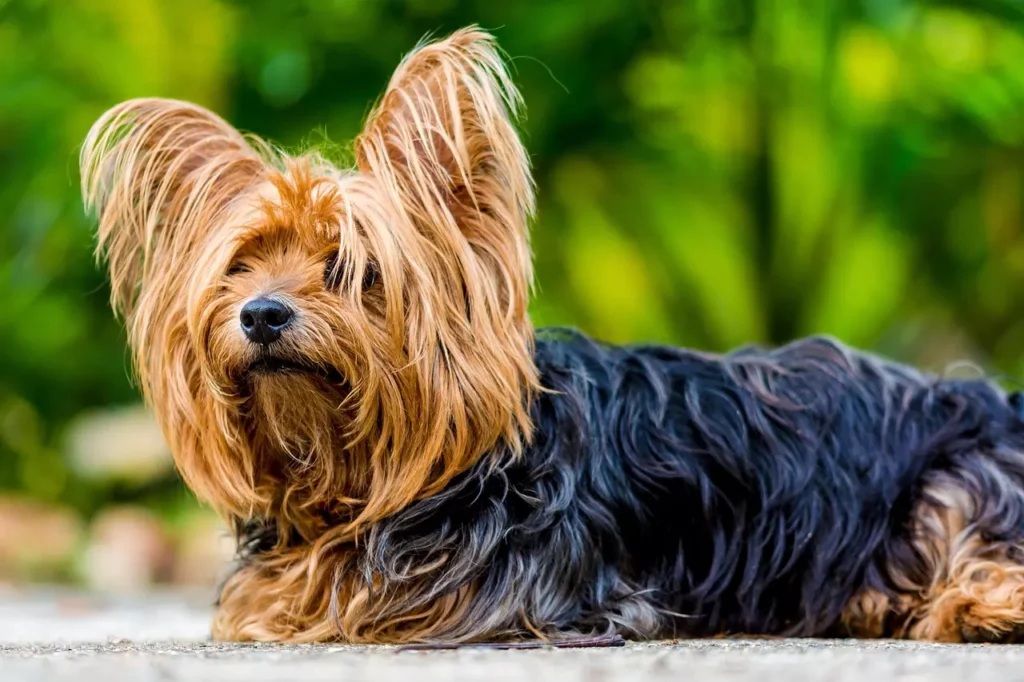
Yorkshire Terrier
The Yorkshire Terrier, often called the “Yorkie”, is a small toy terrier with a big personality. Known for its long, silky coat and feisty spirit, the Yorkshire Terrier is both elegant and bold. Despite its size, it is confident, lively, and affectionate, making it one of the UK’s most popular companion breeds.
Quick Facts
| Attribute | Details |
|---|---|
| Group | Toy |
| Country of origin | England (Yorkshire and Lancashire) |
| Original purpose | Ratting and small vermin control in mills and mines |
| Size & weight | Height 18-23 cm; Weight up to 3.2 kg |
| Life expectancy | 12-15 years |
| Coat & colours | Long, straight, silky coat; traditional steel blue and tan |
| Exercise needs | 30-60 minutes/day |
| Grooming needs | High – daily brushing and regular trims |
| Trainability | Medium – intelligent but sometimes stubborn |
| Barking tendency | High – alert and vocal |
| Suitable for | Singles, couples, older families, flat or house living |
History & Origin
The Yorkshire Terrier was developed during the 19th century in the industrial towns of Yorkshire and Lancashire. Scottish workers brought small terriers with them, which were then bred with local dogs to create the early Yorkie.
Originally used to control rats in textile mills and coal mines, their small size and determination made them excellent vermin hunters. Over time, selective breeding refined their appearance, and they transitioned from working terriers to fashionable companion dogs in Victorian England.
The Kennel Club officially recognised the breed in 1898.
What Were They Bred to Do?
Yorkshire Terriers were bred to catch rats and other vermin. Their strong prey drive, alertness, and lively nature reflect this background. Today, they retain their terrier tenacity but are primarily kept as beloved companion dogs.
Appearance & Breed Standard
Yorkies are small but sturdy, with a compact build. They have a flat skull, small V-shaped ears, and a confident carriage.
Their long, straight, silky coat is their most distinctive feature, traditionally blue and tan. When groomed long, the coat flows elegantly to the floor, though many owners choose shorter “puppy cuts” for practicality.
Temperament & Living with a Yorkshire Terrier
Yorkshire Terriers are spirited, bold, and affectionate. They are loyal to their families and often form strong bonds with one person. Despite their small size, they have a “big dog” attitude and make excellent watchdogs thanks to their alertness and vocal nature.
They can adapt well to flat living but require daily interaction and activity. They are good with older children but may be too delicate for boisterous toddlers.
Exercise & Mental Stimulation
Yorkies need 30-60 minutes of daily exercise, including walks and playtime. Despite their toy size, they enjoy being active and benefit from interactive games and training.
Mental enrichment, such as puzzle toys and obedience training, helps keep their clever minds engaged.
Training & Socialisation
Yorkshire Terriers are intelligent and quick to learn but can also be stubborn. Consistency and positive reinforcement work best. House training may take patience due to their small bladders.
Early socialisation ensures they grow into confident companions rather than overly yappy or timid dogs.
Grooming & Shedding
Yorkies require high grooming care:
Daily brushing to prevent tangles in their long coat.
Professional grooming or trimming every 6-8 weeks.
Regular cleaning of ears, eyes, and teeth is essential.
Nail trimming should be done regularly.
They are low shedders, making them suitable for allergy-sensitive households, though their grooming demands are significant.
Health & Longevity
Yorkshire Terriers typically live 12-15 years.
Health concerns can include:
Patellar luxation
Collapsed trachea
Hypoglycaemia (especially in puppies)
Dental problems (common in small breeds)
Eye issues (cataracts, retinal problems)
Responsible breeding and good dental care are essential for long-term health.
Feeding & Care Basics
Yorkies do best on a balanced diet formulated for toy breeds. Small stomachs mean they benefit from smaller, frequent meals, especially as puppies. Careful portioning helps prevent obesity, which can strain their delicate frames.
Ethical Sourcing & Adoption
Choose breeders from The Kennel Club Assured Breeders Scheme who health-test their dogs. Many rescues and charities in the UK rehome Yorkies, particularly older dogs. Always ask about health clearances and socialisation before adopting or buying.
Legal Note
Yorkshire Terriers are not subject to breed-specific restrictions in the UK.
Is the Yorkshire Terrier Right for You?
Best for:
Owners seeking a small but confident companion
People willing to commit to regular grooming
Flat or city dwellers
Think twice if:
You prefer a quiet, non-barking dog
You want a low-maintenance breed
You have very young children who may handle them too roughly
FAQs
Do Yorkshire Terriers bark a lot?
Yes, they are vocal and alert, making them good watchdogs but sometimes noisy.Are Yorkies good with children?
They are better suited to homes with older children due to their small size and delicate build.How much exercise does a Yorkie need?
Around 30-60 minutes daily, including walks and play.Do Yorkshire Terriers shed?
They shed very little, but their long coat requires high maintenance.Are Yorkies easy to train?
They are intelligent but can be stubborn. Consistent, positive training works best.How long do Yorkshire Terriers live?
Typically 12-15 years with good care.