
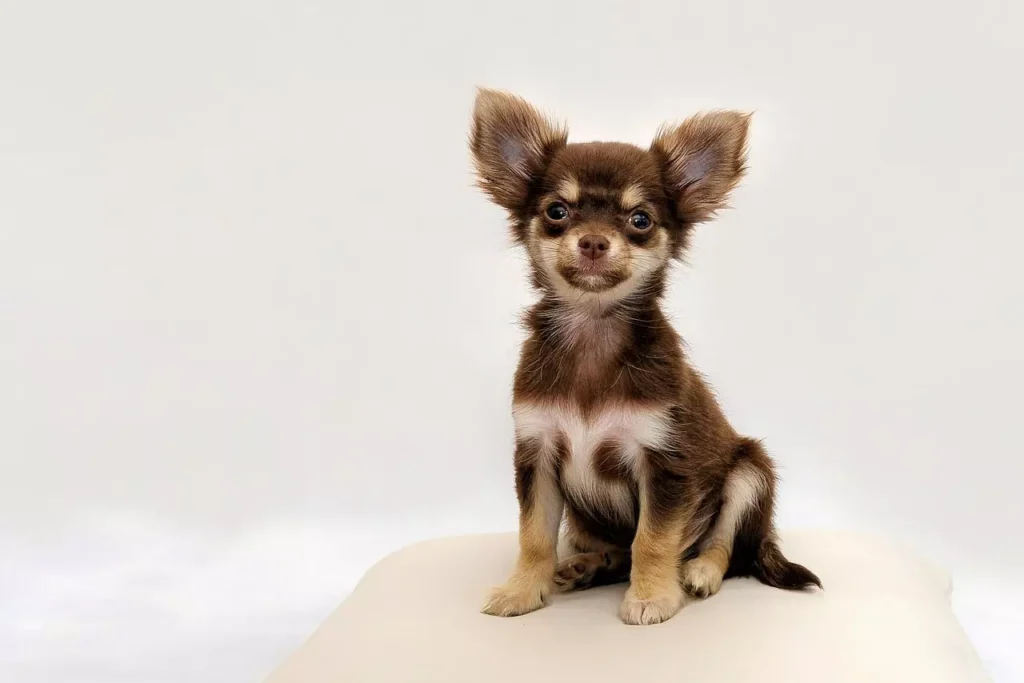
Chihuahua
The Chihuahua is the world’s smallest dog breed, famous for its bold personality, alert nature, and deep devotion to its owner. Despite its tiny size, this toy breed has a big character-confident, charming, and often feisty. Well-suited to city living and companionship, the Chihuahua thrives when treated as a true member of the family.
Quick Facts
| Attribute | Details |
|---|---|
| Group | Toy |
| Country of origin | Mexico |
| Original purpose | Companion dog, sacred dog of ancient civilisations |
| Size & weight | Height 15-23 cm; Weight 1.5-3 kg |
| Life expectancy | 12-16 years |
| Coat & colours | Two coat types: smooth or long; colours include fawn, black, white, chocolate, cream, gold, and various combinations |
| Exercise needs | 30-45 minutes/day |
| Grooming needs | Low to moderate (depending on coat type) |
| Trainability | Medium – intelligent but stubborn |
| Barking tendency | High – alert watchdogs |
| Suitable for | Singles, couples, older owners, flat dwellers |
History & Origin
The Chihuahua originates from Mexico and is believed to descend from the Techichi, a small companion dog kept by the Toltec civilisation as early as the 9th century. Later, the Aztecs regarded these dogs as sacred, linking them to spiritual rituals.
In the 19th century, small dogs resembling today’s Chihuahuas were discovered in the Mexican state of Chihuahua, from which the breed takes its name. They were imported to the United States and Europe, gaining popularity as fashionable toy dogs. Today, they are cherished worldwide as lively companions.
What Were They Bred to Do?
Unlike many breeds developed for work, the Chihuahua was bred primarily for companionship. Their alertness and tendency to bark also made them excellent watchdogs, despite their small stature.
Appearance & Breed Standard
Chihuahuas are tiny but well-proportioned. They have a rounded “apple” head, large, expressive eyes, and prominent, upright ears.
Their coats can be either:
Smooth-coated: short, glossy, and close to the body.
Long-coated: soft, with fringes on ears, legs, and tail.
Colours are highly varied, from solid fawn and black to bi-colour and tri-colour combinations. Their gait is brisk and energetic, reflecting their lively nature.
Temperament & Living with a Chihuahua
Chihuahuas are affectionate, loyal, and bold. They often form strong attachments to one person but can be friendly with the whole family when well socialised.
They are alert watchdogs, often vocal, and may be wary of strangers. While good with respectful older children, their small size makes them fragile and less suitable for households with boisterous young kids.
Exercise & Mental Stimulation
Chihuahuas need 30-45 minutes of exercise daily, often achieved with short walks and indoor play. Despite their size, they enjoy being active and benefit from interactive games and training.
Mental stimulation-such as obedience training, puzzle toys, or even agility adapted to their size-helps prevent boredom and excessive barking.
Training & Socialisation
Chihuahuas are intelligent but can be stubborn. Positive reinforcement and consistency work best. Early socialisation is essential to prevent timidity or excessive barking.
House training may take patience due to their small bladders. Teaching boundaries early helps prevent “small dog syndrome,” where they believe they rule the household.
Grooming & Shedding
Grooming needs vary by coat type:
Smooth-coated: weekly brushing is sufficient.
Long-coated: brush several times weekly to prevent tangles.
They shed lightly year-round. Regular dental care is essential, as small breeds are prone to dental disease. Nail trimming and ear cleaning should be part of the routine.
Health & Longevity
Chihuahuas typically live 12-16 years, with some reaching 18 years.
Health concerns include:
Patellar luxation
Heart disease (mitral valve disease)
Collapsed trachea
Dental problems
Hydrocephalus (rare, but more common in toy breeds)
Hypoglycaemia in puppies
Responsible breeders test for hereditary conditions. Regular veterinary care is key to their long lifespan.
Feeding & Care Basics
Chihuahuas require a high-quality, portion-controlled diet suitable for toy breeds. Puppies may need multiple small meals daily to prevent hypoglycaemia. Adults typically thrive on two small meals daily. Overfeeding should be avoided, as excess weight can strain their delicate frames.
Ethical Sourcing & Adoption
Choose breeders registered with The Kennel Club Assured Breeders Scheme. Always check for health clearances and responsible socialisation. Chihuahuas are sometimes surrendered to rescues due to their strong personalities, so adoption is also an option.
Legal Note
Chihuahuas are not restricted under UK legislation.
Is the Chihuahua Right for You?
Best for:
Singles, couples, or seniors seeking a loyal, portable companion
Flat or city dwellers
Owners who enjoy training and companionship
Think twice if:
You have very young children who may handle them roughly
You prefer a quiet, non-barking breed
You cannot commit to consistent training and dental care
FAQs
Are Chihuahuas good with children?
They are affectionate but fragile, so best suited to homes with older, gentle children.Do Chihuahuas bark a lot?
Yes, they are alert and vocal, often acting as watchdogs.How much exercise does a Chihuahua need?
Around 30-45 minutes daily, split into short walks and play.Do Chihuahuas get along with other pets?
They can, but early socialisation is important. Some may try to dominate larger dogs.What health problems are common in Chihuahuas?
Dental disease, patellar luxation, heart conditions, and hypoglycaemia in puppies.How long do Chihuahuas live?
Typically 12-16 years, sometimes longer with good care.