
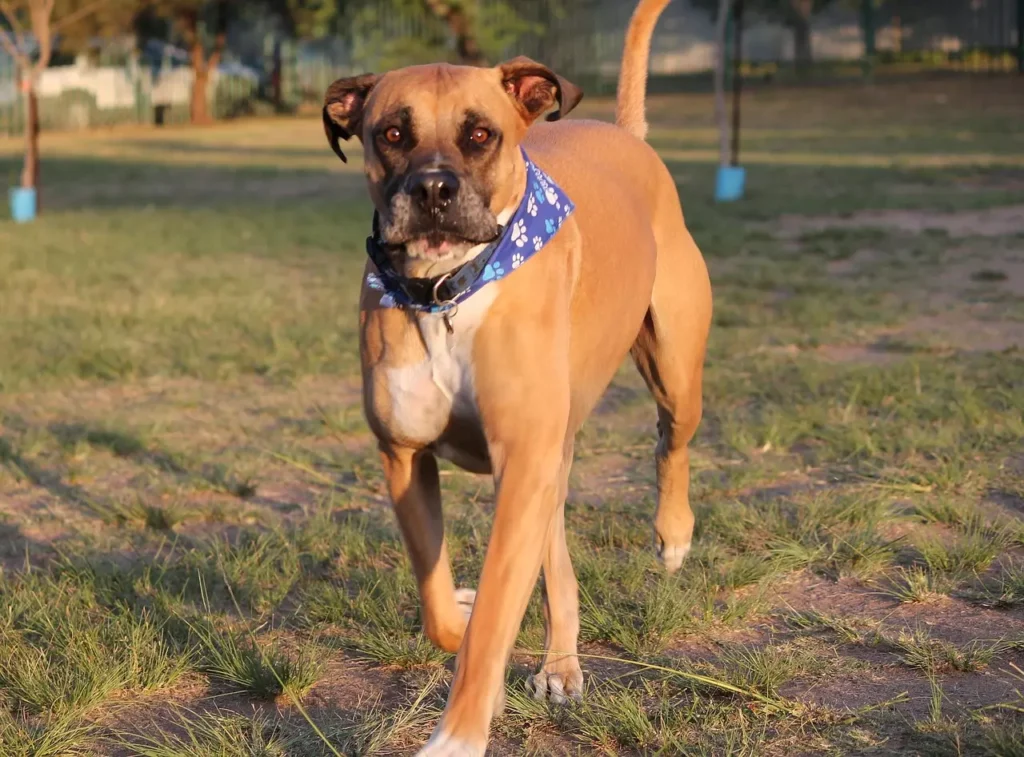
Bullmastiff
The Bullmastiff is a large British working breed originally developed to accompany gamekeepers and deter poachers. Modern Bullmastiffs can be calm and closely attached to their households, but their considerable size, guarding background and physical strength require early training and responsible management. Prospective owners should also understand the breed’s joint, breathing and gastric health risks, relatively short lifespan and substantial cost of care.
Quick Facts
| Attribute | Details |
|---|---|
| Group | Working |
| Country of origin | United Kingdom |
| Original purpose | Accompanying gamekeepers and deterring or restraining poachers |
| Size & weight | Large; males approximately 64–69 cm and 50–59 kg, females 61–66 cm and 41–50 kg |
| Life expectancy | Around 10 years as a general guide; individual lifespan varies |
| Coat & colours | Short coat in brindle, fawn or red, usually with a darker muzzle |
| Exercise needs | Around two hours daily as a general adult guide, divided into appropriate sessions and adapted to health, build and weather |
| Grooming needs | Weekly brushing plus regular skin, eye, ear, dental and nail care |
| Trainability | Requires early, consistent reward-based training that accounts for the dog’s strength |
| Barking tendency | Variable; may bark to alert or in response to unfamiliar activity |
| Suitable for | Owners with sufficient space, time, physical control and experience managing a large, powerful dog |
History & Origin
The Bullmastiff was developed in nineteenth-century Britain from Mastiff and Bulldog ancestry. Gamekeepers required a powerful dog that could accompany them at night, detect an intruder and help prevent escape until assistance arrived.
Brindle dogs were historically useful because their colouring was less conspicuous during night work. As the breed became established, fawn and red coats also became common. The Royal Kennel Club recognised the Bullmastiff as a breed in 1924.
What Were Bullmastiffs Bred to Do?
Bullmastiffs were developed to work alongside gamekeepers and deter or restrain poachers. The job required strength, confidence, awareness of unfamiliar activity and the ability to respond to a handler.
Modern dogs are primarily companions, but their guarding ancestry can still influence behaviour. Owners should not encourage suspicion or defensive displays. Calm exposure, careful management and reward-based training are safer than attempting to make a pet dog more protective.
Bullmastiff Size, Weight & Appearance
The Bullmastiff is a large, powerful dog. The UK breed standard gives a height of approximately 64–69 cm and weight of 50–59 kg for males. Females are approximately 61–66 cm and 41–50 kg.
These ranges describe the breed standard and are not targets for making a dog as heavy as possible. Excess body fat places additional strain on joints, movement, breathing and temperature regulation.
The coat is short and may be brindle, fawn or red. The muzzle is normally dark. Health, sound movement and stable temperament should take priority over unusually large size, an exaggerated head or a particular colour.
Temperament & Living with a Bullmastiff
Bullmastiffs can be calm and strongly attached to familiar people. Around visitors or unfamiliar situations, individual responses may range from relaxed to reserved or concerned. Breed descriptions cannot guarantee behaviour.
The combination of size and guarding ancestry makes early training particularly important. An adult Bullmastiff that jumps, pulls, blocks movement or reacts strongly can be difficult to manage even when the behaviour is not intended to cause harm.
Introductions to visitors should be calm and controlled. The dog should have a separate resting area and should never be expected to tolerate unwanted handling.
Children and dogs must always be supervised together. Even a friendly Bullmastiff can accidentally knock over a child because of its size and strength.
Exercise & Mental Stimulation
Royal Kennel Club and PDSA guidance suggests around two hours of daily exercise for an adult Bullmastiff. This should be treated as a planning guide rather than a demand for two hours of continuous or strenuous movement.
Divide activity into manageable walks, sniffing opportunities, calm play and short training sessions. The appropriate amount depends on age, build, joint health, breathing, fitness and temperature.
Bullmastiff puppies should not be taken on prolonged runs or repeatedly encouraged to jump while growing. Exercise should develop gradually and provide experience of different environments without placing unnecessary stress on developing joints.
Heavy exercise during hot weather is unsuitable. Choose cooler times, provide water and shade, and stop if the dog has difficulty breathing or recovering normally.
Training & Socialisation
Begin training while the dog is still small enough to manage easily. Priorities include calm lead walking, recall, settling, releasing objects, comfortable handling and polite greetings.
Our guide to teaching a dog to walk nicely on the lead provides a practical starting point. Pulling should be addressed early because managing a fully grown Bullmastiff by strength alone is neither reliable nor safe.
Use food, play or access to suitable activities as rewards. Harsh physical corrections can increase fear, frustration or defensive behaviour without teaching the dog what to do instead.
Socialisation should consist of safe, positive experiences that the puppy can manage. It does not require unrestricted contact with every person or dog. Quality and emotional response matter more than the number of encounters.
Living with Other Dogs & Pets
Some Bullmastiffs live successfully with dogs, cats or other animals, but this should not be assumed from breed alone. Temperament, early experience, previous behaviour and the way introductions are managed all matter.
Introduce animals gradually and use physical separation when direct supervision is not possible. Food, toys, resting places and attention from people may need careful management.
Smaller pets require particular caution. Apparent calmness during one interaction does not guarantee that chasing will never occur.
Bullmastiff Grooming & Shedding
Bullmastiffs shed despite their short coats. Weekly brushing is normally sufficient as a starting point, although shedding may increase at certain times.
Our guide to brushing your dog’s coat explains how to introduce grooming gradually.
Any facial wrinkles should be inspected regularly and kept clean and dry according to veterinary guidance. Persistent redness, odour, discharge, itching or soreness needs veterinary assessment rather than repeated home cleaning.
Owners should also prepare for drooling, particularly after drinking or eating. Nails, ears, teeth, paws and skin require routine examination.
Bullmastiff Health & Lifespan
Royal Kennel Club and PDSA breed guides describe the Bullmastiff’s typical lifespan as under 10 years. A large 2024 UK study estimated a median lifespan of approximately 10.2 years. These figures describe populations and cannot predict an individual dog’s lifespan.
Health concerns reported in the breed include hip and elbow dysplasia, eye and eyelid conditions, gastric dilatation-volvulus, skin disease, some cancers and brachycephalic obstructive airway syndrome.
The Royal Kennel Club currently lists hip scoring, elbow grading and eye examination through the relevant BVA/RKC schemes as Good Practice before breeding.
Prospective owners should ask to see the parents’ actual results and compare scores with current breed information. A general statement that the parents have been “health checked” is not the same as documented screening.
Breathing & Heat Tolerance
The Bullmastiff has a relatively short muzzle, and PDSA includes brachycephalic obstructive airway syndrome among the breed’s potential health concerns. Not every Bullmastiff is affected to the same extent.
Noisy breathing, poor exercise tolerance, gagging, disturbed sleep, overheating or slow recovery should not automatically be dismissed as normal for the breed. Affected dogs require veterinary assessment.
When choosing a puppy, look beyond head size. Observe how both parents breathe while resting and after gentle movement, and avoid dogs with extremely shortened muzzles, tightly narrowed nostrils or obvious breathing difficulty.
GDV or Bloat
Bullmastiffs are among the large, deep-chested dogs at risk of gastric dilatation-volvulus, commonly called GDV or bloat. This is a veterinary emergency.
Warning signs can include an enlarged or tight abdomen, repeated unsuccessful attempts to vomit, excessive drooling, restlessness, weakness or collapse. Seek emergency veterinary help immediately rather than waiting to see whether the dog improves.
Owners should ask their vet about the individual dog’s risk, feeding routine and whether preventative gastropexy is appropriate. No feeding method can guarantee that GDV will not occur.
Feeding & Weight Management
Feed a complete, balanced diet appropriate for the dog’s life stage, health and activity. Growing puppies need a diet formulated to support controlled development of large breeds.
Our guide to feeding your dog a balanced diet explains the main principles.
Measure the daily allowance and include training rewards. Adjust portions according to body condition and veterinary advice rather than trying to achieve the highest possible breed-standard weight.
Fresh water must always be available. Discuss meal size, timing and activity around food with your vet, particularly because of the breed’s GDV risk.
Ethical Sourcing & Adoption in the UK
Bullmastiffs and mastiff-type dogs may be available through general or specialist rescue organisations. A responsible rescue should explain the individual dog’s health, behaviour, handling needs and suitability for children or other animals.
If buying a puppy, see it interacting with its mother where the litter was raised. Request documented hip, elbow and eye results for both parents and ask about breathing, mobility, cancer and longevity among close relatives.
Avoid sellers who promote exceptional size, refuse visits, arrange collection in public, advertise many breeds continuously or pressure buyers into making an immediate payment.
Insurance, food, equipment and veterinary care can be considerably more expensive for a dog of this size. Check policy limits and exclusions before committing.
Legal Note (UK)
The Bullmastiff is not named as a prohibited type in current UK government guidance. However, prohibited-type assessments can consider physical characteristics rather than the breed name recorded by an owner or seller.
Owners must keep every dog under control and meet its welfare and identification requirements. Anyone concerned about the legal classification of an individual mastiff-type dog should consult current official guidance and obtain appropriate professional advice.
Is the Bullmastiff Right for You?
May suit you if:
- You understand how to manage a large, physically powerful dog
- You can provide early training and carefully controlled socialisation
- You have enough space and can afford large-breed care
- You can provide appropriate daily exercise without repetitive high-impact activity
- You are prepared for drooling, shedding and possible health costs
Think carefully if:
- You cannot physically manage a dog weighing more than 40 kg
- You want a dog for regular distance running or intense exercise
- You cannot supervise interactions with children or other animals
- The dog would regularly be left alone for long periods
- You are attracted mainly by guarding behaviour or exceptional size
FAQs
How long do Bullmastiffs live?
Around 10 years is a reasonable general guide. Royal Kennel Club and PDSA breed pages say under 10 years, while a 2024 UK study estimated a median of approximately 10.2 years.
How big does a Bullmastiff get?
Males are approximately 64–69 cm and 50–59 kg. Females are approximately 61–66 cm and 41–50 kg.
How much exercise does a Bullmastiff need?
Around two hours daily is a general adult guide from UK breed sources. Divide this into appropriate sessions and adapt it to age, joints, breathing, fitness and weather.
Are Bullmastiffs good family dogs?
Some are suitable family companions, but breed alone cannot guarantee temperament. Their size makes careful training and constant supervision around children essential.
Do Bullmastiffs have breathing problems?
Some may be affected by BOAS because of their shortened muzzle. Persistent respiratory noise, poor exercise tolerance or overheating needs veterinary assessment.
Do Bullmastiffs shed and drool?
Yes. They shed despite having short coats, and many drool noticeably, especially around food and water.
Can a Bullmastiff live in a flat?
It may be possible, but available space, stairs, access to suitable exercise and the practicalities of managing a very large dog must be considered carefully.
What health tests should Bullmastiff breeders complete?
Current Royal Kennel Club Good Practice recommendations include hip scoring, elbow grading and eye testing. Buyers should verify both parents’ results.
How much does a Bullmastiff cost in the UK?
Prices and adoption fees vary. Ongoing food, insurance, equipment and veterinary costs are more important than a temporary advertised purchase price.
Sources
- Royal Kennel Club — Bullmastiff breed information and health screening
- Royal Kennel Club — Bullmastiff breed standard
- PDSA — Bullmastiff care and breed-related health information
- British Veterinary Association — Hip Dysplasia Scheme
- British Veterinary Association — Elbow Dysplasia Scheme
- British Veterinary Association — Eye Scheme
- Dogs Trust — brachycephalic dogs and BOAS
- Scientific Reports — 2024 UK study of companion-dog longevity
- GOV.UK — controlling your dog and prohibited types
Information checked: September 2026. Breed descriptions provide general guidance; every dog is an individual.