
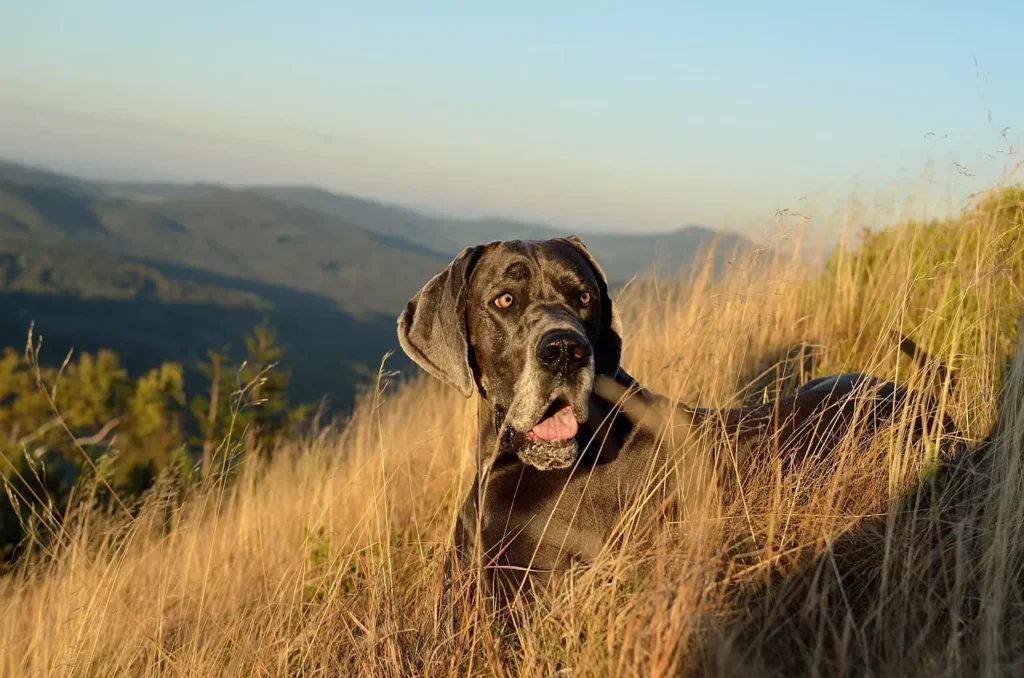
Great Dane
The Great Dane is a giant German breed originally developed from powerful hunting dogs. Modern Great Danes are often affectionate companions, but their exceptional size affects almost every part of ownership—from training, transport and feeding to housing and veterinary costs. This UK breed guide explains their temperament, adult size, exercise, health, lifespan and the practical realities prospective owners should consider.
Quick Facts
| Attribute | Details |
|---|---|
| Group | Working |
| Country of origin | Germany |
| Original purpose | Hunting large game, particularly wild boar; later guarding and companionship |
| Size & weight | Giant; the UK standard gives minimum adult heights of 76 cm for males and 71 cm for females, with minimum weights of 54 kg and 46 kg respectively |
| Life expectancy | Sources vary from under 10 to 10+ years; a large 2024 UK study reported a median of approximately 10.6 years for Great Danes |
| Coat & colours | Short, dense coat; recognised colours include black, blue, brindle, fawn, harlequin and mantle |
| Exercise needs | High for many adults; daily walks, play and enrichment should be adjusted for age, health and fitness |
| Grooming needs | Low to moderate; usually weekly brushing, with more frequent care during heavier shedding |
| Trainability | Medium to high; early reward-based training is essential because of their eventual size and strength |
| Barking tendency | Variable; some may alert readily, while others are relatively quiet |
| Suitable for | Well-prepared households with sufficient space, time, transport and finances for a giant dog |
History & Origin
Despite its English name, the Great Dane was developed in Germany. Its ancestors were large, powerful hunting dogs used in packs to pursue wild boar and other formidable game. Different mastiff-type and hunting dogs contributed to the development of the breed over time.
As hunting practices changed, Great Danes increasingly became estate guards and companions. Selective breeding gradually produced the taller, more elegant outline associated with the modern breed. The name “Great Dane” remained in English-speaking countries even though the breed is not Danish in origin.
What Were Great Danes Bred to Do?
Great Danes were originally bred for demanding hunting work that required size, speed, strength and determination. Some were also used to guard estates and property.
Modern Great Danes are primarily companions, but their history still matters. They are extremely powerful dogs, and individuals may be alert, energetic or interested in pursuing movement. Responsible ownership requires secure handling, suitable training and realistic preparation for their adult strength.
Great Dane Size, Height & Weight
The Great Dane is a giant breed. The current UK breed standard gives a minimum height for dogs over 18 months of 76 cm for males and 71 cm for females. It also lists minimum adult weights of 54 kg for males and 46 kg for females.
These figures are minimum measurements from a show standard rather than targets that every dog should exceed. Actual size varies, and breeding for progressively greater height or weight can place additional strain on health and mobility. Sound movement and healthy, functional proportions are more important than producing the largest possible dog.
Prospective owners should consider the practical effect of this size. Beds, crates, cars, stairways and veterinary equipment must accommodate a very large dog. An adult that becomes frightened, unwell or unable to walk may also be difficult to lift or transport safely.
Appearance & Coat Colours
Great Danes have a tall, muscular yet comparatively elegant build. They have a long head, broad muzzle, deep chest, strong limbs and powerful hindquarters. Their natural ears are triangular, set high and folded forwards.
The coat is short, dense and sleek. Recognised UK colours include black, blue, brindle, fawn, harlequin and mantle. Colour should never be prioritised over health, temperament and responsible breeding.
Ear cropping is a painful cosmetic procedure and is illegal in England and Wales, with comparable animal-welfare protections applying elsewhere in the UK. Naturally folded ears are normal for the breed.
Great Dane Temperament & Personality
Great Danes are often described as friendly, affectionate and devoted, but these are general breed tendencies rather than guarantees. Temperament is influenced by genetics, early development, socialisation, health, training and previous experiences.
Some are confident and outgoing, while others may be more reserved or sensitive. Because an anxious or excitable giant dog can be difficult to manage physically, careful breeding and positive early experiences are particularly important.
They often enjoy close contact with their household and may find prolonged or unprepared periods alone difficult. Owners should teach independence gradually instead of assuming the dog will automatically settle when left.
Are Great Danes Good Family Dogs?
A well-matched Great Dane can be an affectionate family companion, but suitability depends on the individual dog and household. Their size means they can accidentally knock over a child or vulnerable adult even without aggressive intent.
Interactions between children and dogs should always be supervised. Children should be taught not to disturb a dog while eating, resting or trying to move away. The dog must also have a quiet resting place where interaction is not forced.
Introductions to existing dogs or other pets should be gradual. A friendly breed description does not guarantee compatibility between particular animals.
Space, Transport & Everyday Practicalities
A Great Dane does not necessarily need a rural estate, but the home must safely accommodate a giant dog. There should be enough room for the dog to stand, turn, rest and move without repeatedly colliding with furniture or people.
Slippery floors may make movement more difficult, particularly for growing, injured or older dogs. Secure rugs or other suitable surfaces can improve grip. Food, medication, breakable objects and bins must also be kept out of reach—the dog’s head may be level with kitchen worktops.
Transport requires advance planning. The vehicle should allow safe entry, travel and exit without forcing the dog into a cramped position. Owners should also plan how they would move the dog during illness or an emergency.
Exercise & Mental Stimulation
Many adult Great Danes are energetic and need substantial daily activity. The Royal Kennel Club places the breed in its highest general exercise category, while Dogs Trust advises daily walks together with opportunities to explore, play and use energy.
A single fixed duration will not suit every Great Dane. Exercise should be adjusted for age, health, fitness, weather and personality. Several suitable outings may be more appropriate than one demanding session.
Growing puppies need particular care because their bodies are developing rapidly. Forced running, repetitive jumping and unsuitable high-impact activity should be avoided. A vet can advise on appropriate exercise for an individual puppy, especially if there are concerns about movement or growth.
Scent activities, food puzzles, searching games and short reward-based training sessions provide mental stimulation without depending entirely on strenuous physical exercise.
Training & Socialisation
Training should begin early, before the puppy reaches adult strength. Useful priorities include calm greetings, settling, waiting at doors, handling, recall and walking politely on a lead.
Positive reinforcement helps the dog understand which behaviours are rewarding. Physical punishment, intimidation and equipment designed to cause discomfort can increase fear and make a large dog more difficult to handle safely.
Socialisation should involve gradual, positive exposure to people, dogs, transport, veterinary handling and different environments. It does not mean forcing interaction. The puppy should be able to observe and learn while remaining comfortable.
Grooming & Shedding
Great Danes shed despite their short coat. Weekly brushing is usually a practical starting point, although more frequent grooming may be helpful during periods of heavier shedding. Our guide to brushing a dog’s coat correctly explains how to make the process comfortable.
Check the skin, ears, feet and nails regularly. Nails that become too long may affect movement, which is especially important in a dog carrying considerable body weight.
Dental care should begin early. Regular brushing with dog-safe toothpaste and veterinary examinations can help identify problems before they become more advanced.
Great Dane Health & Lifespan
Published lifespan figures differ according to the population and method used. The Royal Kennel Club describes the breed’s lifespan as under 10 years, while Dogs Trust uses 10+ years. A large 2024 UK study reported a median lifespan of approximately 10.6 years for Great Danes.
A separate 2026 VetCompass study found a median of 8.94 years across giant breeds collectively. These population figures cannot predict how long an individual dog will live, but they show why prospective owners should take the health and welfare effects of giant size seriously.
Health concerns discussed in connection with Great Danes include orthopaedic disease, dilated cardiomyopathy and gastric dilatation-volvulus. Not every Great Dane will develop these conditions, and symptoms should be assessed by a veterinary professional rather than diagnosed from a breed profile.
Gastric dilatation-volvulus, commonly called GDV or bloat, is an emergency. A swollen abdomen, marked distress or repeated unsuccessful attempts to vomit require immediate veterinary attention. Owners should discuss individual risk, feeding routines and possible preventative options with their vet rather than relying on unproven guarantees.
The Great Dane Breed Council also provides information about dilated cardiomyopathy, hip health and other breed-related concerns. Routine veterinary care, an appropriate body condition and prompt investigation of changes in breathing, movement, appetite or energy are important throughout life.
Feeding a Great Dane
Great Danes need a complete diet appropriate for their life stage, health and body condition. Growing puppies require food suitable for large or giant-breed development, but the exact product and amount should be discussed with a vet or qualified veterinary nutrition professional.
More food is not automatically better. Excess energy intake and inappropriate supplementation during growth may be harmful. Portions should be measured and adjusted according to the dog’s condition rather than used to push faster growth or maximum size.
Our guide to feeding a dog a balanced diet covers the basic principles. Because Great Danes are deep-chested, owners should also ask their vet for individual advice about meal size, timing, exercise around feeding and GDV risk.
Fresh water should always be available. Raised bowls should not be presented as a proven universal method of preventing bloat; equipment and feeding arrangements should reflect current veterinary advice and the individual dog’s needs.
Costs of Owning a Great Dane
The cost of keeping a Great Dane is normally higher than for a smaller dog. Food, medication, parasite treatment, beds, crates, transport equipment and veterinary procedures may all cost more because of the dog’s size.
Insurance should be researched before committing to a puppy or adult dog. Check exclusions, excesses, annual limits and whether ongoing conditions remain covered. Owners should also maintain a realistic emergency budget.
Boarding, professional dog walking and rental accommodation can be harder to arrange for a giant breed, so these practical costs should be investigated in advance.
Ethical Sourcing & Adoption in the UK
Great Danes occasionally become available through general and breed-specific rescue organisations. A responsible rescue should assess the individual dog, explain known health or behavioural needs and help determine whether the home can accommodate a giant breed safely.
Anyone buying a puppy should meet the mother, see the environment in which the litter was raised and verify health-test results rather than accepting verbal assurances. Current Royal Kennel Club best-practice guidance lists hip, elbow and eye testing, together with a DNA test for inherited myopathy of Great Danes.
Ask breeders how they select for functional size, sound movement, longevity and stable temperament. Avoid anyone advertising exceptionally large puppies as inherently healthier, better or more valuable.
Legal Note (UK)
Great Danes are not specifically listed as a prohibited breed or type in current UK government guidance. However, dog-control law applies to every dog, including incidents in the owner’s home or other private places.
The physical power of a Great Dane makes early training and secure handling especially important. Owners should also check local rules covering leads, public spaces, livestock and access.
Is the Great Dane Right for You?
May suit you if:
- You understand the space, transport and financial requirements of a giant dog
- You can provide daily exercise and mental stimulation
- You are committed to early, reward-based training
- You can accommodate a very large bed and suitable resting area
- You accept that the breed may have a shorter lifespan and significant healthcare costs
Think carefully if:
- You want a dog that is inexpensive to feed, insure and transport
- You cannot physically or safely manage a powerful adult dog
- Your accommodation cannot comfortably fit a giant breed
- The dog would regularly be left alone for extended periods
- You are choosing primarily because you want the tallest or heaviest possible dog
FAQs
How big does a Great Dane get?
The UK standard gives minimum adult heights of 76 cm for males and 71 cm for females. Minimum standard weights are 54 kg and 46 kg respectively, although individual size varies.
How long do Great Danes live?
Different sources give slightly different figures. The Royal Kennel Club describes lifespan as under 10 years, Dogs Trust uses 10+ years, and a large 2024 UK study reported a median of approximately 10.6 years.
Are Great Danes good family dogs?
A suitably bred, trained and matched Great Dane can be an affectionate companion. Their size requires careful supervision around children and vulnerable adults.
How much exercise does a Great Dane need?
Many adults need substantial daily exercise, but the appropriate amount depends on age, health, fitness and personality. Puppies require carefully managed activity while growing.
Can Great Danes live in flats?
Some individuals may manage, but the home, lift or stairs, outdoor access and communal areas must safely accommodate a giant dog. Many flats will not be practical for the breed.
Do Great Danes shed?
Yes. Their short coat sheds throughout the year and may shed more heavily at certain times. Weekly brushing is usually a sensible starting point.
Are Great Danes easy to train?
They can respond well to reward-based training, but early consistency is essential because an untrained adult is exceptionally large and powerful.
Why are they called Great Danes if they come from Germany?
The English name remained in use even though the modern breed was developed in Germany from large hunting dogs.
What health tests should Great Dane breeders complete?
Current Royal Kennel Club best-practice guidance lists hip, elbow and eye testing plus a DNA test for inherited myopathy of Great Danes. Buyers should verify the parents’ actual results.
Are Great Danes expensive to keep?
They can be. Food, insurance, medication, veterinary procedures, equipment, transport and boarding commonly cost more for a giant dog.
Sources
- Dogs Trust — Great Dane breed and care information
- Royal Kennel Club — Great Dane breed standard
- Royal Kennel Club — Great Dane overview and health testing
- Scientific Reports — Longevity of companion dog breeds in the UK
- VetCompass — Health and lifespan of giant dog breeds in the UK
- Great Dane Breed Council — Breed health information
- GOV.UK — Controlling your dog in public
- GOV.UK — Ear-cropping legislation and welfare
Information reviewed: September 2026. Breed descriptions provide general guidance; every Great Dane is an individual.