
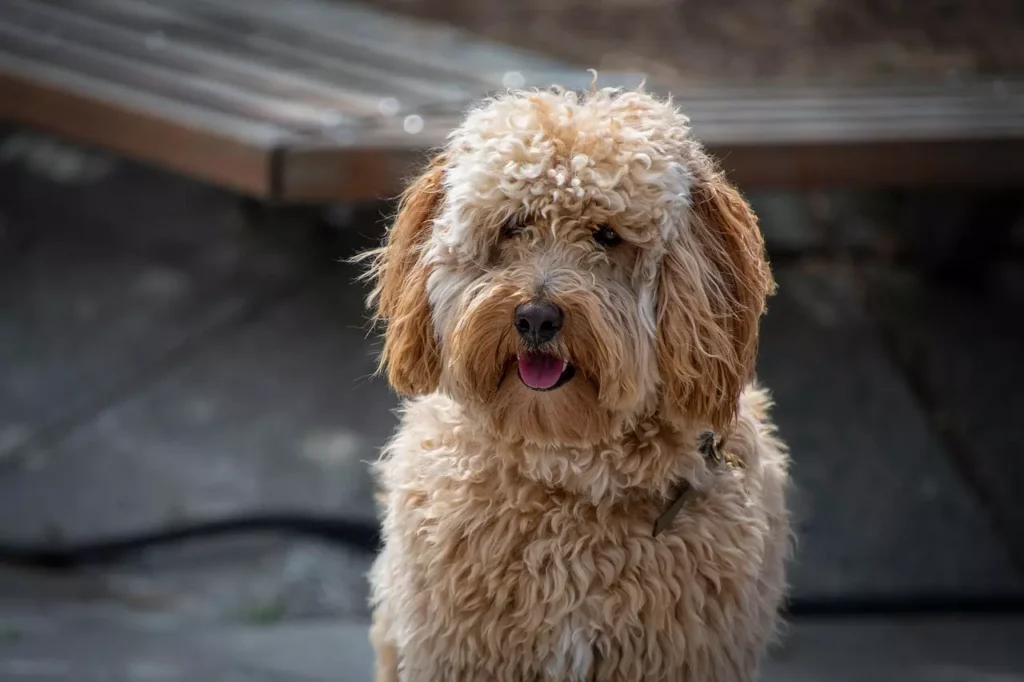
Labradoodle
The Labradoodle is a popular crossbreed created by mixing the intelligence and low-shedding coat of the Poodle with the friendly, loyal nature of the Labrador Retriever. Known for its affectionate temperament, trainability, and suitability for families, the Labradoodle has become one of the UK’s most beloved companion dogs.
Quick Facts
| Attribute | Details |
|---|---|
| Group | Crossbreed (not officially recognised by The Kennel Club) |
| Country of origin | Australia (1980s) |
| Original purpose | Companion and service dog, hypoallergenic guide dog |
| Size & weight | Miniature: 35-42 cm / 7-13 kg; Medium: 43-52 cm / 13-20 kg; Standard: 53-63 cm / 23-30+ kg |
| Life expectancy | 12-15 years |
| Coat & colours | Wavy to curly, low- to moderate-shedding; colours include cream, apricot, chocolate, black, red, parti-colour |
| Exercise needs | 1-2 hours/day |
| Grooming needs | Moderate to high – regular brushing and professional grooming |
| Trainability | High – intelligent and eager to please |
| Barking tendency | Medium |
| Suitable for | Active families, allergy-sensitive homes, first-time owners willing to commit to grooming |
History & Origin
The Labradoodle was first bred in Australia in the late 1980s. Wally Conron, of the Royal Guide Dogs Association, sought to create a hypoallergenic guide dog by crossing a Labrador Retriever with a Standard Poodle. The result was a dog that combined the Poodle’s coat qualities with the Labrador’s temperament.
The Labradoodle’s popularity spread rapidly to the UK and worldwide. Today, they are one of the best-known “designer dogs”, valued as companions, therapy dogs, and assistance dogs, though they are not formally recognised as a pedigree breed by The Kennel Club.
What Were They Bred to Do?
Labradoodles were bred to be service and companion dogs with a low-shedding coat. They combine the Labrador’s trainability and loyalty with the Poodle’s intelligence and potential allergy-friendliness. Many still serve as guide, therapy, and assistance dogs.
Appearance & Breed Standard
As a crossbreed, Labradoodles vary in appearance. Most are medium to large with an athletic build. They have expressive eyes, floppy ears, and coats that can be fleece-like (soft waves) or wool-like (tight curls).
Colours include cream, apricot, red, chocolate, black, and parti-colour. Their appearance depends heavily on the traits inherited from each parent.
Temperament & Living with a Labradoodle
Labradoodles are friendly, sociable, and affectionate. They are typically good with children and other pets, making them excellent family dogs. Their intelligence and enthusiasm make them quick learners, though they may become excitable if under-stimulated.
They thrive in active households and dislike being left alone for long periods, as this can lead to separation anxiety.
Exercise & Mental Stimulation
Labradoodles need 1-2 hours of daily exercise. Walks, swimming, running, and off-lead play are ideal. Mental enrichment—training sessions, agility, scent work, and puzzle feeders—helps satisfy their intelligent minds.
Without sufficient exercise, they may develop destructive behaviours.
Training & Socialisation
Highly trainable, Labradoodles respond well to positive reinforcement. They excel in obedience, agility, and assistance roles. Early training is important to manage their energy and prevent jumping up or pulling on the lead.
Early socialisation ensures they grow into confident, well-adjusted dogs.
Grooming & Shedding
Grooming needs vary depending on coat type:
Fleece/wavy coats: brush 3-4 times weekly to prevent matting.
Wool/curly coats: require daily brushing and regular trims.
Professional grooming every 6-8 weeks is common.
All types need regular ear cleaning, nail trimming, and dental care.
They are often low-shedding, but no dog is truly hypoallergenic.
Health & Longevity
Labradoodles typically live 12-15 years.
Potential health concerns include:
Hip and elbow dysplasia
Progressive Retinal Atrophy (PRA)
Addison’s disease (from the Poodle side)
Allergies and skin conditions
Ear infections (due to floppy ears)
Responsible breeding reduces risks. Health testing of parent dogs is essential.
Feeding & Care Basics
Labradoodles require a balanced diet suited to their size and energy. Portion control is important to prevent obesity, especially in larger Labradoodles. Adults typically thrive on two meals daily, while puppies need smaller, more frequent meals.
Ethical Sourcing & Adoption
Choose breeders who health-test Labradors and Poodles for hips, elbows, and eyes. Many Labradoodles are available from rescue centres, as their popularity sometimes leads to overbreeding. Avoid puppy farms or breeders who cannot provide health clearances.
Legal Note
Labradoodles are not subject to breed-specific restrictions in the UK.
Is the Labradoodle Right for You?
Best for:
Active families seeking a friendly, trainable companion
People interested in therapy or assistance dogs
Owners willing to commit to regular grooming
Think twice if:
You prefer a very low-maintenance coat
You cannot provide daily exercise and stimulation
You are away from home for long hours
FAQs
Are Labradoodles hypoallergenic?
Many shed less than other breeds, but no dog is completely hypoallergenic.Are Labradoodles good with children?
Yes, they are affectionate and gentle, making excellent family dogs.How much exercise does a Labradoodle need?
Around 1-2 hours daily, including both physical and mental activity.Do Labradoodles shed?
Shedding varies depending on coat type. Wavy and curly coats shed less than straight ones.What health issues are common in Labradoodles?
Hip and elbow dysplasia, PRA, ear infections, and allergies are possible.How long do Labradoodles live?
Typically 12-15 years with good care.