
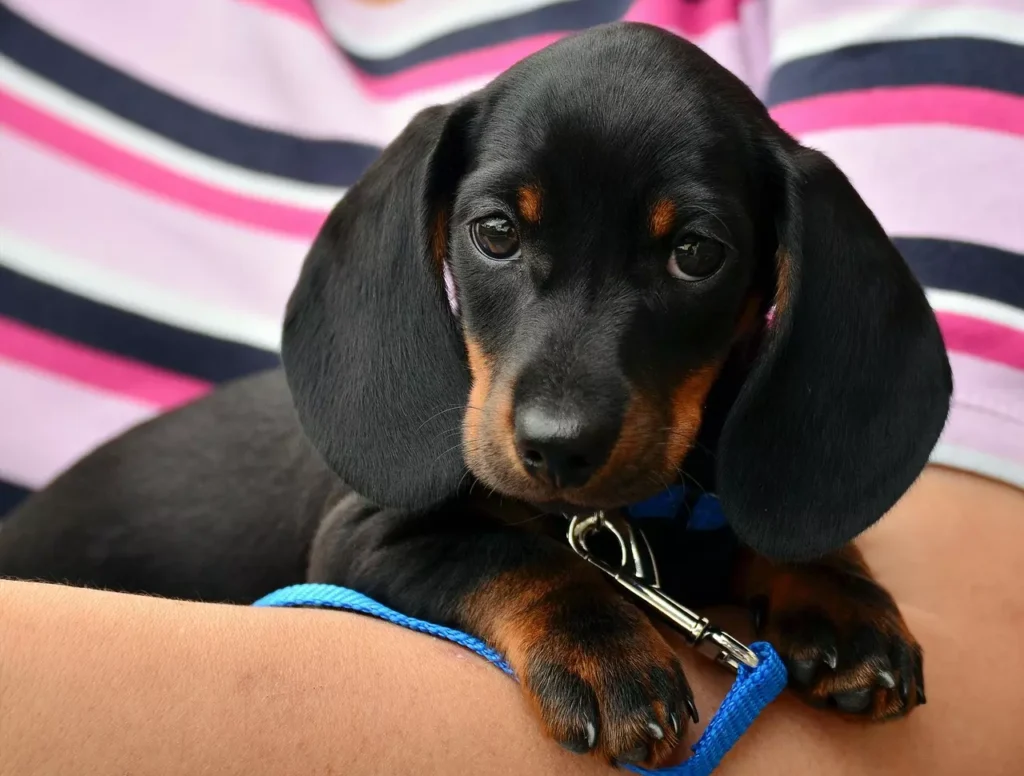
Dachshund
The Dachshund is a distinctive German hound developed for tracking and working below ground. In the UK, the breed is recognised in standard and miniature sizes, each available with smooth, long or wire-haired coats. Dachshunds can be lively, affectionate companions, but prospective owners should understand their hunting instincts, training needs and increased risk of intervertebral disc disease (IVDD).
Quick Facts
| Attribute | Details |
|---|---|
| Group | Hound |
| Country of origin | Germany |
| Original purpose | Tracking wounded game and hunting badgers, rabbits and other quarry below ground |
| Size & weight | Standard ideal weight: 9–12 kg; Miniature ideal weight: 4.5 kg, with 5 kg as the desired maximum under the UK breed standard |
| Life expectancy | Typically over 12 years; a 2024 UK study estimated median survival of Miniature Dachshunds at 14 years |
| Coat & colours | Smooth, long-haired or wire-haired; permitted colours and patterns vary slightly between coat varieties |
| Exercise needs | Up to one hour daily is a general guide, adjusted for size, age, health and fitness |
| Grooming needs | Low to moderate; long and wire-haired coats require additional care |
| Trainability | Moderate; capable of learning but may be independent and strongly motivated by scent |
| Barking tendency | Often vocal and alert, although behaviour varies between individual dogs |
| Suitable for | Homes able to provide companionship, reward-based training, controlled exercise and informed spinal care |
History & Origin
The Dachshund originated in Germany, where the breed is known as the Teckel. Its name is commonly translated from German as “badger dog”, reflecting its historical use as a scent hound capable of following quarry and working below ground.
Dachshunds were selected for courage, persistence, scenting ability and a compact but powerful build. Their short legs helped them work close to the ground, while their long muzzle, strong forequarters and deep chest supported tracking and demanding field work.
Germany recognises three sizes based on chest circumference. In the UK, the Royal Kennel Club recognises two sizes—standard and miniature—and three coat types: smooth, long-haired and wire-haired. This creates six separately registered varieties.
What Were Dachshunds Bred to Do?
Standard Dachshunds were principally developed to track wounded game and pursue quarry such as badgers. Smaller dogs were used for rabbits and other animals living in burrows. Their work required determination, an excellent sense of smell and enough independence to continue when out of sight of the handler.
These qualities remain visible in modern companions. Dachshunds may become absorbed in scents, dig enthusiastically, investigate small spaces or chase wildlife. Safe management, gradual recall training and suitable scent-based activities can give these behaviours an appropriate outlet.
Dachshund Sizes, Coats & Appearance
The Dachshund should be moderately long in proportion to height without harmful exaggeration. The current UK breed standard states that there should be sufficient ground clearance for free movement, with the distance beneath the dog measuring at least one quarter of the height at the withers.
The standard variety has an ideal weight of 9–12 kg. The Miniature Dachshund has an ideal weight of 4.5 kg, with 5 kg listed as the desired maximum. These figures describe the breed ideal rather than a weight target for every pet. Healthy weight depends on build, muscle, age and body condition.
The three coat varieties are:
- Smooth-haired: short, dense and close-fitting
- Long-haired: soft and straight, with longer feathering on the ears, legs, underside and tail
- Wire-haired: short and harsh with an undercoat, together with characteristic eyebrows and facial furnishings
Permitted colours differ slightly between coat varieties. Red, black and tan, chocolate and tan, and certain dapple patterns are among the recognised options. Health and temperament should take priority over rare or fashionable colouring.
Dachshund Temperament & Everyday Life
Dachshunds are often lively, curious and closely attached to their households. Many are confident explorers with strong opinions about their surroundings, but temperament varies between individual dogs. Genetics, coat variety, early experience, socialisation, health and training can all influence behaviour.
Their alertness and working history can make them vocal. Barking may be triggered by visitors, outdoor sounds, excitement, frustration or being left alone. Calm routines, sufficient activity and reward-based training are more useful than punishment, which can increase anxiety without addressing the cause.
Dachshunds can live successfully with children when the individual dog is suitable and interactions are supervised. Children should not pick up, drop, climb on or disturb a resting dog. The dog needs a quiet place where they can move away from attention.
Some Dachshunds live comfortably with cats or other dogs, while others may chase smaller animals. Introductions should be gradual, and compatibility should never be assumed from breed alone.
Exercise & Mental Stimulation
Dachshunds need regular exercise despite their short legs. The Royal Kennel Club uses up to one hour per day as a broad guide, while Dogs Trust recommends daily walks and opportunities to explore, play and use natural behaviours. The appropriate amount depends on size, age, health, fitness and personality.
Regular, controlled movement helps maintain muscle and healthy body condition. Exercise can include relaxed walks, sniffing, search games, food puzzles and short reward-based training sessions. Puppies, older dogs and dogs recovering from spinal problems require an individual plan developed with a vet or veterinary physiotherapy professional.
Advice about stairs and jumping is often presented too simply. A UK study of more than 2,000 Dachshunds found associations between activity and IVDD, but its observational design could not prove that particular activities caused or prevented the disease. Owners should reduce uncontrolled falls and repetitive high-impact activity while avoiding unnecessary lifelong inactivity.
Provide secure footing on slippery floors and help the dog enter or leave unusually high places when needed. Any restriction following pain, injury or surgery should come from the treating veterinary team.
Training & Socialisation
Dachshunds are capable learners, although scent and movement can compete strongly for their attention. Use short sessions, valuable rewards and achievable steps. Describing the breed as stubborn often overlooks motivation, distraction, fear or unclear training.
Useful everyday skills include recall, settling calmly, leaving found objects and walking comfortably on the lead. Practise recall initially in secure areas or with an appropriately handled long line attached to a well-fitting harness.
Socialisation should introduce puppies gradually to different people, dogs, surfaces, handling, sounds and environments. The aim is calm confidence rather than forced interaction. Allow the dog distance when needed and seek qualified behavioural support if persistent fear, guarding or separation-related behaviour develops.
Do Dachshunds Shed? Grooming & Coat Care
All Dachshund coat types shed, although the amount and required maintenance vary. Smooth-haired Dachshunds generally need a weekly brush. Long-haired coats require more frequent brushing around the ears, legs and underside, where tangles can form.
Wire-haired dogs need regular brushing and may benefit from professional hand-stripping to maintain coat texture. Clipping changes the texture and colour of a harsh coat, so owners should discuss their goals with an experienced groomer.
Gentle brushing and coat care also provide an opportunity to check the skin and body. Introduce handling positively and support the dog’s body when moving them. Nails, ears and teeth require routine attention, and sudden discomfort during grooming should be assessed by a vet.
How Long Do Dachshunds Live? Health & IVDD
Dachshunds typically live for more than 12 years. A large UK study published in 2024 estimated median survival for Miniature Dachshunds at 14 years. This population statistic does not predict the lifespan of an individual dog, and results can differ between varieties and datasets.
Intervertebral disc disease, commonly shortened to IVDD, is the most important breed-associated health concern. Degeneration of the discs between the vertebrae can lead to pain and pressure on the spinal cord. A 2015 owner survey reported veterinary-diagnosed IVDD in 15.7% of the Dachshunds studied, with substantial differences between varieties.
Signs requiring prompt veterinary attention can include spinal pain, reluctance to move, an arched posture, weakness, unsteady walking or reduced use of the legs. Sudden weakness or loss of movement should be treated as an emergency. Do not attempt to diagnose or manipulate a painful dog’s back at home.
The current Royal Kennel Club health guidance recommends X-ray-based IVDD spine screening for breeding dogs across Dachshund varieties. The scheme assesses visible disc calcifications to inform breeding decisions; it cannot guarantee that an individual dog will never develop IVDD.
Additional recommendations depend on the precise variety. Current guidance includes BVA/KC/ISDS eye screening and PRA cord1 DNA testing for Miniature Smooth-haired and Miniature Long-haired Dachshunds. Miniature Wire-haired Dachshunds additionally have a specific DNA test for Lafora disease. Prospective owners should check the current page for their chosen size and coat rather than relying on one generic checklist.
Maintaining a healthy body condition, providing appropriate regular exercise and selecting breeders who use relevant screening are sensible risk-management measures. Even carefully bred and well-managed dogs can still develop disease, so appropriate veterinary insurance or another realistic plan for treatment costs is worth considering.
Feeding & Care Basics
Feed a complete, balanced diet suitable for the dog’s life stage. Portions should reflect the particular food, the dog’s size, body condition, health and activity rather than breed alone.
Training treats form part of the daily intake and can add up quickly in a small dog. Regularly assess body condition and ask a vet or veterinary nurse for guidance if weight is changing or difficult to judge.
Fresh water should always be available. Dachshunds also need comfortable rest, dental care, preventive veterinary treatment and protection from extreme weather appropriate to their coat and health.
Ethical Sourcing & Adoption (UK)
When buying a puppy, first identify the exact size and coat variety. Ask the breeder to explain the current health recommendations for that variety and show original results for both parents. Registration alone does not demonstrate that recommended screening has been completed.
For all varieties, ask about IVDD screening, spinal problems in related dogs, body proportions and genetic diversity. For miniature smooth and long-haired dogs, check relevant eye and PRA cord1 results. For Miniature Wire-haired Dachshunds, also ask for Lafora DNA results.
The Royal Kennel Club does not register puppies produced by mating two dapple Dachshunds because this combination is associated with increased risks affecting vision and hearing. Avoid breeders who prioritise unusual colour, use phrases such as “rare colour” to justify a higher price or cannot explain the genetic implications of a mating.
A responsible breeder should allow you to meet the puppy with their mother where they were raised, answer questions openly and avoid pressuring you into an immediate payment. Adoption through a rescue organisation is another option, and rescue staff can help match an individual dog’s health, behaviour and care needs to the household.
Legal Note (UK)
Dachshunds are not listed as a prohibited type in current UK government guidance. However, laws concerning control apply to all dogs, and owners must prevent their dog from being dangerously out of control.
Local Public Spaces Protection Orders may create rules concerning leads and access. Owners should also follow current countryside guidance around livestock and wildlife. Legal requirements can change, so check official national and local guidance when necessary.
Is the Dachshund Right for You?
May suit you if:
- You want a small but active hound with an independent character
- You enjoy patient, reward-based training and scent activities
- You can maintain a healthy body condition and provide regular controlled exercise
- You are prepared for breed-relevant screening, insurance and possible spinal care
Think carefully if:
- You expect a small dog to need very little exercise or training
- You cannot safely manage barking, chasing or unreliable recall
- The dog would regularly be left alone for long periods
- You are choosing primarily for an unusual colour or exaggerated body shape
FAQs
How long do Dachshunds live?
They typically live for more than 12 years. A large 2024 UK study estimated median survival of Miniature Dachshunds at 14 years, but individual lifespan varies.
What is the difference between a standard and Miniature Dachshund?
The UK recognises two sizes. The standard has an ideal weight of 9–12 kg, while the miniature has an ideal weight of 4.5 kg and a desired maximum of 5 kg.
Do Dachshunds suffer from back problems?
They have an increased risk of intervertebral disc disease. Not every Dachshund develops IVDD, and screening, healthy body condition and appropriate activity can form part of responsible risk management.
Should Dachshunds use stairs or jump?
There is insufficient evidence for a universal rule that every healthy Dachshund must avoid all stairs and jumping. Prevent uncontrolled falls and excessive impact, provide appropriate exercise and follow individual veterinary advice.
How much exercise does a Dachshund need?
Up to one hour daily is a broad guide for many healthy adults. Size, age, health, fitness and personality should determine the actual routine.
Do Dachshunds bark a lot?
Many are naturally alert and vocal, but barking varies. Suitable activity, calm routines and reward-based training can help address unnecessary barking.
Are Dachshunds good family dogs?
They can be affectionate family companions when the individual dog suits the household. Children must be supervised and taught not to lift, drop or handle the dog roughly.
Do Dachshunds shed?
Yes. Smooth and wire-haired dogs generally need weekly brushing, while long-haired coats require more frequent attention to prevent tangles.
Are Dachshunds easy to train?
They can learn very well but may be distracted by scents and motivated to make independent decisions. Short, consistent and reward-based sessions work best.
What health tests should a Dachshund breeder use?
IVDD spine screening is a central recommendation. Other tests depend on the exact size and coat variety and may include eye screening, PRA cord1 or Lafora testing.
Sources
- Dogs Trust — Dachshund care and behaviour
- Scientific Reports — UK companion-dog longevity study
- Canine Genetics and Epidemiology — DachsLife 2015 IVDD study
- Dachshund Health UK — breed health information
- Royal Kennel Club — Standard Smooth-haired Dachshund
- Royal Kennel Club — Dachshund breed standard
- Royal Kennel Club — IVDD screening scheme
- GOV.UK — controlling your dog in public
Information checked: September 2026. Breed descriptions are general guidance; every dog is an individual. Health concerns should be discussed with a veterinary professional, and current screening recommendations should be checked for the exact Dachshund variety.