
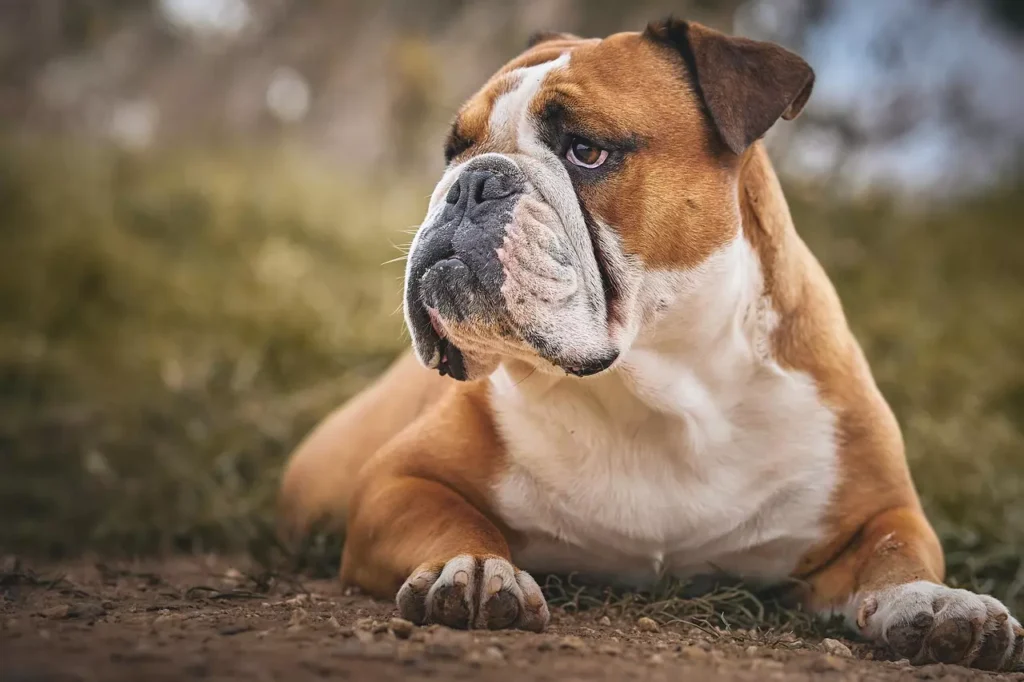
Bulldog (English Bulldog)
The Bulldog, often referred to as the English Bulldog, is one of Britain’s most iconic breeds. Known for its stocky frame, wrinkled face, and calm, affectionate nature, the Bulldog has become a beloved family companion in the UK and worldwide. Despite its strong and powerful appearance, the Bulldog is generally gentle and people-loving, making it a popular choice for households seeking a loyal, low-energy pet.
Quick Facts
| Attribute | Details |
|---|---|
| Group | Utility |
| Country of origin | United Kingdom |
| Original purpose | Bull-baiting (historically); later companion |
| Size & weight | Males: 31-40 cm, 23-25 kg (12-16 in, 50-55 lb); Females: slightly smaller, 18-23 kg (40-50 lb) |
| Life expectancy | 8-10 years |
| Coat & colours | Short, smooth coat; various colours including brindle, fawn, red, white, or pied |
| Exercise needs | 30-60 minutes per day |
| Grooming needs | Low – weekly brushing, wrinkle cleaning, and routine care |
| Trainability | Medium – intelligent but can be stubborn |
| Barking tendency | Low |
| Suitable for | Families, city or suburban living, owners seeking a calm and affectionate dog |
History & Origin
The Bulldog originated in England as early as the 13th century, bred for the brutal sport of bull-baiting. When blood sports were banned in the 19th century, breeders sought to preserve the Bulldog’s distinct look and character while focusing on gentler temperaments. The result was the affectionate companion dog we know today. The breed became a national symbol of British resilience, famously associated with Winston Churchill and wartime spirit.
What Were They Bred to Do?
Originally, Bulldogs were bred to control bulls in the ring, which explains their muscular build and strong jaws. Though no longer used for such purposes, their bravery and determination have carried through to modern Bulldogs, often expressed as quiet persistence and loyalty. Today, they serve purely as companions, valued for their affectionate, calm demeanour and strong bond with people.
Appearance & Breed Standard
The Bulldog is a medium-sized, muscular dog with a distinctive short, broad muzzle and characteristic skin folds on the face and neck. Their head is large and square, with a pronounced undershot jaw. The eyes are dark, round, and set low and wide apart. Bulldogs have a smooth, short coat in a variety of colours, and their overall appearance is one of strength and solidity. Their gait is deliberate and rolling, a hallmark of the breed.
Temperament & Living with a Bulldog
Bulldogs are renowned for their placid and affectionate temperament. They are often described as loyal, dependable, and loving with their families. They usually get on well with children and can live happily in multi-pet households if introduced properly. Their laid-back personality makes them well-suited to city or suburban homes, including flats, provided they get enough exercise. However, they can be stubborn, so owners need patience and consistency when it comes to training.
Exercise & Mental Stimulation
Bulldogs need regular but moderate exercise. Around 30 to 60 minutes daily is usually sufficient, divided into gentle walks and short play sessions. They are not built for endurance or extreme heat due to their short muzzle, so exercise should be tailored to their comfort, especially in warm weather. Mental stimulation, such as interactive toys, training games, and problem-solving activities, helps keep them engaged without requiring excessive physical exertion.
Training & Socialisation
While intelligent, Bulldogs can be strong-willed and easily bored. Training works best with positive reinforcement, using food and praise as motivation. Early socialisation is important to build confidence and reduce any stubborn tendencies. Consistency is key, as they may test boundaries. Short, engaging training sessions will help maintain their focus and prevent resistance.
Grooming & Shedding
Bulldogs are low-maintenance in terms of coat care. Weekly brushing removes loose hair and keeps the coat healthy. However, their facial wrinkles require daily cleaning to prevent irritation or infection. Regular ear checks, nail trimming, and dental care are also essential. Bulldogs shed moderately throughout the year, though their short hairs can cling to clothing and furniture.
Health & Longevity
The Bulldog is prone to several health concerns, many linked to its brachycephalic (short-nosed) structure. Common issues include breathing difficulties, overheating, skin problems in the folds, joint conditions, and heart concerns. Their average lifespan is 8 to 10 years. UK breeders are encouraged to participate in health schemes and select for less exaggerated features. Owners should be mindful of weight management, as obesity can worsen breathing and joint issues. Regular vet checks and preventive care are vital.
Feeding & Care Basics
Bulldogs should be fed a balanced, portion-controlled diet appropriate for their size and relatively low activity level. They are prone to weight gain, so measured meals are essential. Adults typically do well on two meals per day. Puppies require smaller, more frequent meals to support steady growth. Access to fresh water at all times is crucial, especially in warmer months.
Ethical Sourcing & Adoption (UK)
Responsible breeders registered with the Kennel Club Assured Breeders Scheme should be the first choice for anyone buying a Bulldog puppy. They will conduct health tests and provide guidance on care. Bulldogs can also be found in breed-specific rescues and general animal charities across the UK. Avoid unverified sellers or breeders unwilling to show health documentation or living conditions.
Legal Note (UK)
The Bulldog is not restricted under UK law. Owners, however, must comply with general dog control legislation, ensuring their pet is safe and under control in public.
Is the Bulldog Right for You?
Best for:
Families or individuals seeking a calm, affectionate companion
Owners in towns or cities looking for a dog suited to smaller living spaces
People with time for regular but moderate exercise and grooming care
Think twice if:
You want a high-energy, athletic dog
You cannot commit to routine health care and potential vet bills
You live in a hot climate or want a dog for long-distance running
FAQs
How much does a Bulldog cost in the UK?
A Bulldog puppy from a reputable breeder usually costs £1,500-£3,000. Adoption fees are lower, with rescues often covering initial vet checks.
Are Bulldogs good with children?
Yes, they are typically gentle and patient, making them suitable for family life, though supervision is always recommended.
Do Bulldogs shed much?
They shed moderately year-round, but their short coat is easy to manage with weekly brushing.
How much exercise does a Bulldog need?
They require 30-60 minutes daily, with gentle walks and play. Care should be taken to avoid overexertion, especially in warm weather.
What health problems are common in Bulldogs?
Breathing difficulties, skin fold infections, joint issues, and heart conditions are relatively common. Choosing a health-tested puppy reduces risks.
Can Bulldogs live in flats?
Yes, Bulldogs adapt well to flat living as long as they get daily walks and companionship.