
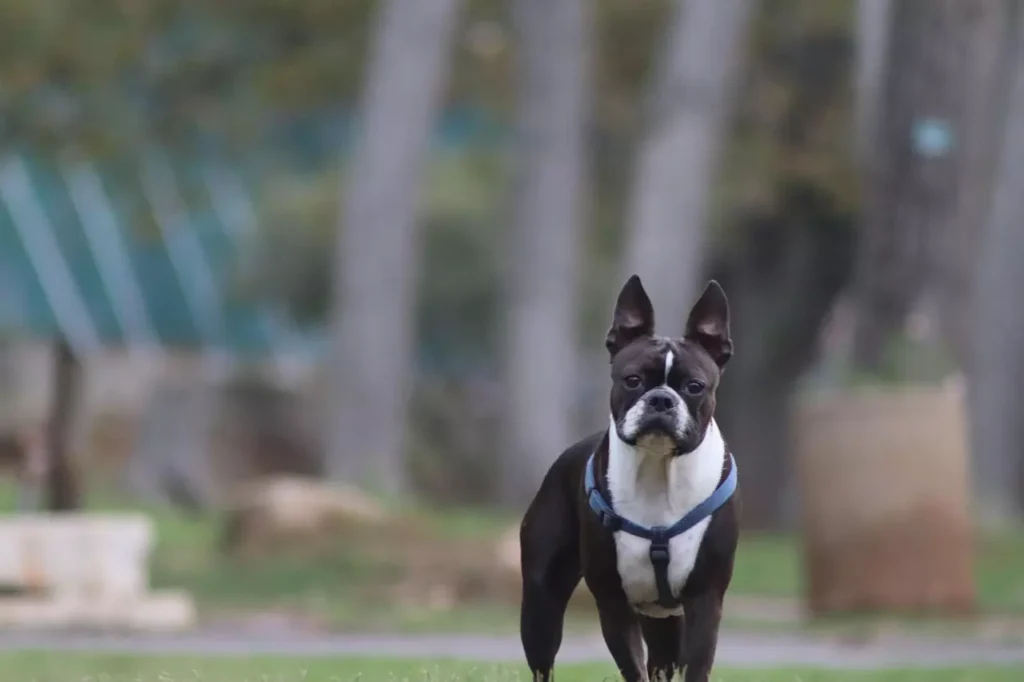
Boston Terrier
The Boston Terrier – often called the “American Gentleman” – is a small, lively companion dog with a tuxedo-like coat and a big personality. Bred in the United States, the Boston is known for being affectionate, intelligent, and adaptable – making it an increasingly popular choice for UK families. With their cheerful nature and moderate exercise needs – they fit well into city and suburban households alike.
Quick Facts
| Attribute | Details |
|---|---|
| Group | Utility |
| Country of origin | United States |
| Original purpose | Companion dog – descended from bulldog-terrier crosses |
| Size & weight | Height: 25-38 cm (10-15 in) – Weight: 6-11 kg (13-24 lb) |
| Life expectancy | 11-15 years |
| Coat & colours | Short, smooth coat – black & white, brindle & white, or seal & white with tuxedo markings |
| Exercise needs | 30-60 minutes per day |
| Grooming needs | Low – weekly brushing |
| Trainability | High – intelligent and eager to please |
| Barking tendency | Low to Medium |
| Suitable for | Families, city dwellers, first-time owners |
History & Origin
The Boston Terrier was developed in the late 19th century in Boston, Massachusetts. It originated from crosses between English Bulldogs and various terriers – producing a small, compact dog with a gentle nature. While its earliest ancestors were used in pit fighting – careful selective breeding quickly transformed the Boston into a friendly and refined companion. By 1893 it was recognised by the American Kennel Club and has since gained international popularity – including here in the UK.
What Were They Bred to Do?
Though descended from dogs used in blood sports – the Boston Terrier was intentionally bred away from aggression. Instead, breeders focused on developing a charming, people-friendly companion. Their small size, adaptability, and cheerful nature made them ideal city dogs – equally at home in apartments or houses. Today, their role remains the same – affectionate family dogs and loyal companions.
Appearance & Breed Standard
The Boston Terrier is compact and well-proportioned – sturdy without being heavy. The head is square with a short muzzle, and large round eyes give them an expressive, alert look. Ears are small and stand erect. The coat is short and smooth, always with distinctive white markings on the face, chest, and legs that resemble a tuxedo. Accepted colours are black and white, brindle and white, or seal and white. Movement is brisk and confident – reflecting their spirited character.
Temperament & Living with a Boston Terrier
Boston Terriers are affectionate, intelligent, and full of character. They are friendly with people and usually get on well with children and other pets. Their playful and adaptable nature makes them excellent family dogs. They can be a little stubborn at times – but their eagerness to please usually outweighs this. While generally quiet, they may bark to alert their owners – making them good little watchdogs.
Exercise & Mental Stimulation
Bostons need around 30-60 minutes of exercise each day. They enjoy walks, games of fetch, and indoor play. While energetic, they are not as demanding as some other breeds – making them suitable for less active households as long as they receive daily activity. They also appreciate mental stimulation through training games and puzzles. Due to their short muzzle, care should be taken in hot weather – as they can overheat more quickly than longer-nosed breeds.
Training & Socialisation
Boston Terriers are intelligent and generally eager to learn. They respond best to positive reinforcement – using praise, treats, and play as rewards. Early training helps establish good manners and prevents stubborn habits. Socialisation from puppyhood ensures they grow into confident, well-rounded dogs. Their sensitive nature means harsh training methods should be avoided.
Grooming & Shedding
With their short, smooth coat, Boston Terriers are easy to maintain. Weekly brushing helps remove loose hair and keeps the coat shiny. They shed lightly year-round. Regular cleaning of their face folds and eyes is important, as they can be prone to staining. Routine nail trimming, ear cleaning, and dental care should also be part of grooming.
Health & Longevity
Boston Terriers live on average 11-15 years. They are generally healthy but, like many brachycephalic breeds, can experience breathing difficulties. Other potential issues include eye problems, allergies, and patellar luxation. Responsible breeders screen for health concerns and avoid extreme features. Regular vet care, weight management, and avoiding overexertion in heat support long-term health.
Feeding & Care Basics
A balanced diet suitable for small companion dogs is recommended. Bostons thrive on two measured meals per day. Portion control is important – as they can gain weight if overfed. Access to fresh water should always be available.
Ethical Sourcing & Adoption (UK)
When looking for a Boston Terrier puppy, buyers should choose reputable breeders who follow health testing and welfare standards. The Kennel Club Assured Breeders Scheme is a good place to start. Rescue organisations and charities also rehome Boston Terriers across the UK. Avoid puppy farms or sellers unwilling to provide health certificates or allow you to see puppies with their mother.
Legal Note (UK)
The Boston Terrier is not subject to breed-specific legislation in the UK. Owners must comply with general dog laws covering control and welfare.
Is the Boston Terrier Right for You?
Best for:
Families looking for an affectionate, playful companion
Owners living in flats or houses in towns and cities
First-time dog owners prepared to train and socialise
Think twice if:
You want a dog that can tolerate very hot weather or long, intense exercise
You prefer a completely silent breed
You cannot commit to daily companionship – Bostons dislike being left alone
FAQs
How much does a Boston Terrier cost in the UK?
Puppies usually cost £1,500-£2,500 depending on breeder reputation. Rescue adoption fees are lower.
Do Boston Terriers shed much?
They shed lightly year-round – weekly brushing helps keep it under control.
Are Bostons good with children?
Yes – they are playful and affectionate, making them good family pets.
How much exercise do they need?
About 30-60 minutes per day – split between walks, games, and indoor play.
What health problems affect Boston Terriers?
Breathing difficulties, eye problems, allergies, and patellar luxation are the main concerns.
Can they live in flats?
Yes – they are well-suited to city living as long as they get daily exercise.