
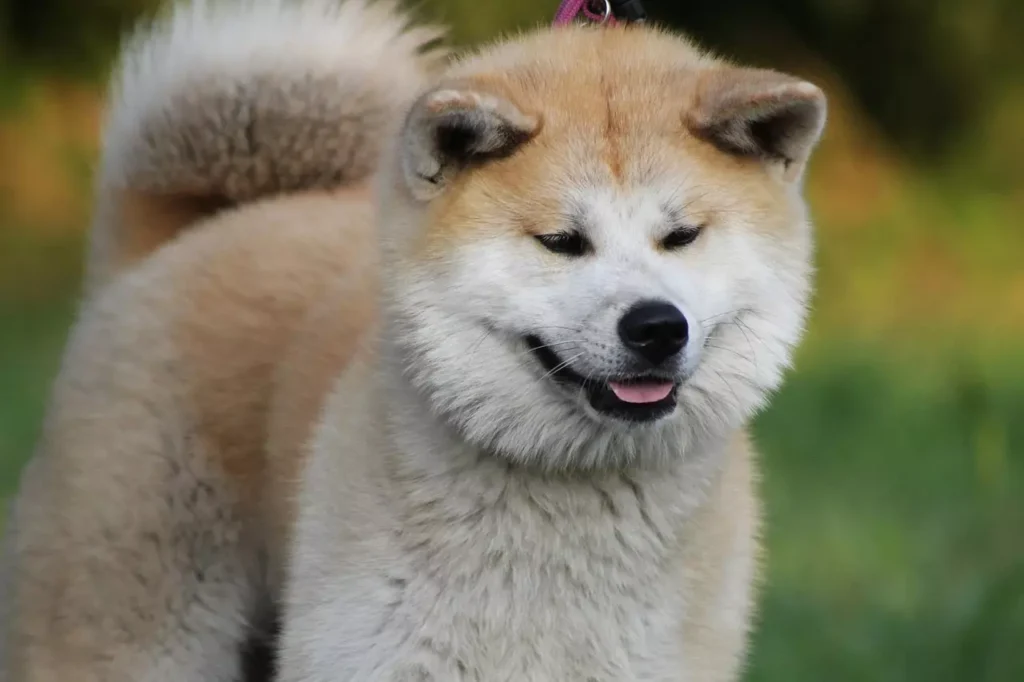
Akita
The Akita is a powerful, dignified, and loyal large breed from Japan, admired for its striking appearance and unwavering devotion to its family. Known as a courageous guardian with a calm and reserved temperament, the Akita is best suited to experienced owners who understand its independent nature and strong protective instincts.
Quick Facts
| Attribute | Details |
|---|---|
| Group | Utility |
| Country of origin | Japan |
| Original purpose | Hunting large game, guarding |
| Size & weight | Height: Males 66-71 cm, Females 61-66 cm; Weight: 32-59 kg |
| Life expectancy | 10-13 years |
| Coat & colours | Thick double coat; colours include red, brindle, white, sesame, and pinto |
| Exercise needs | 1-1.5 hours/day |
| Grooming needs | Moderate to high – regular brushing, heavy shedding twice a year |
| Trainability | Medium – intelligent but independent |
| Barking tendency | Low |
| Suitable for | Experienced owners, large homes with gardens, active singles or families with older children |
History & Origin
The Akita originates from Japan’s northern Akita Prefecture. It was developed in the 17th century for hunting large game such as elk, wild boar, and even bears. Over time, the breed was also used as a guardian of homes and samurai households.
The Akita gained cultural significance in Japan, symbolising loyalty, protection, and good health. The famous Akita “Hachikō”, who waited daily at a train station for his deceased owner for nearly 10 years, cemented the breed’s reputation for devotion.
The Kennel Club in the UK recognises the Japanese Akita Inu and the American Akita as separate varieties, though both share the same heritage.
What Were They Bred to Do?
Akitas were bred to hunt large game and guard property and people. Their courage, strength, and independence reflect this background. Today, they are primarily kept as loyal companions and protectors, though their guarding instincts remain strong.
Appearance & Breed Standard
The Akita is a large, powerful dog with a broad head, erect triangular ears, and a curled tail carried over the back. Their thick double coat is weather-resistant, suited to cold climates.
Coat colours vary and include red, brindle, sesame, white, and pinto. Their appearance is both imposing and noble, with a balanced, athletic build.
Temperament & Living with an Akita
Akitas are dignified, loyal, and protective. They are deeply devoted to their families and often reserved or aloof with strangers. Despite their size and strength, they are usually quiet, with a calm presence indoors.
They can be good with children when raised together but may not tolerate rough play. Due to strong guarding instincts and same-sex aggression, they are best suited to single-dog households or homes with careful introductions.
Exercise & Mental Stimulation
Akitas need 1-1.5 hours of daily exercise. They enjoy long walks, playtime, and secure off-lead activities. Mental stimulation, such as training sessions and puzzle toys, is equally important to prevent boredom and frustration.
They are not endurance runners but appreciate steady, moderate activity.
Training & Socialisation
Akitas are intelligent but independent, sometimes described as strong-willed. Training requires consistency, patience, and firm but kind leadership. Positive reinforcement works best, but they are not as eager to please as some breeds.
Early socialisation is essential to manage guarding instincts and ensure they are confident around people and other dogs. Recall training can be challenging, so secure areas are recommended.
Grooming & Shedding
Akitas have a dense double coat that sheds heavily twice a year (known as “blowing coat”). During this period, daily brushing is needed.
Routine care includes:
Weekly brushing outside shedding seasons
Regular ear cleaning, nail trimming, and dental care
Occasional baths to keep the coat fresh
They are generally clean dogs with low natural odour.
Health & Longevity
Akitas typically live 10-13 years.
Potential health issues include:
Hip dysplasia
Progressive Retinal Atrophy (PRA)
Autoimmune disorders (e.g., VKH syndrome)
Hypothyroidism
Gastric dilatation-volvulus (bloat)
Responsible breeders screen for hips, eyes, and thyroid health.
Feeding & Care Basics
Akitas require a balanced, high-quality diet suited to large, active dogs. Portion control is important to prevent obesity, as excess weight increases the risk of joint problems. Adults usually do best with two meals daily rather than one large meal, helping to reduce bloat risk.
Ethical Sourcing & Adoption
Choose breeders who are part of The Kennel Club Assured Breeders Scheme and carry out health tests. Akita rescues and breed-specific charities in the UK often rehome both Japanese and American Akitas.
Avoid puppy farms or breeders who cannot provide health certificates and early socialisation.
Legal Note
The Akita is not banned in the UK, though its size, guarding instincts, and strength require responsible ownership. Some local authorities may have restrictions on large breeds in public housing.
Is the Akita Right for You?
Best for:
Experienced dog owners who enjoy a loyal guardian
Families with older children
Homes with large gardens or access to secure outdoor space
Think twice if:
You are a first-time owner
You want a dog that is highly sociable with strangers and other dogs
You cannot commit to consistent training and strong leadership
FAQs
Are Akitas good family pets?
Yes, with experienced owners. They are loyal and protective, best with families who understand large breeds.Do Akitas bark a lot?
No, they are usually quiet dogs, barking only when necessary.How much exercise does an Akita need?
Around 1-1.5 hours daily, including walks and moderate play.Are Akitas easy to train?
They are intelligent but independent, requiring firm, consistent training.Do Akitas get along with other dogs?
Often not, especially with same-sex dogs. Careful introductions are required.How long do Akitas live?
Typically 10-13 years with good care.