
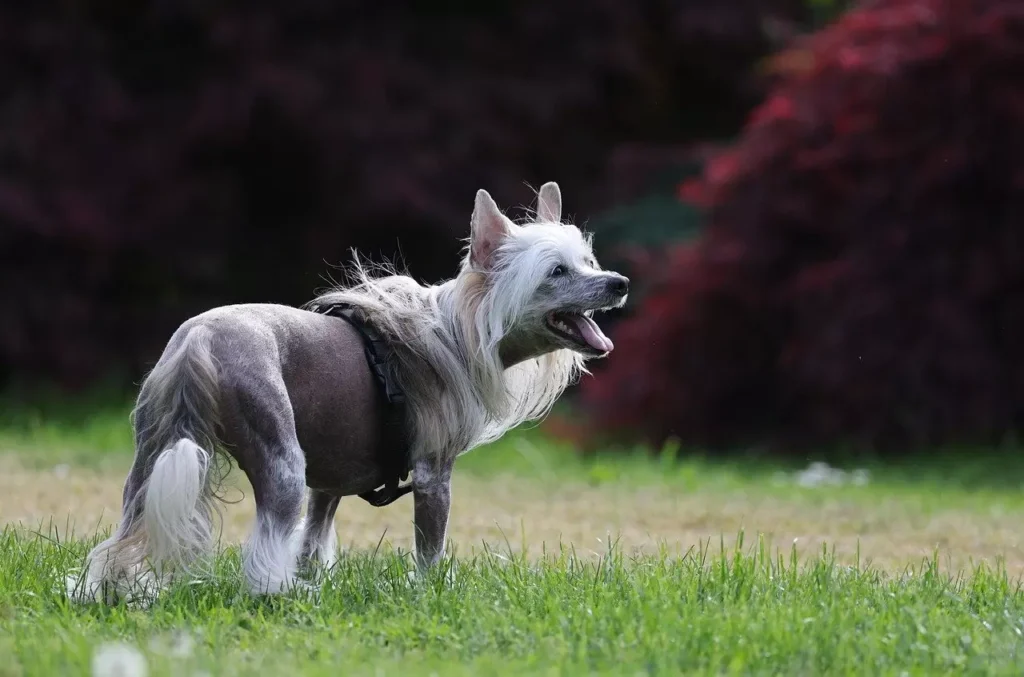
Chinese Crested
Quick Facts
| Attribute | Details |
|---|---|
| Group | Toy |
| Country of origin | Traditionally associated with China; the breed’s earlier origins remain uncertain |
| Original purpose | Primarily a companion dog; its ancestors may also have been carried aboard ships |
| Size & weight | Small; approximately 23–33 cm tall, with weight varying but generally not exceeding 5.4 kg under the breed standard |
| Life expectancy | Typically over 12 years; around 13–15 years is often used as a general guide |
| Coat & colours | Hairless with a crest, socks and tail plume, or fully coated Powderpuff; many colours and combinations |
| Exercise needs | At least around 30 minutes daily, adjusted for age, health, fitness and weather |
| Grooming needs | Moderate; skin and sparse hair care for Hairless dogs, regular brushing for Powderpuffs |
| Trainability | Generally intelligent and responsive to patient, reward-based training |
| Barking tendency | Moderate; some are alert and vocal around visitors or unfamiliar sounds |
| Suitable for | Attentive households able to provide companionship, gentle handling and variety-specific grooming |
History & Origin
The early history of the Chinese Crested is uncertain, and accounts of its development vary. Hairless dogs have appeared in several parts of the world, and dogs associated with the Chinese Crested may have travelled between countries aboard trading ships.
The breed became linked with China, where dogs of different sizes and types were recorded historically. However, the modern Chinese Crested was shaped through international breeding rather than through one completely documented line of descent.
Today, the breed includes two coat varieties: Hairless and Powderpuff. Both can occur within the same litter and belong to the same recognised breed.
What Were Chinese Cresteds Bred to Do?
The modern Chinese Crested is primarily a companion dog. Historical accounts also associate small hairless dogs with ships, where they may have provided company and helped control rodents, but the precise role and ancestry of the breed are not fully established.
Chinese Cresteds are no longer working dogs in the usual sense. Many nevertheless enjoy learning, exploring and taking part in activities such as trick training, scent games and small-dog agility.
Chinese Crested Size, Weight & Appearance
The Chinese Crested is a small, graceful dog with a fine to moderate build. Under the Royal Kennel Club standard, the ideal height is approximately 28–33 cm for males and 23–30 cm for females. Weight varies, but the standard states that it should generally not exceed 5.4 kg.
These measurements describe the show standard rather than a health target for every pet. Individual dogs may be somewhat larger or smaller, and a vet can help assess an appropriate body condition.
The breed standard describes two general builds. The Deer type is lighter and finer-boned, while the Cobby type has a heavier body and bone. Both should be able to move comfortably and remain physically functional.
Hairless and Powderpuff Varieties
The Hairless Chinese Crested has exposed skin across most of the body, with fine hair forming a crest on the head and neck, socks around the feet and a plume on the tail. The amount of body hair can vary between individuals.
The Powderpuff is covered by a soft undercoat and a fine veil of longer hair. Powderpuffs are not a separate breed and may be born in the same litter as Hairless puppies.
Many colours and combinations are recognised. Colour should remain secondary to health, temperament, sound movement and responsible breeding.
Chinese Crested Temperament & Personality
Chinese Cresteds are often playful, attentive and strongly interested in human company. Many enjoy resting close to their owners but are also capable of being active and curious when given the opportunity.
Every dog has an individual temperament shaped by genetics, early experiences, socialisation and training. Some Chinese Cresteds readily approach unfamiliar people, while others may need additional time and space.
Their small size can make them vulnerable to rough handling. They should be allowed to move away from unwanted contact rather than being repeatedly picked up or passed between people.
Exercise & Mental Stimulation
Around 30 minutes of daily exercise is a practical starting point for many adult Chinese Cresteds, although a fit and healthy dog may enjoy more. Individual requirements depend on age, health, fitness and personality.
Several shorter walks can work well, especially in difficult weather. Hairless dogs have limited natural protection against cold, strong sunlight, rough vegetation and minor skin injuries, so routes and conditions need to be considered carefully.
Indoor play, food puzzles, scent games and short training sessions provide useful mental stimulation. Puppies, older dogs and dogs with joint or eye conditions may need adapted exercise following veterinary advice.
Training & Socialisation
Chinese Cresteds can be intelligent and responsive learners. Short, varied sessions using food, toys or other suitable rewards are usually more effective than physical correction or repeated drilling.
Useful everyday skills include recall, settling, cooperative grooming and walking calmly on a lead. Handling practice is particularly valuable because the dog will need regular skin, coat, dental, nail and veterinary checks.
Socialisation should be gradual and positive. Introduce puppies carefully to different people, suitable dogs, surfaces, household sounds and everyday environments without forcing interaction.
As a companion breed, some Chinese Cresteds may find lengthy periods alone difficult. Teach independence in small steps and seek qualified behavioural support if the dog shows persistent distress.
Hairless Chinese Crested Skin Care
Exposed skin does not mean that a Hairless Chinese Crested needs a complicated collection of cosmetic products. Care should be based on the individual dog’s skin and veterinary advice.
Skin should be checked regularly for dryness, irritation, spots, scratches or changes in colour and texture. Use only mild, dog-appropriate cleansing products when bathing. Frequent washing or unsuitable oils and creams can irritate the skin or block follicles.
Hairless dogs need protection from strong sunlight. Shade, avoiding the hottest part of the day and suitable protective clothing may help. Ask your vet to recommend a dog-safe sun-protection product where one is necessary, because some human products contain ingredients that are unsafe if licked.
Warm, well-fitting clothing may be helpful during cold or wet weather. Clothing should not rub the skin, restrict movement or be left on when it becomes damp.
Powderpuff Grooming & Shedding
The Powderpuff has a soft double coat that can tangle, particularly around the legs, ears, armpits and areas where a harness rests. Brushing once or twice a week may be sufficient for some coats, while others require more frequent attention.
Work gently from the ends of the hair towards the skin and check that the brush reaches through the coat without scraping. Our guide to brushing your dog’s coat explains the general approach.
Powderpuffs shed, although the amount varies. Hairless dogs may also lose hair from their crest, socks and tail plume. Nails, ears and teeth need routine attention in both varieties.
Dental Care
Dental care is particularly important in Chinese Cresteds. The genetic trait associated with hairlessness can also be associated with missing or unusually shaped teeth, so Hairless dogs may not have complete dentition.
Begin gentle tooth brushing early using a dog toothpaste and suitable brush. Arrange veterinary examinations as recommended and seek advice if the dog has difficulty eating, unpleasant breath, inflamed gums or a damaged tooth.
Powderpuffs can also develop dental disease and require the same preventive attention, even though they are less likely to show the dentition changes linked directly to the hairless trait.
Health & Lifespan
Chinese Cresteds typically live for more than 12 years, with approximately 13–15 years often used as a general guide. Lifespan varies according to genetics, overall health, body condition, lifestyle and access to veterinary care.
Potential health concerns include primary lens luxation, progressive retinal atrophy, kneecap instability, Legg–Calvé–Perthes disease, dental abnormalities and skin problems. Not every dog develops these conditions, and a list of possible concerns cannot diagnose an individual animal.
At the time this page was checked, the Royal Kennel Club identified the following pre-breeding priorities:
- Maintaining and prioritising genetic diversity
- DNA testing for primary lens luxation, known as PLL
- DNA testing for progressive rod-cone degeneration progressive retinal atrophy, known as prcd-PRA
Prospective owners should ask for verifiable results for both parents and discuss eye, joint, dental and skin history with the breeder. Genetic carriers should not automatically be treated as unhealthy pets, but mating decisions need to be planned so that affected puppies are not produced while useful genetic diversity is preserved.
Owners should seek veterinary advice about changes in vision, persistent eye discomfort, limping, skin irritation or difficulty eating.
Feeding & Everyday Care
Feed a complete, balanced diet appropriate for the dog’s age, size, health and activity. Manufacturer instructions provide a starting point, but portions should be adjusted according to body condition and veterinary advice.
Measure meals and include training treats in the daily allowance. Our guide to feeding a dog a balanced diet covers the basic principles.
Fresh water should always be available. If missing or abnormal teeth make chewing difficult, ask a vet for individual feeding and dental guidance rather than changing the diet without advice.
Living with Children and Other Pets
A Chinese Crested may live successfully with considerate children, but the breed’s small frame can be injured accidentally by rough handling or boisterous play. Children and dogs must always be supervised together.
Compatibility with dogs, cats and other pets depends on the individuals and their previous experiences. Introductions should be gradual, with separate resting and feeding areas available.
A small dog should not be expected to tolerate unwanted handling from another animal. Play with substantially larger dogs requires particularly careful supervision.
Ethical Sourcing & Adoption in the UK
Chinese Cresteds occasionally become available through general rescue organisations and specialist rehoming groups. A responsible rescue should discuss the individual dog’s health, skin or coat care, dental condition and behaviour before adoption.
When buying a puppy, meet the puppy with its mother where they were raised. Ask for verifiable PLL and prcd-PRA results for both parents and discuss how the breeder manages genetic diversity.
Look at the comfort and health of the adult dogs rather than choosing primarily for the amount of hair, unusual colour or very small size. A responsible breeder should discuss the practical differences between Hairless and Powderpuff care and provide realistic information about teeth and skin.
Legal Responsibilities in the UK
Chinese Cresteds are not specifically listed as a prohibited type under current UK government guidance. General dog-control, identification and animal-welfare laws still apply.
Owners must keep their dog under proper control, comply with applicable microchipping rules and follow local restrictions concerning leads and public spaces.
Is a Chinese Crested Right for You?
A Chinese Crested may suit you if:
- You want a small, affectionate and engaging companion
- You can provide daily walks, play and mental stimulation
- You are prepared for skin care or regular coat maintenance
- You can provide routine dental and veterinary care
- You will check breed-specific health tests before buying a puppy
Think carefully if:
- The dog would regularly be left alone for long periods
- You want a genuinely maintenance-free or completely non-shedding dog
- You cannot protect a Hairless dog from difficult weather
- Young children may handle the dog roughly
- You are choosing mainly for unusual appearance rather than health and temperament
Frequently Asked Questions
Are all Chinese Crested dogs hairless?
No. The breed includes Hairless and fully coated Powderpuff dogs, and both varieties can occur within the same litter.
How long do Chinese Cresteds live?
They typically live for more than 12 years, with around 13–15 years often used as a general guide. Individual lifespan varies.
How big does a Chinese Crested get?
The Royal Kennel Club standard gives an ideal height of approximately 28–33 cm for males and 23–30 cm for females. Weight varies but should generally not exceed 5.4 kg under the standard.
Do Chinese Cresteds shed?
Powderpuffs shed, although the amount varies. Hairless dogs have much less body hair but can still lose hair from the crest, feet and tail.
Do Hairless Chinese Cresteds need sunscreen?
They need protection from strong sunlight, but the safest method and product depend on the dog. Prioritise shade and suitable clothing, and ask a vet to recommend a dog-safe product if one is required.
How much exercise does a Chinese Crested need?
Around 30 minutes daily is a useful starting point, but healthy individuals may enjoy more. Exercise should be adjusted for age, fitness, health and weather.
What health tests should Chinese Crested breeders perform?
Current Royal Kennel Club guidance lists DNA testing for PLL and prcd-PRA and emphasises maintaining genetic diversity. Buyers should request verifiable results for both parents.
How much does a Chinese Crested cost in the UK?
Purchase and adoption fees vary over time. Owners should also budget for food, grooming or skin care, dental treatment, insurance and veterinary care.
Sources
- Royal Kennel Club — Chinese Crested information and current Health Standard
- Royal Kennel Club — Chinese Crested breed standard
- Purina UK — Chinese Crested care and grooming information
- American Chinese Crested Club — breed health information
- Cornell University College of Veterinary Medicine — progressive retinal atrophy
- GOV.UK — Controlling your dog in public
Information checked: September 2026. Breed descriptions provide general guidance; every dog is an individual.