
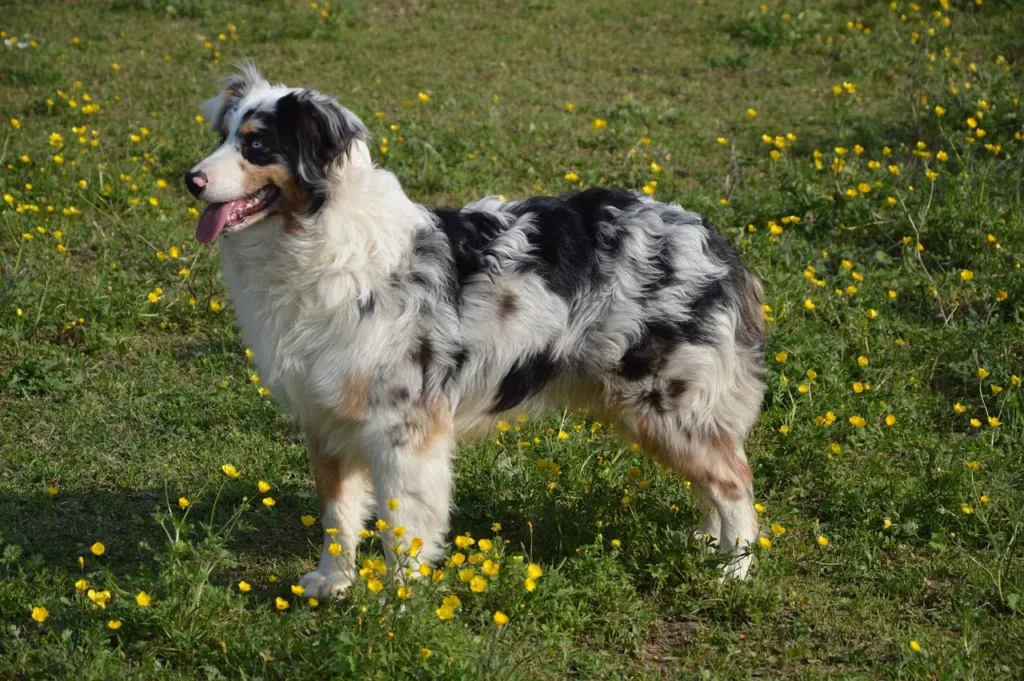
Australian Shepherd
The Australian Shepherd, often called an Aussie, is an energetic herding dog developed in the United States. Quick to learn and interested in what is happening around them, these dogs can suit owners who enjoy training and outdoor activity. They need more than a garden: daily engagement, regular exercise and opportunities to settle are all important parts of life with an Aussie.
Quick Facts
| Attribute | Details |
|---|---|
| Group | Pastoral |
| Country of origin | United States |
| Original purpose | Herding livestock and working on ranches |
| Size & weight | Medium; males 51–58 cm and females 46–53 cm at the shoulder. PDSA gives a general adult weight guide of 18–29 kg; individuals vary. |
| Life expectancy | Over 10 years as a general breed guide; individual lifespans vary |
| Coat & colours | Medium-length double coat; black, red, blue merle or red merle, with or without white and tan markings |
| Exercise needs | High; around two hours or more daily for a healthy adult, adapted to the individual, plus mental stimulation |
| Grooming needs | Regular brushing several times a week; additional care during heavier shedding |
| Trainability | Quick to learn; needs consistent, reward-based training and guidance around distractions |
| Barking tendency | Can be vocal, particularly when alert or excited |
| Suitable for | Active households with time for daily exercise, training, grooming and companionship |
History & Origin
Despite the name, the Australian Shepherd was developed in the United States. The breed became established as a working ranch dog, helping handlers move and manage livestock. Its history involves imported herding dogs, but describing it simply as an Australian breed misses where the modern Aussie took shape.
What Were Australian Shepherds Bred to Do?
Australian Shepherds were bred to herd livestock while working with a handler. This helps explain their interest in movement and readiness to respond. In a pet home, those instincts need appropriate outlets rather than opportunities to chase runners, bicycles or children.
Australian Shepherd Size, Weight & Appearance
The UK breed standard gives a height of 51–58 cm for males and 46–53 cm for females, measured at the shoulder. PDSA lists an approximate adult weight of 18–29 kg. These figures are guides, not targets that every dog should meet.
Aussies have a medium-length double coat. Recognised colours include black, red, blue merle and red merle, with or without white and tan markings. Colour should never take priority over health, temperament or responsible breeding.
Temperament & Living with an Australian Shepherd
An Aussie can be an enthusiastic companion for someone who enjoys involving their dog in everyday activities. However, being intelligent does not make a dog undemanding. Without suitable guidance, an Aussie may put that attention and energy into barking, chasing or other unwanted habits.
Some are reserved with unfamiliar people. Allow introductions at the dog’s pace rather than expecting immediate friendliness. In family homes, supervise children and dogs together and provide a quiet place where the dog can rest undisturbed.
Exercise & Mental Stimulation
UK breed guidance suggests around two hours or more of daily exercise for a healthy adult. This is a planning guide, not an instruction to make every dog run for two hours. Age, fitness, weather and health should shape the routine.
Combine walks with sniffing opportunities, suitable play and short training sessions. Puppies and dogs with medical conditions need an adapted programme discussed with a vet. Build in quiet periods too: keeping an Aussie constantly occupied is not the same as teaching them to settle.
Training & Socialisation
Use rewards to show your dog which behaviours are worth repeating. Practise in a quiet setting first, then introduce distractions gradually. Short sessions make it easier to keep training clear and manageable.
Useful everyday skills include coming when called, walking on a loose lead, leaving distractions and relaxing on a mat. Reward calm observation of moving people and animals. If chasing or nipping becomes difficult to manage, seek help from a qualified reward-based trainer or clinical animal behaviourist.
Socialisation should involve manageable, positive experiences, not forced contact with every person or dog you meet.
Do Australian Shepherds Shed? Grooming & Coat Care
Yes, Australian Shepherds shed, and their double coat needs regular attention. Brush several times a week, increasing the frequency when more undercoat is coming out. Check areas prone to tangles, including behind the ears and around the legs.
Our guide to brushing your dog’s coat explains how to make grooming more comfortable. Avoid pulling at tight mats; a groomer can help when they cannot be removed gently. Include regular nail, ear and dental checks in the care routine.
How Long Do Australian Shepherds Live? Health & Lifespan
PDSA and the Royal Kennel Club give a general lifespan guide of over 10 years. This is a broad breed description rather than a prediction for an individual dog.
Before buying a puppy, ask to see the parents’ relevant health results. Current UK breed recommendations include hip and elbow assessment, eye screening and DNA tests for specified inherited conditions. A DNA panel alone does not replace the other examinations, and testing cannot guarantee lifelong health.
MDR1 drug sensitivity: some Australian Shepherds carry a variant in the ABCB1 gene, commonly called MDR1, that can affect their response to certain medicines. A genetic test can establish a dog’s status. Share the result with your vet before treatment and ask for advice if the status is unknown. Do not stop prescribed medication or choose alternatives without veterinary guidance.
Merle-related risks: breeding two merle dogs can produce puppies with a higher risk of hearing and eye abnormalities. Merle genetics are more complex than coat appearance alone suggests. Responsible breeding decisions require appropriate testing and informed advice; a merle coat does not by itself mean that a dog is deaf or has impaired vision.
Feeding & Care Basics
Choose a complete food appropriate for the dog’s life stage and individual needs. An active breed does not automatically need a working-dog formula: the amount and type of activity actually performed matter.
Use feeding instructions as a starting point and ask your vet about portions or changes in body condition. Our guide to feeding your dog a balanced diet covers the basics. Keep fresh water available and include treats when considering the overall feeding routine.
Ethical Sourcing & Adoption (UK)
Consider whether an adult rescue dog could suit your household. Ask about their response to children, other animals, visitors and time alone, as well as any training or health support they need.
If buying a puppy, request documented health results and discuss the parents’ temperaments and the puppy’s early experiences. See the puppy with their mother where they were raised. Do not let a particular coat colour, a deposit deadline or a seller’s reassurance replace careful checks.
Legal Note (UK)
Owners must prevent their dog from being dangerously out of control, including on private property. Follow local lead restrictions and access rules, and prevent chasing or disturbance of livestock. Consult current official guidance for the requirements that apply where you live.
Is the Australian Shepherd Right for You?
Best for:
- Owners who enjoy regular outdoor activity and training
- Households with time for companionship and coat care
- People prepared to manage herding instincts around movement
- Owners willing to teach calm behaviour as well as active skills
Think twice if:
- You want a low-maintenance or consistently quiet dog
- You expect a garden to replace walks and interaction
- The dog would routinely spend long periods alone
- You cannot safely manage chasing around children or other animals
FAQs
Are Australian Shepherds good family dogs?
They can suit active families, but suitability depends on the individual dog and the household. Herding behaviour needs management, and children should always be supervised around dogs.
Are Australian Shepherds easy to train?
They often learn quickly, but still need patient teaching and consistent practice. Intelligence does not remove the need to work on distractions, recall and settling.
Do Australian Shepherds shed a lot?
They shed regularly and may lose considerably more undercoat at certain times. Frequent brushing helps manage loose hair and tangles.
How much exercise does an Australian Shepherd need?
Plan for around two hours or more daily for a healthy adult, adjusted to the individual. Include varied activity and mental stimulation rather than relying on repetitive running.
Can Australian Shepherds live in a flat?
It is possible, but access to suitable exercise, noise management and a workable daily routine matter. A larger home does not compensate for insufficient interaction.
What is MDR1 in Australian Shepherds?
MDR1 is the commonly used name for a genetic drug-sensitivity issue. Testing helps a vet make informed treatment decisions; owners should share their dog’s result with the veterinary team.
How much does an Australian Shepherd cost in the UK?
Purchase prices and adoption fees vary. Check current costs directly and budget for ongoing care, training, insurance and veterinary treatment rather than the initial fee alone.
Sources
- PDSA — Australian Shepherd care and key facts
- Royal Kennel Club — breed information and health screening
- Royal Kennel Club — Australian Shepherd breed standard
- American Kennel Club — temperament and living with an Australian Shepherd
- Dogs Trust — reward-based training
- Cornell University College of Veterinary Medicine — MDR1 drug sensitivity
- UC Davis Veterinary Genetics Laboratory — merle genetics and testing
- GOV.UK — controlling your dog
Information checked: September 2026. This guide provides general information and does not replace individual veterinary or behaviour advice.