
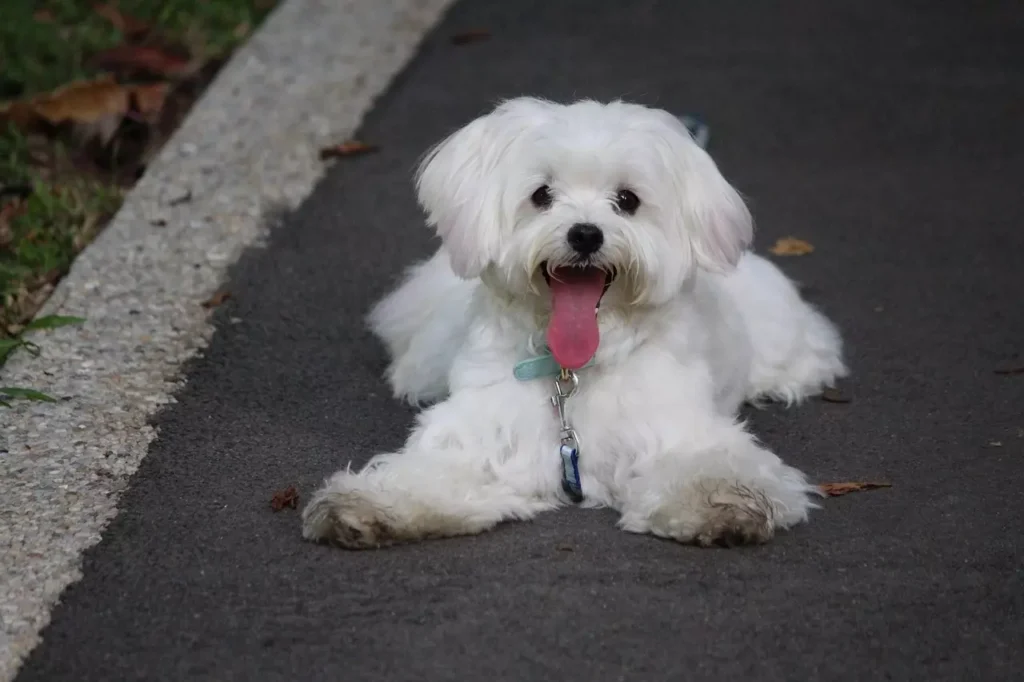
Maltese
The Maltese is a small companion dog with historic links to the Mediterranean island of Malta. Recognised for its white, silky coat, the breed can be lively, alert and strongly interested in spending time with people. Its compact size can suit many homes, but prospective owners should be prepared for daily coat care, patient training and close attention to dental and eye health.
Quick Facts
| Attribute | Details |
|---|---|
| Group | Toy |
| Country of origin | Mediterranean region, with historic links to Malta |
| Original purpose | Companion dog |
| Size & weight | Small; the UK standard specifies a height of no more than 25 cm but does not set an official weight |
| Life expectancy | Often over 12 years; a 2024 UK study reported a median of approximately 13.1 years |
| Coat & colours | Long, straight and silky coat without a woolly undercoat; white with slight lemon markings permitted |
| Exercise needs | Up to about 30 minutes of walks daily, plus play and mental enrichment |
| Grooming needs | High; daily care for a long coat or frequent brushing and regular trims for a shorter coat |
| Trainability | Medium to high; intelligent and responsive to patient reward-based training |
| Barking tendency | Variable; may bark to alert, seek attention or respond to unfamiliar sounds |
| Suitable for | Owners seeking a small companion and able to provide regular company, grooming and dental care |
History & Origin
The Maltese has been associated with Mediterranean companion dogs for centuries. Its exact early development is not fully documented, but the breed has particularly strong historical links with Malta. Written accounts and artwork show small, long-coated white dogs kept as companions in the region.
The modern breed was shaped through organised breeding and showing in Europe. Although the Maltese has an ancient background, claims that every modern dog can be traced through an uninterrupted pedigree for thousands of years should be treated cautiously.
What Were Maltese Dogs Bred to Do?
The Maltese was developed primarily as a companion rather than a hunting, herding or guarding breed. Its small size allowed it to live closely with people in a wide range of homes.
Modern Maltese dogs still tend to enjoy involvement in everyday household life. However, companionship does not mean constant carrying or attention. They need walks, play, training, rest and opportunities to explore as dogs.
Maltese Size, Weight & Appearance
The Maltese is a small, balanced dog with short, straight legs, dark eyes and dropped, feathered ears. The UK breed standard gives a maximum height of 25 cm at the withers but does not specify an official weight.
Many adult Maltese dogs weigh approximately 3–4 kg, but this is only a general guide. Healthy size depends on build, sex, genetics and body condition. A dog should not be kept underweight simply to match a particular number.
The coat should be white, straight and silky rather than woolly. Slight lemon markings are permitted by the UK standard. The coat should not be so excessive that it restricts comfortable movement.
Is There a Miniature or Teacup Maltese?
The Royal Kennel Club recognises one Maltese breed. It does not recognise separate “miniature”, “mini”, “toy” or “teacup” varieties. The Maltese is already classified within the Toy group.
These additional names are generally advertising terms and do not guarantee an adult size. Deliberately selecting for extreme smallness can increase concerns about physical fragility, dental crowding and the care of very small puppies.
Choose a puppy for health, temperament and responsible rearing rather than because a seller promises that it will remain unusually tiny. Ask about the parents’ adult size and health, but remember that no breeder can guarantee an exact mature weight.
Maltese Temperament & Family Life
Maltese dogs are commonly described as lively, alert and sweet-tempered, but every dog has an individual personality. Behaviour is influenced by genetics, early experiences, health, training and the home environment.
Many Maltese dogs enjoy staying close to familiar people and can adapt well to a flat or house. Their small size does not remove the need for boundaries, independence training or appropriate exercise.
They may live successfully with children, dogs or other pets, but compatibility should be assessed individually. Young children must be supervised because rough handling or accidental falls can injure a small dog. The dog should always have access to a quiet, undisturbed resting place.
Exercise & Mental Stimulation
The Royal Kennel Club gives up to around 30 minutes of daily exercise as a general guide. The appropriate amount depends on age, health, fitness and personality, and some healthy adults may enjoy more activity when it is introduced gradually.
Short walks can be combined with sniffing, play and reward-based training. Small dogs benefit from exploring at ground level rather than spending every outing in a carrier.
Puppies need shorter, age-appropriate activity, while older dogs and those with medical conditions may require an adapted routine. Puzzle toys, scent games and learning simple skills provide useful mental enrichment indoors.
Training & Socialisation
Maltese dogs can be intelligent and responsive learners. Short, consistent sessions using food, toys or praise are usually more effective than punishment or confrontation.
House training can require patience because young puppies have limited bladder control and need frequent opportunities to toilet. Accidents should be managed calmly rather than punished.
Early socialisation should introduce people, suitable dogs, handling, household sounds and different environments gradually. Owners should also practise recall, settling, comfortable grooming and calm lead walking. A Maltese should not be allowed to rehearse unwanted behaviour simply because its small size makes that behaviour easier to overlook.
Maltese Grooming, Coat Care & Shedding
A Maltese kept in a long coat normally requires daily grooming to prevent tangles and matting. Many companion dogs have a shorter trim, but this still requires frequent brushing and regular appointments with a professional groomer.
Follow a gentle coat-brushing routine and check areas behind the ears, under the legs and around a harness. Introduce grooming gradually with rewards rather than waiting until the coat becomes uncomfortable.
Maltese dogs generally shed relatively little, but no dog is completely non-shedding. Loose hairs may remain within the coat instead of falling visibly around the home. Low visible shedding also does not guarantee that a dog will be suitable for someone with allergies.
Hair should be kept away from the eyes. Persistent staining, discharge, redness or discomfort should be discussed with a vet because tear marks can have several causes and are not simply a cosmetic issue.
Dental Care
Dental care is particularly important for small dogs because their teeth are closely spaced within a small mouth. Plaque and gum disease can develop even when the visible coat and face are carefully groomed.
Introduce tooth brushing gradually using dog-safe toothpaste. Human toothpaste should not be used. A vet should check retained puppy teeth, damaged teeth, persistent bad breath, inflamed gums or difficulty eating.
Dental chews and specialist diets may sometimes support oral care, but they do not automatically replace brushing and veterinary dental assessment.
Maltese Health & Lifespan
Maltese dogs often live for more than 12 years. A large UK study published in 2024 reported a median lifespan of approximately 13.1 years for the breed, although no average can predict an individual dog’s lifespan.
Health concerns that may affect Maltese dogs include inherited eye disease, dental disease, kneecap instability and other conditions seen in small dogs. This does not mean every Maltese will experience these problems.
The Royal Kennel Club currently lists eye testing through the BVA/KC/ISDS Eye Scheme as a Best Practice pre-breeding assessment for Maltese dogs. Prospective owners should ask to see the parents’ current, verifiable results and discuss the health of close relatives.
Seek veterinary advice for persistent eye discharge, cloudiness, squinting, changes in movement, repeated skipping on a hind leg, loss of appetite or unexplained changes in behaviour. Routine preventive care remains important even when a dog appears well.
Feeding & Everyday Care
A Maltese needs a complete and balanced diet suited to their age, health and activity. Portions should be based on body condition and the food manufacturer’s guidance rather than breed averages alone.
Very young or unusually small puppies may have different feeding requirements from healthy adults. Buyers should obtain a clear feeding schedule and contact a vet promptly if a young puppy becomes unwell or stops eating.
Training treats count towards the daily food allowance. Fresh water should always be available, and changes in appetite, weight or digestion should be discussed with a vet.
Ethical Sourcing & Adoption in the UK
Maltese dogs and Maltese crosses may occasionally be available through general or specialist rescue organisations. A responsible rescue should explain the individual dog’s known health, behaviour, grooming and home requirements.
When buying a puppy, meet the puppy with its mother where they were raised. Ask about eye screening, dental development, movement, family health and early socialisation. Health documents should be verifiable rather than described only as a general “vet check”.
Avoid sellers who promote “teacup” size, extremely low predicted weights or unusual colours as signs of greater value. Also avoid anyone who refuses visits, offers several unrelated breeds, suggests meeting away from the puppies’ home or pressures buyers into sending money quickly.
Legal Note (UK)
Maltese dogs are not named as a prohibited dog type in current UK government guidance. General identification, welfare and dog-control laws still apply.
The law concerning dangerously out-of-control dogs applies to every breed and size. Owners should also check local requirements covering leads, access to public spaces and dog fouling.
Is the Maltese Right for You?
Best for:
- Owners looking for a small companion dog
- People able to provide regular company and interaction
- Homes prepared for frequent grooming and dental care
- Owners who enjoy gentle walks, play and reward-based training
- Flats or houses where the dog’s daily needs can be met
Think twice if:
- You want a genuinely maintenance-free coat
- The dog would routinely be left alone for long periods
- You cannot supervise interactions with very young children
- You are choosing mainly because of a “teacup” or miniature label
- You are not prepared for grooming and potential veterinary dental costs
FAQs
How big does a Maltese get?
The UK breed standard gives a maximum height of 25 cm but does not specify an official weight. Many adults weigh approximately 3–4 kg, although individual size and build vary.
Is there a miniature Maltese?
No separate miniature Maltese is recognised by the Royal Kennel Club. Terms such as miniature, mini and teacup are normally used in advertising rather than official breed classification.
Is a Maltese a terrier?
No. Despite sometimes being called a “Maltese Terrier”, the breed is officially named Maltese and belongs to the Toy group, not the Terrier group.
How long do Maltese dogs live?
They often live beyond 12 years. A 2024 UK study reported a median lifespan of approximately 13.1 years, but individual longevity varies.
Do Maltese dogs shed?
They usually shed relatively little, although no dog is completely non-shedding. Their long coat still requires frequent grooming and does not guarantee suitability for people with allergies.
How much exercise does a Maltese need?
Up to about 30 minutes of walks daily is a useful general guide, supplemented with play, sniffing and training. Needs should be adjusted for the individual dog.
Are Maltese dogs good with children?
They can live successfully with respectful children, but their small size makes them vulnerable to rough handling or falls. Adult supervision is essential.
Are Maltese dogs suitable for first-time owners?
They can be, provided the owner understands the commitment involved in grooming, dental care, house training and regular companionship.
Are Maltese dogs hypoallergenic?
No dog is guaranteed to be hypoallergenic. Maltese dogs may release less visible hair than some breeds, but allergens can also be present in skin particles and saliva.
Sources
- Royal Kennel Club — Maltese overview and health screening
- Royal Kennel Club — Maltese breed standard
- British Veterinary Association — Hereditary Eye Disease Scheme
- Scientific Reports — Longevity of companion dog breeds in the UK
- VetCompass — Patellar luxation in dogs under primary veterinary care
- BMC Veterinary Research — Dental home care in dogs
- BMC Veterinary Research — Common disorders diagnosed in UK dogs
- GOV.UK — Controlling dogs in public
Information checked: September 2026. Breed descriptions provide general guidance; every dog is an individual.