
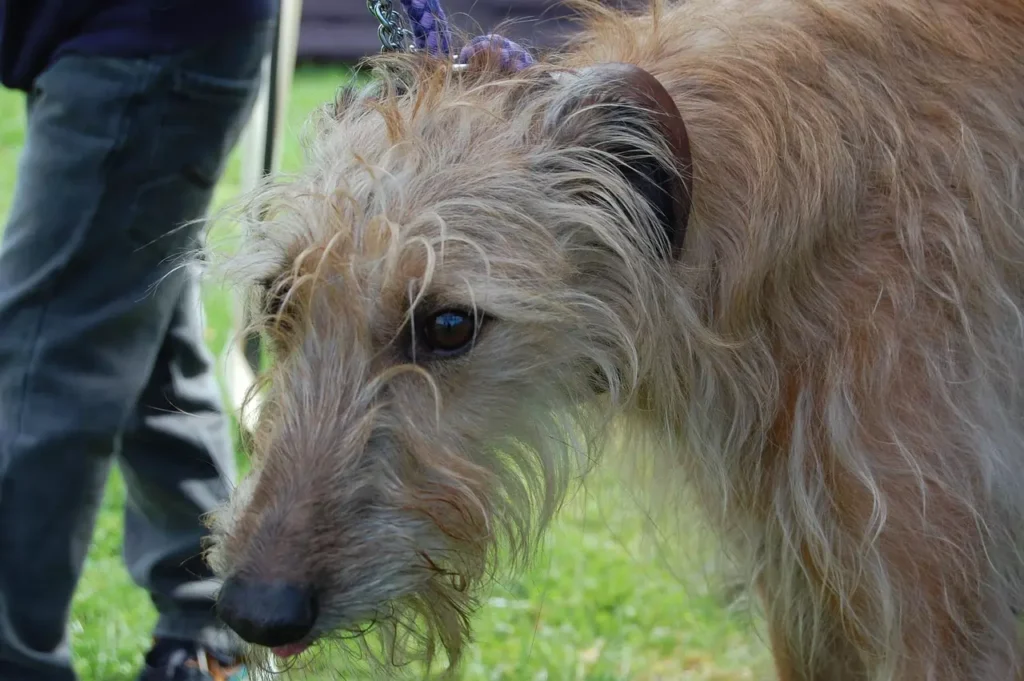
Lurcher
The Lurcher is not a pedigree breed but rather a traditional British crossbreed, most often a mix between a sighthound (such as a Greyhound, Whippet, or Deerhound) and another working breed like a Collie or Terrier. Long associated with the UK’s countryside and hunting heritage, Lurchers are known for their speed, intelligence, and gentle nature at home. Today, they are popular family companions as well as working dogs, thriving in households that can provide both exercise and affection.
Quick Facts
| Attribute | Details |
|---|---|
| Group | Crossbreed (sighthound type) |
| Country of origin | United Kingdom |
| Original purpose | Hunting and poaching (speed, stamina, cunning) |
| Size & weight | Typically around 12–32 kg, but size and weight vary widely according to parentage |
| Life expectancy | 12–15 years |
| Coat & colours | Can be smooth, rough, or broken; wide range of colours including fawn, black, brindle, grey, and parti-colours |
| Exercise needs | 60–90 minutes per day |
| Grooming needs | Low to Moderate — depends on coat type |
| Trainability | Medium to High — intelligent but can be independent |
| Barking tendency | Low |
| Suitable for | Active families, rural or suburban homes, rescue adopters |
History & Origin
The Lurcher is a traditional British crossbreed, usually created by crossing a sighthound such as a Greyhound, Whippet or Deerhound with another working breed, often a Collie or Terrier. Lurchers were developed for speed, stamina, intelligence and versatility rather than to meet a fixed breed standard.
Historically, they were closely associated with rural life and used for hunting rabbits, hares and other small game. Today, Lurchers are commonly kept as companions and are frequently available through UK rescue organisations. Their appearance, temperament and care needs can vary according to the breeds in their ancestry.
What Were Lurchers Bred to Do?
Lurchers were bred to combine the speed and sight of a sighthound with useful traits from another working breed. Depending on their parentage, these traits could include stamina, intelligence, responsiveness and determination.
Although most modern Lurchers are family companions, many retain a strong instinct to run and chase. Secure exercise areas, careful recall training and responsible handling around wildlife and smaller animals are therefore important.
Lurcher Size, Weight & Appearance
Because Lurchers are crossbreeds, there is no single standard height or weight. Many adult Lurchers weigh approximately 12–32 kg, although smaller and larger dogs are possible depending on their parentage.
They usually have a lean build, long legs, a deep chest and the graceful outline of a sighthound. Their coats may be smooth, rough, broken or longer, and they can appear in a wide variety of colours and markings.
Temperament & Living with a Lurcher
Lurchers are often affectionate and relaxed at home, but every dog is an individual. Temperament can be influenced by parentage, early socialisation, previous experiences, training and the home environment.
Many enjoy resting indoors after suitable exercise, while outdoors they may display impressive speed and a strong chase instinct. Some can live successfully with children, dogs or other pets, but introductions should be gradual and carefully managed. Children should always be supervised around dogs.
Exercise & Mental Stimulation
Lurcher exercise needs vary according to age, size, health, fitness and personality. Many enjoy daily walks combined with opportunities for short bursts of running in a secure area. They also need time to sniff, explore and engage with their surroundings.
Activities such as reward-based training, scent games, food puzzles and suitable play can provide useful mental stimulation. Puppies, older dogs and dogs with health conditions may need shorter or specially adapted exercise based on veterinary advice.
Training & Socialisation
Lurchers can be intelligent and responsive, although some are independent and easily distracted by movement. Positive, reward-based training is the best approach. Training should be introduced gradually and practised consistently in different environments.
Recall can be challenging because of the instinct to chase. A long training line and secure exercise areas can help owners practise safely. Early, positive socialisation can also help a Lurcher become more comfortable around people, dogs, sounds and new situations.
Do Lurchers Shed? Grooming & Coat Care
Lurchers do shed, but the amount depends on the coat they inherit. Smooth-coated Lurchers may shed lightly to moderately, while rough, broken or longer coats can require more frequent brushing to remove loose hair and prevent tangles.
Most Lurchers are relatively low-maintenance, and a weekly brush is usually a practical starting point. Their nails, ears, teeth and skin should also be checked regularly. Thin-coated dogs may benefit from suitable protection during cold weather.
How Long Do Lurchers Live? Health & Lifespan
Lurchers typically live for 12 years or more, with approximately 12–15 years often used as a general guide. An individual dog’s lifespan can vary according to parentage, genetics, size, body condition, lifestyle and access to veterinary care.
Because Lurchers are crossbreeds, potential health concerns depend partly on the breeds in their ancestry. Owners should arrange routine veterinary checks and seek professional advice about any changes in movement, appetite, behaviour or general condition.
Feeding & Care Basics
A Lurcher should receive a complete, balanced diet appropriate for their age, size, health and activity level. Feeding amounts should be based on the individual dog, the manufacturer’s guidance and their body condition rather than breed alone.
Fresh drinking water should always be available. Sudden dietary changes should be avoided, and owners who are unsure about portions, body condition or feeding requirements should ask their vet for individual advice.
Ethical Sourcing & Adoption (UK)
Lurchers are frequently available through UK rescue organisations, making adoption an option worth considering. Rescue staff can help assess whether an individual dog’s temperament, history and care needs are suitable for a particular household.
Anyone buying a puppy should choose a responsible source that is transparent about the parent dogs, health, living conditions and early socialisation. Avoid sellers who refuse home visits, provide little information or pressure buyers into making a quick decision.
Legal Note (UK)
Lurchers are not specifically named as a prohibited type in current UK government guidance. However, the law applies to all dogs, and owners must keep their dog under control in public and private places.
UK guidance also explains that assessment of a prohibited type can depend on a dog’s physical characteristics rather than its stated breed or name. Owners should check current official guidance and any local rules affecting leads, public spaces, livestock and access.
Is the Lurcher Right for You?
Best for:
- Owners looking for an affectionate companion that may be relaxed at home
- Households able to provide daily exercise and secure opportunities to run
- People prepared to use patient, reward-based training
- Owners interested in adopting a rescue dog
Think twice if:
- You want a dog with little or no instinct to chase
- You cannot provide secure exercise or suitable daily activity
- The dog would regularly be left alone for long periods
- You have smaller pets and cannot safely manage introductions and separation
FAQs
How long do Lurchers live?
Lurchers typically live for 12 years or more, with 12–15 years often used as a general guide. Lifespan varies according to parentage, size, health and lifestyle.
How big do Lurchers get?
Their size varies because a Lurcher can be produced from different combinations of breeds. Many adults weigh approximately 12–32 kg, but some may fall outside this range.
How much does a Lurcher cost in the UK?
Adoption and purchase costs vary considerably. Check the current fee directly with the rescue organisation or responsible breeder and budget for ongoing food, equipment, insurance and veterinary care.
Are Lurchers good family pets?
Lurchers can be affectionate family companions, but suitability depends on the individual dog’s temperament, history, training and the household. Introductions should be gradual, and children should always be supervised around dogs.
Do Lurchers need lots of exercise?
They need daily physical activity and mental stimulation, but the appropriate amount depends on age, health, size and personality. Many enjoy walks together with short bursts of running in secure areas.
Can Lurchers live with cats?
Some can live with cats following careful assessment and gradual introductions, but others have a strong chase instinct and may not be suitable for homes with cats or smaller animals.
Do Lurchers shed much?
Yes, Lurchers shed, although the amount varies by coat type. Smooth coats may shed lightly to moderately, while rough or longer coats can require more frequent brushing.
Are Lurchers easy to train?
They are often intelligent but can be independent or distracted by movement. Consistent, reward-based training works best, while recall may require additional practice in secure environments.
Sources
- Dogs Trust — Lurcher breed information
- Purina UK — Lurcher dog breed information
- GOV.UK — Controlling your dog in public
Information checked: September 2026. Breed descriptions are general guidance; every dog is an individual.