
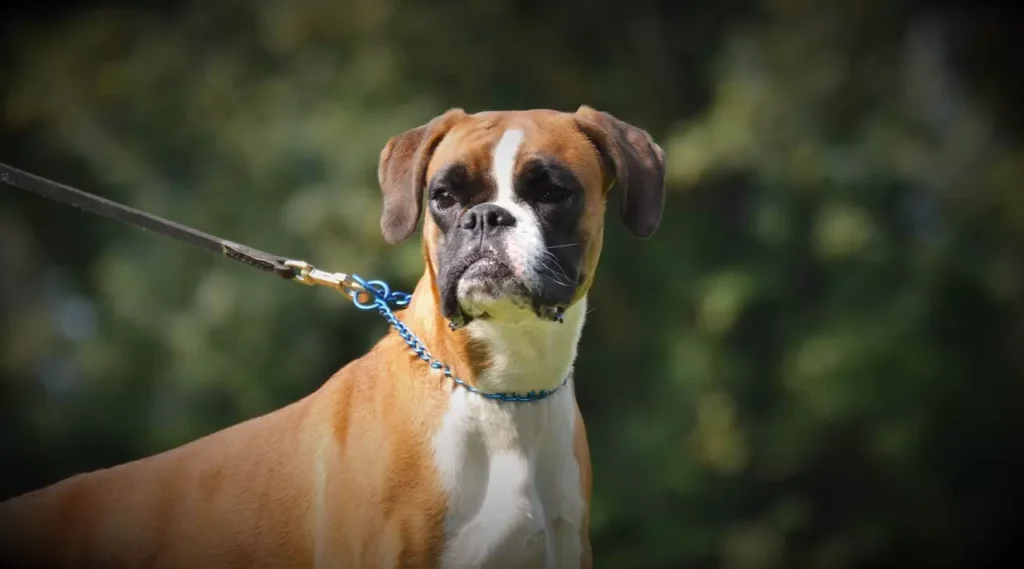
Boxer
The Boxer is an energetic, muscular and people-oriented working dog developed in Germany. Known for their expressive personality and enthusiasm, Boxers can become devoted companions, but they require patient training, substantial daily activity and careful attention to heart health, breathing and temperature control.
Quick Facts
| Attribute | Details |
|---|---|
| Group | Working |
| Country of origin | Germany |
| Original purpose | Working, guarding and utility duties, developed from earlier hunting and mastiff-type dogs |
| Size & weight | Females: approximately 53–59 cm and 25–27 kg; males: 57–63 cm and 30–32 kg, with individual variation |
| Life expectancy | Typically 10+ years; a 2023 UK primary-care study reported a median lifespan of 10.46 years |
| Coat & colours | Short, smooth coat; fawn or brindle, often with white markings and a dark mask |
| Exercise needs | High — many healthy adults need around two hours of daily activity, adjusted for health, fitness and weather |
| Grooming needs | Low — usually weekly brushing, with regular checks of the skin, nails, teeth and ears |
| Trainability | Medium to high — intelligent and responsive but often excitable and slow to mature |
| Barking tendency | Low to moderate; may bark to alert the household |
| Suitable for | Active households prepared for consistent training, close companionship and breed-specific health considerations |
History & Origin
The Boxer was developed in Germany during the late nineteenth century. Its ancestors included Bullenbeisser-type hunting dogs together with other mastiff and bulldog-type dogs. Early Boxers were valued for strength, courage and the ability to work closely with people.
As traditional hunting roles declined, the breed was adapted for guarding, military, police and general utility work. Modern Boxers are most commonly kept as companions, although their alertness, athletic ability and working instincts remain important parts of the breed.
What Were Boxer Dogs Bred to Do?
The Boxer’s ancestors were used to pursue and hold large game until hunters arrived. Later development placed greater emphasis on guarding, control and versatility rather than independent hunting.
These origins help explain the modern Boxer’s combination of physical confidence, attentiveness and strong attachment to their household. They often enjoy activities that involve movement, problem-solving and direct interaction with their owner.
Boxer Size, Weight & Appearance
Boxers are muscular, squarely built dogs with strong bone and an athletic outline. Adult females are generally around 53–59 cm tall and often weigh approximately 25–27 kg. Males are usually around 57–63 cm and may weigh approximately 30–32 kg. Healthy weight depends on the individual dog’s height and build.
The coat is short, smooth and close-fitting. Standard colours are fawn or brindle, frequently accompanied by white markings and a dark mask. So-called “black Boxers” are generally very dark reverse brindles rather than genetically solid-black dogs.
A Boxer’s head should remain balanced with the body. The muzzle should be broad and substantial rather than extremely shortened, and the nostrils should be sufficiently open to support comfortable breathing.
Boxer Temperament & Personality
Boxers are often playful, expressive and strongly attached to their families. Many retain puppy-like enthusiasm well into adulthood and enjoy being involved in household activities. They may be reserved or watchful around unfamiliar people because of their guarding heritage.
Breed descriptions are only a guide. Confidence, sociability and behaviour are also influenced by genetics, early experiences, health, training and the home environment. A Boxer should not be selected solely because the breed is commonly described as loyal or family-friendly.
Exercise & Mental Stimulation
Boxers are active dogs that require daily physical exercise and mental engagement. Around two hours of activity is commonly used as a guide for a healthy adult, divided across walks, play, training and opportunities to explore. The appropriate amount varies with age, health, fitness and personality.
Boxers often enjoy scent games, controlled retrieving, obedience exercises and interactive play. High-impact activity should be limited while puppies are growing, and older dogs or dogs with heart, joint or breathing conditions may require an exercise plan agreed with a vet.
Because Boxers can be vulnerable to overheating, strenuous exercise should be avoided during hot or humid weather. Walks may need to be moved to cooler parts of the day, with access to shade and fresh water.
Training & Socialisation
Boxers are intelligent and capable learners, but their strength, excitement and slower emotional maturity can make consistent training particularly important. Positive, reward-based methods help develop cooperation without creating unnecessary conflict or anxiety.
Useful priorities include recall, calm greetings, settling, leaving unsuitable objects and walking nicely on the lead. Training sessions are often most successful when they are short, varied and practised gradually around distractions.
Socialisation should provide carefully managed, positive experiences with people, suitable dogs, environments and everyday sounds. It should not involve forcing a puppy into interaction when they appear worried or overwhelmed.
Living with Children and Other Pets
A suitably matched Boxer can be an affectionate family companion, but their strength and exuberant play can be challenging around small children or vulnerable adults. Children and dogs should always be supervised, and the dog must have a quiet resting place where they will not be disturbed.
Some Boxers live successfully with other dogs or cats, particularly when introductions are gradual and carefully managed. Compatibility cannot be guaranteed by breed alone. Smaller animals may trigger chasing behaviour and should be protected through secure separation and responsible management.
Do Boxer Dogs Shed? Grooming & Skin Care
Boxers shed despite having a short coat. Hair loss is usually moderate and may become more noticeable during seasonal changes. A weekly brush will generally remove loose hair and help keep the coat in good condition.
Our guide to brushing a dog’s coat correctly explains how routine grooming can also be used to check for lumps, irritation, parasites and other skin changes.
Facial folds should be monitored and kept clean and dry where necessary. Nails, teeth and ears also require regular attention. Persistent redness, itching, soreness, hair loss or an unusual smell should be assessed by a vet rather than treated repeatedly at home without a diagnosis.
Boxer Breathing & Heat Sensitivity
Boxers are brachycephalic, meaning they have a relatively short muzzle and broad head. Some individuals can experience breathing difficulties associated with this anatomy, particularly when the muzzle is extremely short or the nostrils are narrow.
Noisy breathing at rest, struggling to recover after ordinary activity, sleep disturbance, repeated gagging or poor tolerance of warm weather should not be dismissed as normal breed characteristics. Veterinary assessment is appropriate when breathing affects a dog’s comfort or activity.
The Royal Kennel Club currently places the Boxer in Breed Watch Category 2, highlighting pinched nostrils and an excessively short muzzle as conformational concerns. Puppy buyers should prioritise parents that breathe comfortably and have open nostrils and a moderate, functional muzzle.
Boxer Health & Lifespan
A 2023 UK study using primary veterinary-care records reported a median lifespan of 10.46 years among the Boxers that died during the study period. This is a population estimate rather than a prediction for an individual dog.
Conditions reported in the breed include heart disease, hip and elbow dysplasia, eye conditions, skin problems, epilepsy and certain cancers. Boxers may also be affected by brachycephalic obstructive airway syndrome, particularly when facial features restrict normal airflow.
Owners should seek veterinary attention for symptoms such as fainting, unusual weakness, persistent coughing, reduced exercise tolerance, breathing changes, recurring lameness or new and changing lumps. Routine veterinary checks and appropriate screening support earlier investigation but cannot prevent every illness.
Heart Health & Screening
Heart conditions of particular concern in Boxers include aortic or subaortic stenosis and cardiomyopathy. An apparently healthy dog may not always show obvious symptoms, which is why health screening of breeding dogs is important.
The Boxer Breed Council operates a heart-testing scheme focused on aortic stenosis. Prospective puppy buyers should ask for evidence that both parents have been assessed under an appropriate scheme and should confirm exactly which examination was completed, by whom and when.
A single normal result does not guarantee lifelong freedom from every cardiac condition. Depending on family history and veterinary advice, further assessment may include examination by a veterinary cardiologist, echocardiography or monitoring of the heart rhythm.
Health Testing for Boxer Puppies
Current Royal Kennel Club Best Practice recommendations for Boxers include hip scoring, elbow grading and eye testing. The breed also has its separate breed-club heart scheme. Responsible breeders should be willing to provide the actual results for both parents rather than relying on the phrase “vet checked.”
Buyers should consider the parents’ breathing, movement, temperament, family health history and coefficient of inbreeding alongside individual test results. Screening helps breeders make better-informed decisions, but it cannot guarantee the health of every puppy.
Feeding & Weight Management
Boxers should receive a complete, balanced diet appropriate for their age, health and activity level. Portions should be adjusted according to body condition and veterinary advice rather than appetite alone.
Daily food can usually be divided into measured meals, with training treats included within the overall allowance. Maintaining a healthy body condition reduces avoidable pressure on the joints and can make exercise and temperature regulation easier.
Owners should avoid vigorous exercise immediately around mealtimes. Sudden abdominal enlargement, repeated unsuccessful attempts to vomit, marked restlessness or rapid deterioration require urgent veterinary attention.
Can Boxer Dogs Be Left Alone?
Boxers are typically people-oriented and may struggle when left without gradual preparation. Puppies should be taught to settle alone for very short periods before the duration is increased slowly.
A Boxer should not routinely be left for long hours simply because they have reached adulthood. Exercise does not replace companionship, and destructive behaviour or vocalisation may indicate boredom, distress or an unmet need that requires further assessment.
Ethical Sourcing & Adoption in the UK
Boxers and Boxer crosses can be found through general rescue organisations and specialist breed rescues. A reputable organisation should assess each dog individually and explain any known health, behavioural or management requirements.
Anyone buying a puppy should meet the mother with her litter in the place where the puppies were raised. The breeder should provide verifiable health results, discuss heart and breathing health openly, and explain why the parent dogs were selected.
Avoid sellers who prioritise unusual colours, an extremely short muzzle or exaggerated features over health and temperament. Pressure to pay quickly, several unrelated breeds for sale and excuses preventing buyers from seeing the mother are significant warning signs.
Legal Note (UK)
Boxers are not specifically named as a prohibited type in current UK government guidance. However, laws concerning dangerously out-of-control dogs apply to every breed and crossbreed in public and private places.
Owners must keep their dog under appropriate control and follow local requirements concerning leads, livestock, identification and access to public spaces.
Is the Boxer Right for You?
Best for:
- Active households able to provide substantial daily exercise
- Owners prepared for patient and consistent reward-based training
- People wanting an interactive dog that enjoys close companionship
- Households able to manage heat, breathing and breed-specific health considerations
Think twice if:
- You want a quiet, naturally calm or very low-energy dog
- The dog would regularly be left alone for long periods
- You cannot manage a strong and sometimes boisterous adolescent dog
- You are unprepared for health screening, insurance and possible veterinary costs
FAQs
How long do Boxer dogs live?
Boxers typically live for 10 years or more. A 2023 UK veterinary study reported a median lifespan of 10.46 years, although individual longevity varies with genetics, health, lifestyle and veterinary care.
How big does a Boxer get?
Adult females are generally around 53–59 cm tall and males around 57–63 cm. Females commonly weigh approximately 25–27 kg and males around 30–32 kg, but healthy weight depends on individual build.
Are Boxers good family dogs?
They can be affectionate family companions, but their strength and energetic play require training and supervision. Suitability depends on the individual dog and the household rather than breed reputation alone.
How much exercise does a Boxer need?
Many healthy adults need around two hours of daily activity, adjusted for age, fitness and health. Exercise should be reduced or moved to cooler times during warm weather because Boxers can overheat.
Do Boxer dogs shed?
Yes. Their short coat sheds moderately throughout the year and may shed more heavily during seasonal changes. Weekly brushing is usually sufficient.
Are Boxers easy to train?
Boxers are intelligent and capable, but they can be excitable and slow to mature. Short, consistent and reward-based training sessions generally work well.
Do all Boxers have breathing problems?
No, but their shortened head shape increases the risk. Comfortable breathing should be prioritised, and noisy or difficult breathing should be assessed by a vet rather than accepted as normal.
Can Boxers live with cats?
Some can live successfully with cats after careful introductions, especially if raised together. Others may have a strong chase response, so compatibility must be assessed individually.
Are Boxer dogs aggressive?
Aggression is not an inevitable breed characteristic. Behaviour depends on genetics, health, experiences, training and management. Boxers can be watchful or protective, making appropriate socialisation and responsible handling important.
Sources
- Royal Kennel Club — Boxer breed standard
- Royal Kennel Club — Boxer health and breed information
- Royal Kennel Club — Boxer Breed Watch Category 2
- PDSA — Boxer breed information and care
- Dogs Trust — Boxer breed information
- Boxer Breed Council — Aortic stenosis heart testing
- Veterinary Record — UK Boxer demography, disorders and mortality study
- GOV.UK — Controlling your dog in public
Information checked: September 2026. Breed descriptions provide general guidance; every dog is an individual.